19 Amino Acid Genetic Code Explained
You learned that life on Earth runs on 20 amino acids. Now researchers are asking a blunt question. What if that number is not fixed? A new line of work on the 19 amino acid genetic code tests whether cells can keep working after one standard amino acid is removed from the system. That matters because the genetic code is often treated like settled bedrock. If it turns out to be more flexible, that changes how we think about evolution, synthetic biology, and the limits of engineered life. It also has practical value. Scientists who can trim, rewrite, or reroute the code may gain tighter control over microbes used in medicine, manufacturing, and lab research. Big claim? Yes. But the idea is serious, and the experiment gets at a basic issue many headlines skip. How essential is “essential” in biology, really?
What to watch
- Researchers are testing whether cells can survive with 19 standard amino acids instead of 20.
- The work probes how rigid the genetic code really is.
- If successful, the approach could help synthetic biology build more controlled organisms.
- The science is also a clean stress test of evolutionary assumptions about why the code settled where it did.
What is the 19 amino acid genetic code?
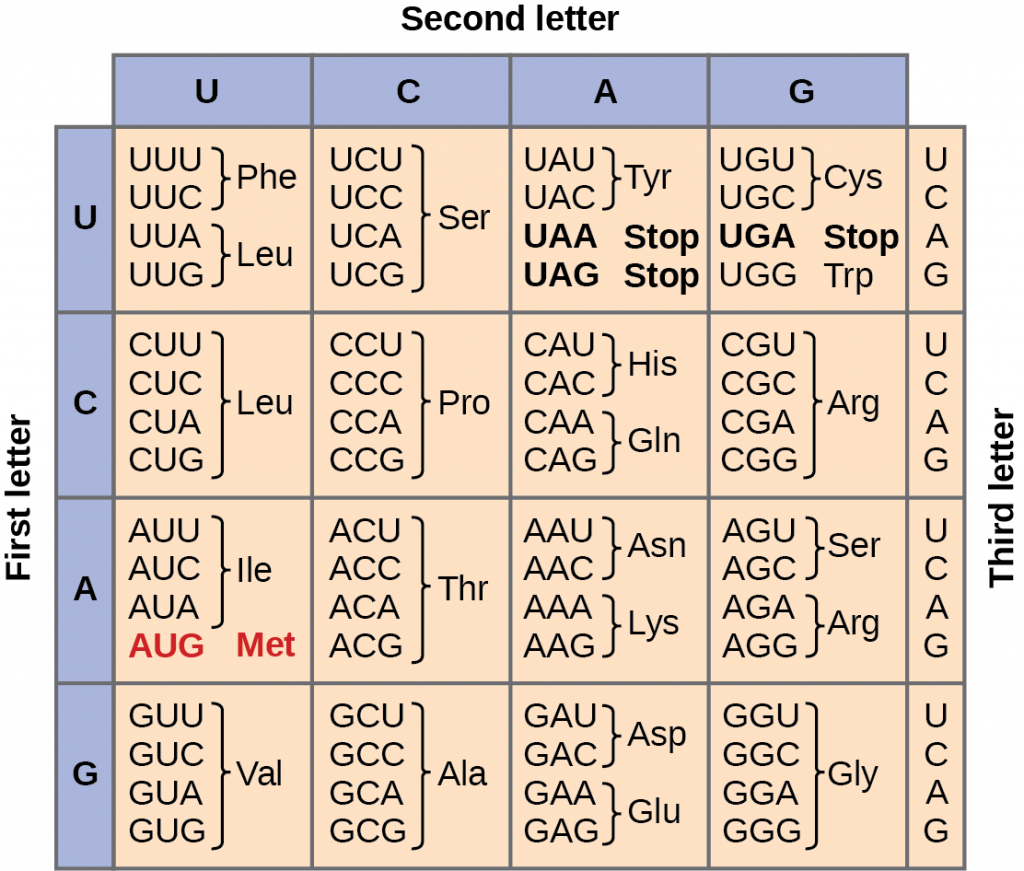
The standard genetic code uses DNA triplets called codons to specify 20 canonical amino acids, plus start and stop signals. Those amino acids are the parts cells use to build proteins, and proteins do most of the heavy lifting in biology.
A 19 amino acid genetic code means one of those standard building blocks is removed from normal use. In plain terms, scientists try to reassign, replace, or eliminate one amino acid so the cell no longer depends on the full original set. That sounds small. It is not.
Think of it like rebuilding a bridge after taking away one standard bolt size. If the structure still stands, you have learned something deep about the design rules, and maybe about how much extra tolerance was baked in from the start.
Why would scientists try to remove an amino acid?
There are two big reasons. First, this is a basic science question about evolution. The standard set of 20 amino acids looks universal enough that many people assume it had to be that way. Maybe not.
Second, synthetic biology likes cleaner systems. If you can free up part of the code, you may be able to assign new chemical functions to it later, or create organisms that are more isolated from the natural world because they run on altered rules (which, honestly, is a smart safety angle).
The real value here is not novelty for its own sake. It is testing whether one of biology’s oldest rules is fixed, or simply familiar.
How do researchers test a 19 amino acid genetic code?
The details vary by lab, but the playbook usually includes a few hard steps. None of them are trivial.
- Pick a target amino acid and map where it appears across the organism’s proteins.
- Rewrite genes so codons for that amino acid are swapped for alternatives where possible.
- Modify transfer RNA and related translation machinery so the cell stops inserting that amino acid in the usual way.
- Force the organism to grow under conditions where the old dependency becomes a liability.
That last step matters. Cells cheat when they can. If there is an easy route back to the old system, evolution often takes it.
And proteins are picky.
Some amino acids can be swapped with close chemical cousins in many places. Others sit at the center of enzyme activity, folding stability, or membrane interactions. Remove the wrong one in the wrong context, and the whole machine sputters.
Why protein chemistry gets ugly fast
Not all amino acids do equal jobs. A substitution that looks harmless on paper can wreck a protein’s shape, its charge pattern, or the way it binds another molecule. That is why this research is more than a gene-editing stunt.
Look, the genetic code is one layer. Proteins are where the bill comes due. Every change has to survive there.
What does this say about evolution?
This is where the story gets interesting. If life can function with 19 amino acids, the canonical set of 20 may reflect historical contingency as much as chemical destiny. That would not mean the system is arbitrary. It would mean evolution settled on a solid answer, not the only answer.
Researchers and historians of molecular biology have debated this for years. Some argue the code expanded as new metabolic capabilities emerged. Others think chemical optimization drove the process. Experiments like this give those debates teeth because they move the question from speculation to testable biology.
Would an early Earth biochemistry with 19 amino acids have worked well enough to persist? Maybe. That is exactly why these studies matter.
Where the 19 amino acid genetic code could matter in practice
If scientists can build organisms that rely on a reduced code, several applications come into view. Some are near-term. Others are still lab-bench material.
- Biocontainment: altered organisms may be easier to isolate from natural ecosystems.
- Protein engineering: a freed codon could later be reassigned to a nonstandard amino acid with new chemistry.
- Drug manufacturing: tailored microbes might make complex compounds with tighter control over protein behavior.
- Fundamental research: reduced-code cells can reveal which parts of translation are truly non-negotiable.
This is one reason synthetic biologists keep pushing on the code itself, rather than treating it like sacred plumbing. The more precisely they can rewrite translation, the more options they gain upstream in cell design.
What are the limits and risks of the idea?
Plenty. A reduced genetic code may work only in stripped-down lab conditions, not in messy real environments. Growth could slow. Protein quality could drop. Evolution might find loopholes and restore old functions through mutation or horizontal gene transfer.
There is also a temptation to overread early results. A viable engineered cell is not the same thing as proof that natural evolution could easily have taken the same route. Lab systems are guided, constrained, and often cushioned by researchers making thousands of choices along the way.
That does not weaken the work. It just keeps the claims honest.
How this research fits the bigger synthetic biology push
For years, teams have tried to expand the code by adding nonstandard amino acids. This project pushes in the other direction by subtracting first. That is a sharp move. In engineering, removal can be more revealing than addition.
It is a bit like a chef taking one staple ingredient out of a kitchen and seeing whether the menu still works. If the dishes hold up, the chef learns which flavors were essential, which were habit, and where new combinations become possible.
Ars Technica’s report points to a field that is getting bolder about testing basic assumptions, not merely editing around the edges. That is the right instinct. Biology has a lot of “universal” rules that are really records of what survived, not iron laws of what must exist.
What to keep an eye on next
The next phase is not about flashy headlines. It is about durability. Can reduced-code organisms stay stable over many generations? Can they grow outside highly tuned media? Can researchers remove dependence on one amino acid without creating hidden weaknesses elsewhere?
Those are the questions that separate a neat lab result from a platform technology.
And if scientists do make the 19 amino acid genetic code stick, the obvious follow-up is even more provocative. How much of biology’s so-called standard toolkit is truly standard, and how much is just the version that won?