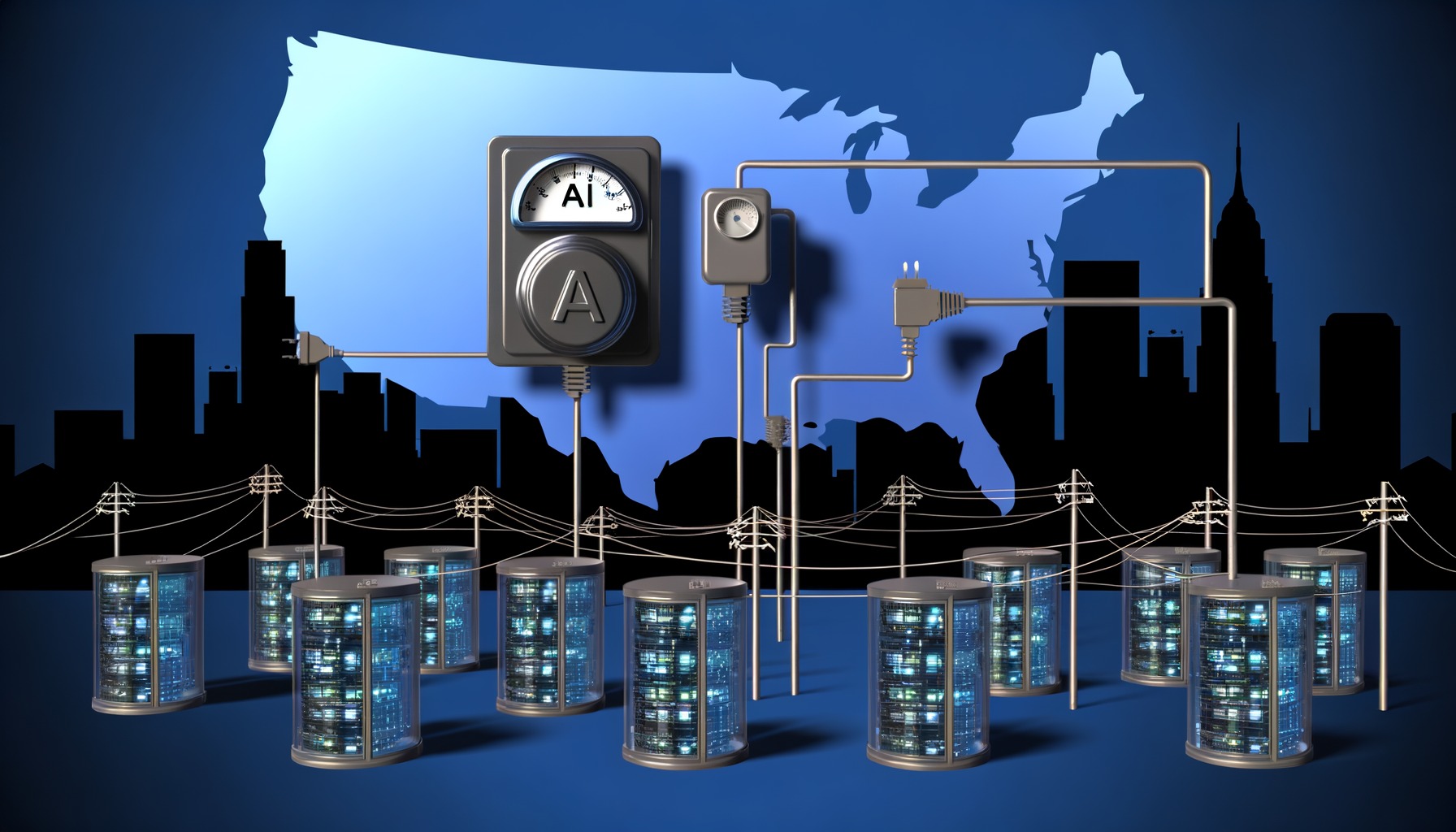
AI Data Centers and the Power Grid
Your next AI query feels weightless. It is not. Behind every chatbot reply, image generation request, and model training run sits a warehouse full of servers pulling huge amounts of electricity. That matters now because AI data centers and the power grid are on a collision course in many parts of the US. Utilities are racing to add capacity. Tech companies are signing power deals at a frantic pace. Regulators and local residents are left asking a basic question: who gets the power, and who gets the bill? I have covered tech hype cycles long enough to know this pattern. Growth gets framed as inevitable, while the messy physical costs get pushed to the margins. But the grid is not software. You cannot patch it overnight, and you definitely cannot bluff your way around transformer shortages, transmission bottlenecks, or rising peak demand.
What matters most
- AI data centers and the power grid are tightly linked because large model training and inference require massive, steady electricity loads.
- Utilities and grid operators face delays from transmission constraints, generator interconnection queues, and equipment shortages.
- Local communities may see higher power demand, water use concerns, and fights over who covers infrastructure upgrades.
- Big tech can fund new power projects, but that does not guarantee faster grid buildout or lower consumer costs.
Why AI data centers and the power grid are suddenly a flashpoint
Data centers have used a lot of electricity for years. AI changes the scale. Training frontier models and serving millions of users can require dense clusters of GPUs that draw far more power than traditional enterprise computing.
The International Energy Agency said in 2024 that electricity use from data centers, AI, and crypto could more than double by 2026. That estimate gets attention for a reason. It points to a real shift in load growth after years when many utilities assumed demand would stay relatively flat.
Look, utilities like predictability. AI demand is arriving with the opposite profile. Companies want power fast, at giant scale, and often in the same regions where transmission is already jammed.
AI demand is not just a tech story. It is now a grid planning story, a land use story, and a public policy story.
How much power does an AI data center actually need?
The exact number depends on the site, the cooling design, and whether the facility handles training, inference, or mixed workloads. Still, the broad trend is clear. New AI-focused campuses can seek hundreds of megawatts, and some proposals stretch toward gigawatt scale.
That is utility-grade demand. Think less like opening an office park and more like adding a large industrial customer, except many of these projects arrive in clusters. It is a bit like building a restaurant row in a neighborhood with a single small gas line. The appetite grows faster than the pipes.
And that is before backup systems, substations, and cooling loads enter the picture.
What breaks first when AI load spikes?
Transmission lines
The US can generate more power in some places than it can move to where it is needed. Transmission expansion is slow because of permitting fights, financing questions, and long construction timelines.
Transformers and grid equipment
Utilities have warned for years about transformer shortages and long lead times for critical gear. You can announce a data center in a quarter. You cannot summon major grid hardware that fast.
Interconnection queues
Power plants, battery projects, and large customers often wait years in interconnection queues. That backlog makes it harder to connect new generation or serve giant new loads without delay.
Local distribution networks
Even if bulk power is available regionally, the local wires and substations may not be ready. Residents usually do not care about the distinction. They just want reliable service and stable bills.
Fair enough.
Who pays for AI data center growth?
This is where the argument gets sharp. Utilities need new generation, transmission upgrades, substations, and other infrastructure to serve giant data center projects. Tech firms often say they will pay their share, and sometimes more, through special contracts or direct investment.
But cost allocation is rarely simple. Regulators have to decide whether upgrades mainly benefit the new customer, the wider system, or both. If the accounting gets fuzzy, ordinary ratepayers can end up exposed.
That is the political fault line. If AI companies capture the upside while households absorb part of the grid bill, expect hearings, lawsuits, and a lot of public anger.
Can clean energy keep up with AI data centers and the power grid?
Tech companies love to talk about carbon-free goals. Some are serious about long-term clean power procurement, including solar, wind, geothermal, advanced nuclear, and battery storage. The problem is timing.
Many clean energy projects face their own permitting and interconnection delays. So a company can sign an impressive power purchase agreement while its servers still rely, in practice, on a grid mix that includes natural gas and coal at the margin. That is not hypocrisy by itself. It is the reality of a constrained system.
If you want the plain version, here it is:
- AI companies need power now.
- Clean projects take time.
- Grid upgrades take even longer.
- That gap often gets filled by existing fossil generation or new gas proposals.
Honestly, this is why the current debate feels so charged. AI is marketed as digital progress, yet its physical footprint can push utilities toward old energy habits unless policy and grid investment move much faster.
What local communities are pushing back on
The pushback is not only about climate. It is also about water use, noise, diesel backup generators, tax incentives, and land. Residents hear promises about jobs, but data centers often create fewer permanent jobs than a factory with similar power demand.
Some communities also worry about reliability during extreme weather. If the grid is already stretched by heat waves or winter storms, what happens when a giant new data center comes online nearby? That is not fearmongering. It is a fair planning question.
And yes, local politics matter. A county board or state utility commission can slow a project even when the market logic looks solid on paper.
What smart readers should watch next
- Utility filings: They show who is asking for new substations, transmission upgrades, or special rate structures.
- Grid operator forecasts: PJM, ERCOT, MISO, and other regional operators are tracking load growth and reliability risks.
- State commission decisions: These rulings often decide who pays for what.
- Power sourcing claims: Watch the difference between annual clean energy matching and actual hourly grid use.
- Project clustering: One data center is a big load. Several in the same corridor can change the whole planning map.
The real test for AI data centers and the power grid
The Verge piece points to the right controversy. AI demand is no longer an abstract cloud-computing issue. It is hitting physical systems that are slow, regulated, and already under strain. That changes the stakes for everyone, from utility planners to homeowners.
Here is my view. The AI boom is forcing a long-overdue reality check. If tech companies want endless compute, they should have to engage with the unglamorous side of infrastructure in public, not hide behind glossy sustainability claims and vague promises. The next few years will show whether the industry can do that honestly, or whether the grid becomes the first hard limit that hype cannot talk its way past.


