AI Job Displacement: What Workers Should Do Now
Your job may not vanish tomorrow, but parts of it could move to software faster than your company admits. That is why AI job displacement matters now. The BBC has reported on growing anxiety around artificial intelligence and work, especially as employers test tools that can write, code, summarize, schedule, and handle customer requests. The hard part is separating panic from planning. Some roles will shrink. Some will change. A few will become more valuable because people can do more with better tools. If you wait for a formal company memo, you may already be behind. The smarter move is to map the tasks in your role, spot what AI can handle, and build skills around judgment, communication, and accountability.
What matters right now
- Tasks are more exposed than job titles. AI usually eats repeatable work first, not whole professions in one bite.
- Entry-level office work faces pressure. Research, drafting, basic analysis, and support tickets are easy targets.
- Human oversight still counts. AI tools make errors, invent details, and miss context.
- Managers need a plan. Quiet automation without retraining creates distrust and weaker teams.
AI job displacement is really task displacement
Look, job titles are a poor way to judge risk. A marketing manager, paralegal, accountant, or software developer may all use AI, but the vulnerable pieces differ. The repeatable, text-heavy, rules-based parts are the first to move.
Think of it like a kitchen brigade. A food processor does not replace the chef, but it changes who spends the morning chopping onions. The same logic applies to office work. AI can draft the email, summarize the contract, or sort the support queue, while a person still decides what is accurate, fair, and useful.
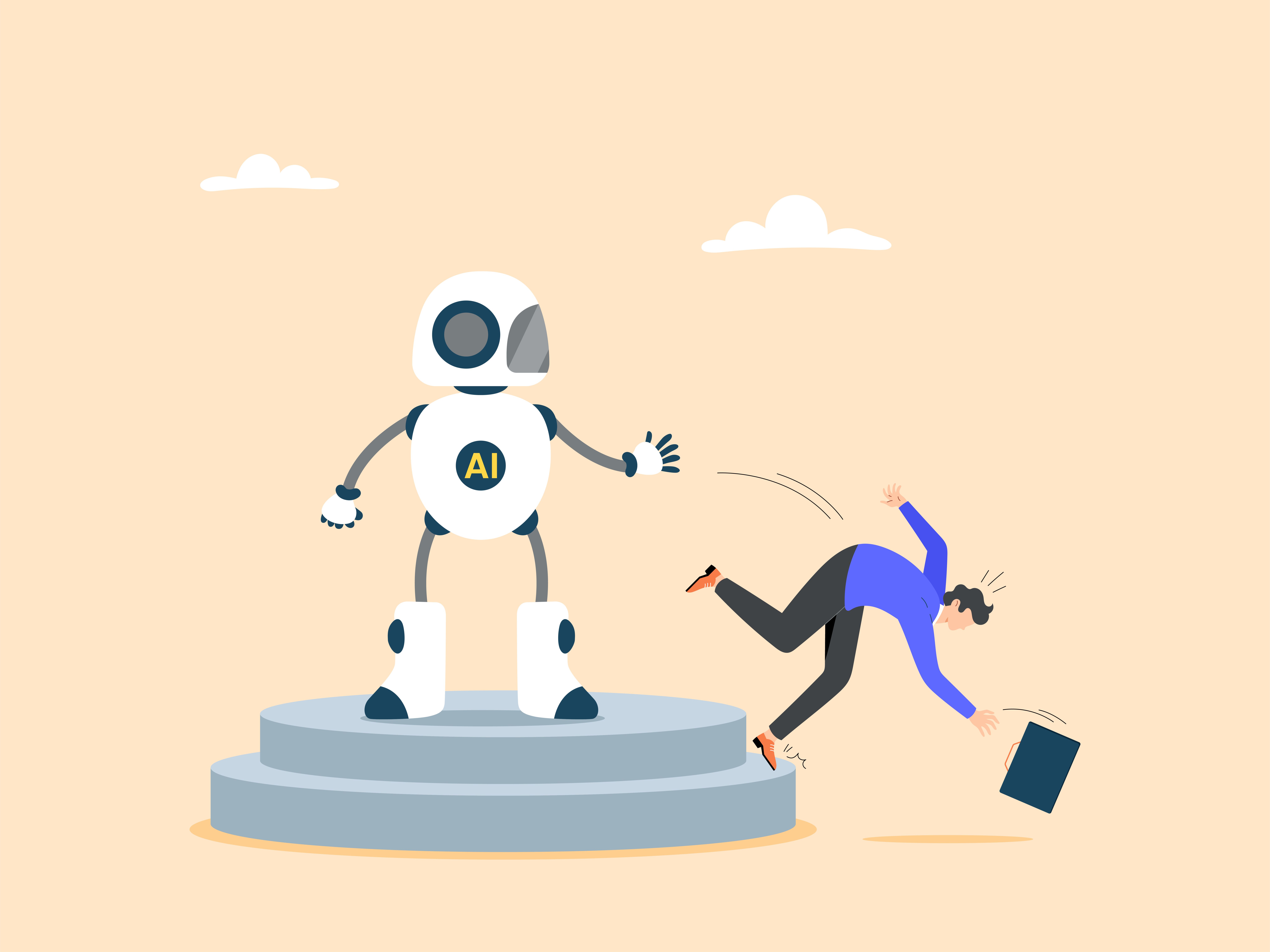
AI is less like a robot taking a chair at your desk and more like a silent coworker grabbing the easiest tasks before anyone updates the org chart.
That shift can be good if it removes drudge work. It can be brutal if your role is built mostly from drudge work.
Where AI job displacement risk is highest
The risk is not evenly spread. Jobs with heavy exposure to writing, pattern matching, basic coding, data cleanup, and customer response work face the most immediate pressure. That does not mean every worker in those areas is doomed. It means the job content will change.
Higher-risk task areas
- First drafts of reports, emails, ads, product copy, and policy documents
- Basic customer service replies and internal help desk tickets
- Routine legal, compliance, and HR document review
- Simple code generation, testing support, and documentation
- Data entry, spreadsheet cleanup, and meeting summaries
What should worry you most? If your main value is speed on routine tasks, AI can compete. If your value is judgment under messy conditions, you have more room to adapt.
What workers should do this month
You do not need to become a machine learning engineer. Most people need a practical AI literacy plan. Start with your own workflow, not a generic course catalog.
- List your weekly tasks. Split them into research, writing, analysis, communication, admin, and decision-making.
- Mark repeatable tasks. Anything with a template, checklist, or predictable input is a candidate for automation.
- Test safe tools. Use approved workplace tools if your employer has them. Do not paste private data into public chatbots.
- Keep proof of human value. Track decisions you made, risks you caught, clients you helped, and results you improved.
- Ask for training before restructuring starts. Waiting until layoffs are announced is a bad strategy.
AI will not wait for your next performance review.
One strong move is to become the person who can check AI output. In many workplaces, that will be more valuable than being the fastest drafter. Accuracy, taste, domain knowledge, and ethics are now career insurance (boring word, useful habit).
How managers should handle AI job displacement
Managers have a choice. They can treat AI as a secret cost-cutting weapon, or they can use it to redesign work with employees in the room. The second option is slower, but it is less likely to poison trust.
Start by being honest about which tasks are changing. Then decide whether savings from automation will fund training, better service, shorter turnaround times, or headcount cuts. Staff can handle hard news better than vague optimism.
A cleaner rollout plan
- Run task audits before buying tools. Do not buy software because a vendor demo looked slick.
- Create AI use rules. Define what data can be entered, who checks output, and who owns mistakes.
- Train teams by role. A finance team and a sales team need different examples.
- Measure quality, not just speed. Faster bad work is still bad work.
- Offer transition paths. If tasks disappear, show people where they can move next.
Honestly, the companies that get this right will not be the ones with the flashiest AI press release. They will be the ones that treat redesign as an operating problem, with clear owners and measurable outcomes.
Why the BBC report fits a larger labor story
The BBC source points to a concern that is now mainstream. AI is no longer a lab story or a Silicon Valley talking point. It is a workplace issue, sitting beside pay, productivity, hiring, and training.
Other named sources have raised similar questions. The International Monetary Fund has estimated that AI could affect about 40% of jobs globally, with higher exposure in advanced economies. Goldman Sachs researchers have also argued that generative AI could expose a large share of work tasks to automation, while creating productivity gains in some sectors. These are forecasts, not fate, but they should get your attention.
The key difference from past automation waves is speed. A factory robot needs equipment, floor space, and capital planning. A generative AI tool can appear in a browser tab before lunch. That changes the tempo of workplace change.
What not to believe about AI job displacement
Two bad takes dominate the debate. One says AI will destroy nearly every job. The other says nothing serious will happen because AI still makes mistakes. Both are lazy.
AI can be unreliable and economically powerful at the same time. A junior analyst can also make mistakes, yet companies still hire junior analysts because their work can be reviewed. The same pattern is forming with AI systems. They produce drafts, summaries, code, and suggestions, while humans remain responsible for the final call.
So the real question is not whether AI is perfect. It is whether it is good enough to reduce the need for certain tasks. In many cases, the answer is already yes.
The next move is yours
If you are an employee, audit your tasks this week and pick one AI skill that fits your job. If you manage people, publish clear rules before teams invent their own. The future of work will not be decided by the loudest AI vendor. It will be shaped by workers and managers who know exactly where human judgment still earns its keep.