AI Safe Tech Jobs in 2025
If you work in tech, the anxiety is real. AI can write code, summarize meetings, answer support tickets, and handle chunks of analyst work that once took hours. That shift makes one question hard to ignore: which AI safe tech jobs still look solid as companies cut costs and push automation deeper into daily work? The answer matters now because hiring plans, pay bands, and team structures are already moving around this new reality. Some roles are exposed. Others look far harder to replace. After years of covering tech hype cycles, I think the smartest way to read this moment is simple. Stop asking whether AI can do parts of your job. Ask whether your role depends on human judgment, messy real-world constraints, cross-team trust, or physical systems that break in unpredictable ways.
Where the safer ground is
- Hands-on infrastructure roles remain harder to automate than screen-only work.
- Jobs that require trust and judgment still have a moat, especially in security and leadership.
- AI changes many tech roles, but it does not erase all of them at the same speed.
- Your edge comes from context, not from doing routine tasks faster than a machine.
Why some AI safe tech jobs hold up better
Jobs are safer from AI when they sit far from clean, repeatable inputs. That usually means the work touches hardware, security risk, regulation, internal politics, or a pile of old systems that do not behave the same way twice.
Think about it like a building renovation. Drafting software can sketch a clean plan. But once you open the wall, you find bad wiring, old pipes, and missing support beams. Tech work is often like that, too. The chaos is the job.
AI is strongest where the rules are clear, the data is clean, and the cost of a wrong answer is low. It gets weaker when reality turns messy.
That is why the most durable roles often combine technical skill with field knowledge, business judgment, and accountability. Someone still has to own the decision when systems fail.
Top AI safe tech jobs to watch
1. Cybersecurity engineers and analysts
Security work looks safer than many adjacent roles because attackers change tactics fast, and defenders deal with ambiguity every day. AI can help scan logs, flag anomalies, and draft incident reports. But it does not carry the final burden of risk.
You do. And that matters.
Security teams also need people who can judge intent, weigh business impact, and respond under pressure. A false positive can waste days. A false negative can cost millions. IBM’s Cost of a Data Breach Report has repeatedly shown breach costs in the millions of dollars globally, which is one reason companies keep paying for experienced defenders.
2. Site reliability engineers and infrastructure specialists
Cloud systems are dense, expensive, and often patched together over years. SREs, network engineers, and infrastructure specialists deal with uptime, latency, outages, and ugly handoffs between tools that were never meant to work together.
AI can suggest fixes. It can even catch patterns humans miss. But when a production system melts down at 2 a.m., companies still want someone who understands the architecture, the tradeoffs, and the blast radius of every move.
Honestly, this is one of the clearest examples of AI safe tech jobs. The work sits too close to operational risk to hand over lightly.
3. Data engineers
Data engineering has more staying power than many people expect. Why? Because the real work is not making a chart or writing a quick query. It is cleaning bad inputs, building pipelines, managing permissions, and making sure decision-makers are not staring at junk.
That plumbing layer is non-negotiable. If the data foundation is shaky, every AI product on top of it gets shaky too.
4. AI systems integrators and applied ML engineers
Yes, AI creates some of its own safest jobs. Companies need people who can connect models to internal tools, tune workflows, evaluate outputs, and keep systems within policy and budget. This is less about pure research and more about making models work inside actual businesses.
Look, many executives bought the fantasy that AI tools would plug in like a toaster. They do not. Someone has to handle retrieval pipelines, permissions, prompt flows, monitoring, model choice, and failure cases.
5. Technical product managers in high-stakes domains
Product roles are uneven. Generic coordination work is more exposed. But technical product managers in sectors like healthcare, finance, enterprise software, and cybersecurity still have room because they translate between engineering limits, customer pain, and compliance demands.
That translation layer matters most where mistakes are expensive. AI can summarize user feedback. It cannot easily settle a fight between legal, sales, security, and engineering over what ships next (and who carries the risk).
6. Field service and hardware-adjacent tech roles
Jobs tied to physical systems often look safer than pure desk work. That includes data center technicians, networking field engineers, robotics maintenance specialists, and certain IT roles that involve on-site troubleshooting.
Physical work resists full automation for a simple reason. Real environments are messy. Parts fail. Access is limited. Documentation is wrong. The server rack in the diagram is not always the rack in the room.
Which tech roles face more pressure from AI?
Some jobs are not disappearing, but they are being compressed. Entry-level coding work, routine QA tasks, basic IT support, and templated content or reporting work all face heavier pressure because AI handles the first draft or first pass cheaply.
That does not mean those paths are dead. It means the floor is rising. Employers may hire fewer juniors if one experienced worker with AI support can do more output in less time.
Here is the hard question. If a model can do 40 percent of your tasks, what remains that only you can own?
How to make yourself part of the AI safe tech jobs group
- Move closer to risk. Learn work tied to uptime, security, compliance, revenue, or core operations.
- Own a messy system. Become the person who understands the legacy stack, the data pipeline, or the customer workflow nobody else fully gets.
- Build judgment, not just output. Anyone can ship more with AI help. Fewer people can decide what should ship, what should stop, and what could break.
- Add domain depth. Tech plus healthcare, fintech, supply chain, or industrial systems beats generic tech skill alone.
- Get comfortable with AI tools. The safer worker is rarely the one ignoring AI. It is the one using it well while adding context the model lacks.
What the Wall Street Journal angle gets right
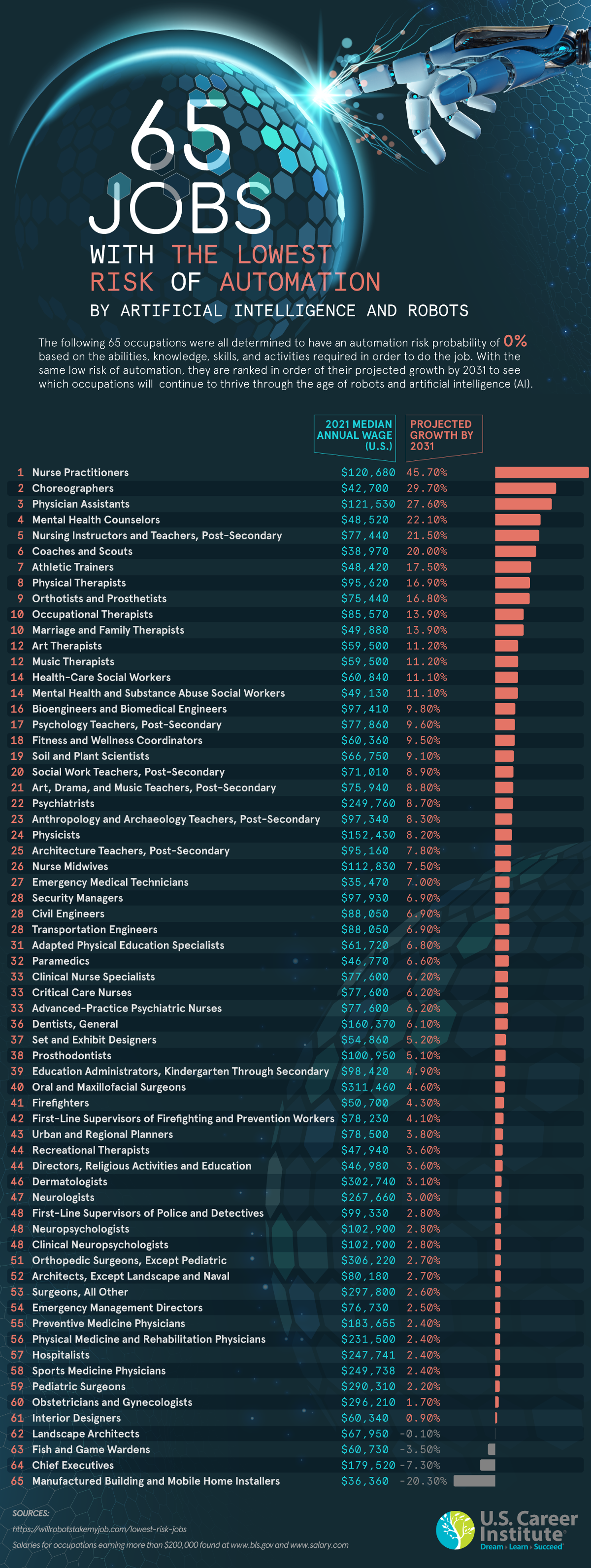
The underlying point is sound. Tech jobs are not equally exposed to automation. Roles grounded in judgment, relationship management, and real-world systems have a better shot than tasks built from repeatable digital steps.
But I would push it a bit further. “Safe” is not permanent. It is relative. A role can be safer than another role and still change fast over the next two years.
So do not bet on job titles alone. Bet on the parts of work that are hardest to standardize.
What to do next
If you are choosing your next move, audit your job at the task level. Split your week into repeatable tasks, judgment calls, stakeholder work, and system ownership. Then ask where your value really sits.
The people who do well in this cycle will not be the ones insisting AI cannot touch them. They will be the ones who move toward the work that stays stubbornly human. Are you building that version of your career yet?