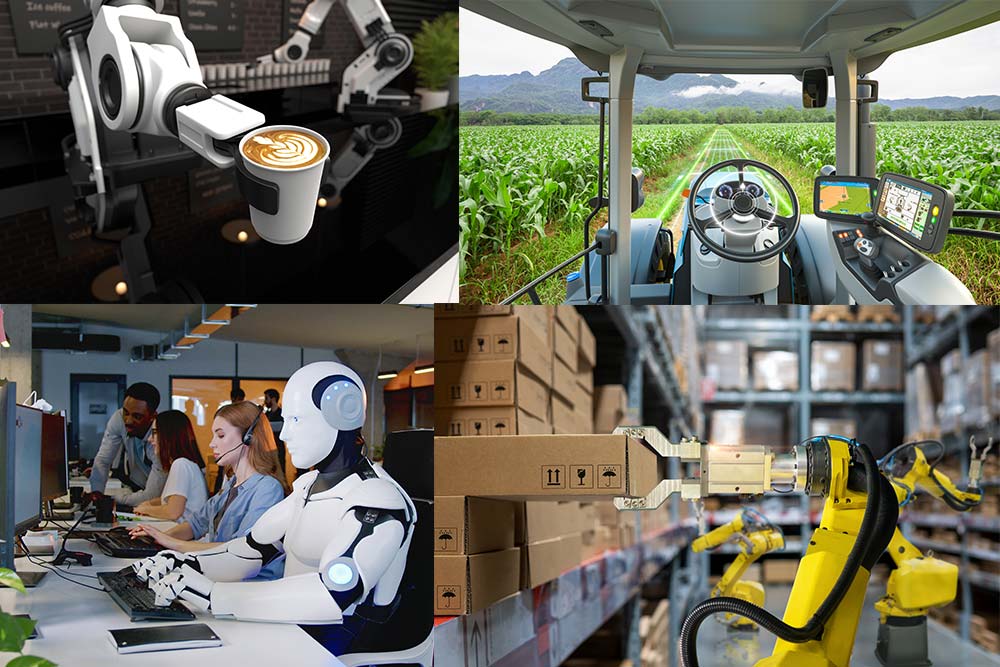
AI Workforce Changes and the Two-Pizza Rule
Teams are getting smaller, and that matters now because AI workforce changes are hitting hiring, workflow, and management at the same time. If one person can do the work that used to take three, your org chart stops being a static document and starts acting like a live wire. The real question is not whether AI will replace jobs in some neat, predictable way. It is how fast it will change the size of teams you actually need to ship work.
The old two-pizza rule from Amazon was built for speed and communication. But AI changes the math. A small team with strong tools can move like a much larger one, while a bloated team can slow down even if everyone is busy. That is why leaders need to rethink headcount, roles, and the amount of management overhead they are willing to pay for.
What AI workforce changes mean right now
- Fewer people can cover more tasks. AI handles drafts, summaries, research, code help, and routine support work.
- Role boundaries are getting blurry. One employee may now do work that once sat across operations, marketing, and analysis.
- Managers need tighter scope. Smaller teams need clearer goals, or work gets chaotic fast.
- Hiring is shifting from volume to leverage. Companies want people who can direct AI, review output, and make decisions.
- Team size is becoming a strategy question. It is no longer just an HR question.
“AI does not just speed up tasks. It changes the number of people you need in the room to get a result.”
Why the two-pizza rule needs a rewrite
Amazon’s two-pizza rule worked because small groups communicate better. That part still holds. But AI workforce changes mean the ceiling is different now, because a compact team can produce far more than it could five years ago.
Think of it like a kitchen. If each chef has sharper tools and a better prep system, you do not need to pack the line with extra cooks. You need fewer people, better coordination, and less waste. Same principle here.
And here’s the thing. Small does not automatically mean efficient. A team of four with no process can be slower than a team of ten with clean handoffs and good tooling. AI helps, but it does not fix sloppy management.
How to size teams in the AI era
Start with the work, not the headcount
Map the actual workflow. Break it into research, production, review, and delivery. Then ask which steps AI can handle safely and which ones still need human judgment.
That gives you a real staffing picture. You may find that a team needs one senior editor, one operator, and AI support, instead of three generalists doing overlapping work.
Watch for hidden coordination costs
Smaller teams can still drown in coordination if decisions are unclear. A team of six with three approvers is often slower than a team of twelve with one owner. AI does not remove that friction. It just makes the friction easier to ignore.
- Define the owner for each deliverable.
- Set clear review rules for AI output.
- Measure cycle time, not just output volume.
- Cut steps that add approval without adding value.
Redesign jobs around judgment
AI is strongest at first drafts and repeatable tasks. Humans still matter most when the work needs context, taste, or risk calls. That means the best hires are often people who can spot errors fast and know when to override the machine.
That is the shift: from task completion to decision quality.
What leaders should do before trimming teams
Do not shrink teams because the spreadsheet looks clean. Test the workflow first. Use AI on one process, measure the result, and see whether quality holds up under pressure.
Ask three blunt questions:
- What work became faster because of AI?
- What work got messier because output now needs more review?
- Which roles are doing real value, and which are just passing files around?
That is where the savings usually are. Not in cutting people blindly, but in removing duplicate effort, slow approvals, and low-value coordination.
The real workforce change is cultural
AI workforce changes are not only about headcount. They also change expectations. People are now judged on how well they use tools, not just how much time they spend grinding through tasks.
That can be good or ugly, depending on how leaders handle it. If you treat AI as a shortcut for layoffs, trust drops. If you treat it as a way to raise output and sharpen roles, teams usually adapt faster. Why keep a structure that rewards busywork?
One more thing. The companies that win will not be the ones with the biggest teams. They will be the ones that know exactly how much team they need, and where the human brain still beats the model.
What to do next
If you run a team, audit one workflow this week and ask where AI can remove effort without creating confusion. If you manage leaders, stop using team size as a badge of importance. In the AI era, lean can be strong, but only if you know what each person is really responsible for. The next hiring decision should answer a tougher question than “Can we afford this person?” It should be, “Can this person make the whole system better?”