Amazon AI Data Centers Face a Power Reality Check
You are being sold AI as software, but the harder story is concrete, power lines, cooling systems, and land. Amazon AI data centers now sit at the center of that tension. According to The Verge, an Amazon blog post warned about the strain AI data centers can place on local resources, then drew attention because that kind of candor rarely survives long in corporate messaging. That matters because AWS is one of the biggest cloud providers on the planet, and its AI push depends on a fast physical buildout. More chips need more electricity. More electricity needs grid capacity. More cooling can mean more water use, depending on the site and system. The public pitch is speed and intelligence. The local question is simpler. What does your community give up to host the machines?
What Stands Out
- Amazon AI data centers are physical infrastructure first, even if the product feels like cloud software.
- The Verge report points to a rare warning from inside Amazon’s own public messaging.
- Power, water, and grid upgrades are becoming business risks, not side issues.
- Local communities need clearer data before approving large AI facilities.
- The AI race is starting to look like an energy race with better branding.
Why the Amazon AI Data Centers Warning Matters
Large cloud companies prefer to talk about models, chips, and customer demand. That story is tidy. Data center siting is not. It involves utilities, zoning boards, transmission constraints, tax incentives, and environmental permits.
The Verge report is useful because it cuts through the normal gloss. A company can promote AI while also admitting, even briefly, that the infrastructure behind it creates tradeoffs. Those tradeoffs are no longer theoretical. They show up as delayed grid connections, rising utility bills, water fights, and new pressure on state regulators.
The uncomfortable truth is that AI does not live in the cloud. It lives in buildings that need huge amounts of power, steady cooling, and political permission to keep expanding.
Amazon is hardly alone. Microsoft, Google, Meta, Oracle, and CoreWeave are all racing to secure capacity. But AWS gives Amazon a special role. It sells the picks and shovels of the AI boom, from cloud compute to custom Trainium chips. If the infrastructure story gets messy, Amazon cannot wave it away as someone else’s problem.
Amazon AI Data Centers Are Becoming a Grid Problem
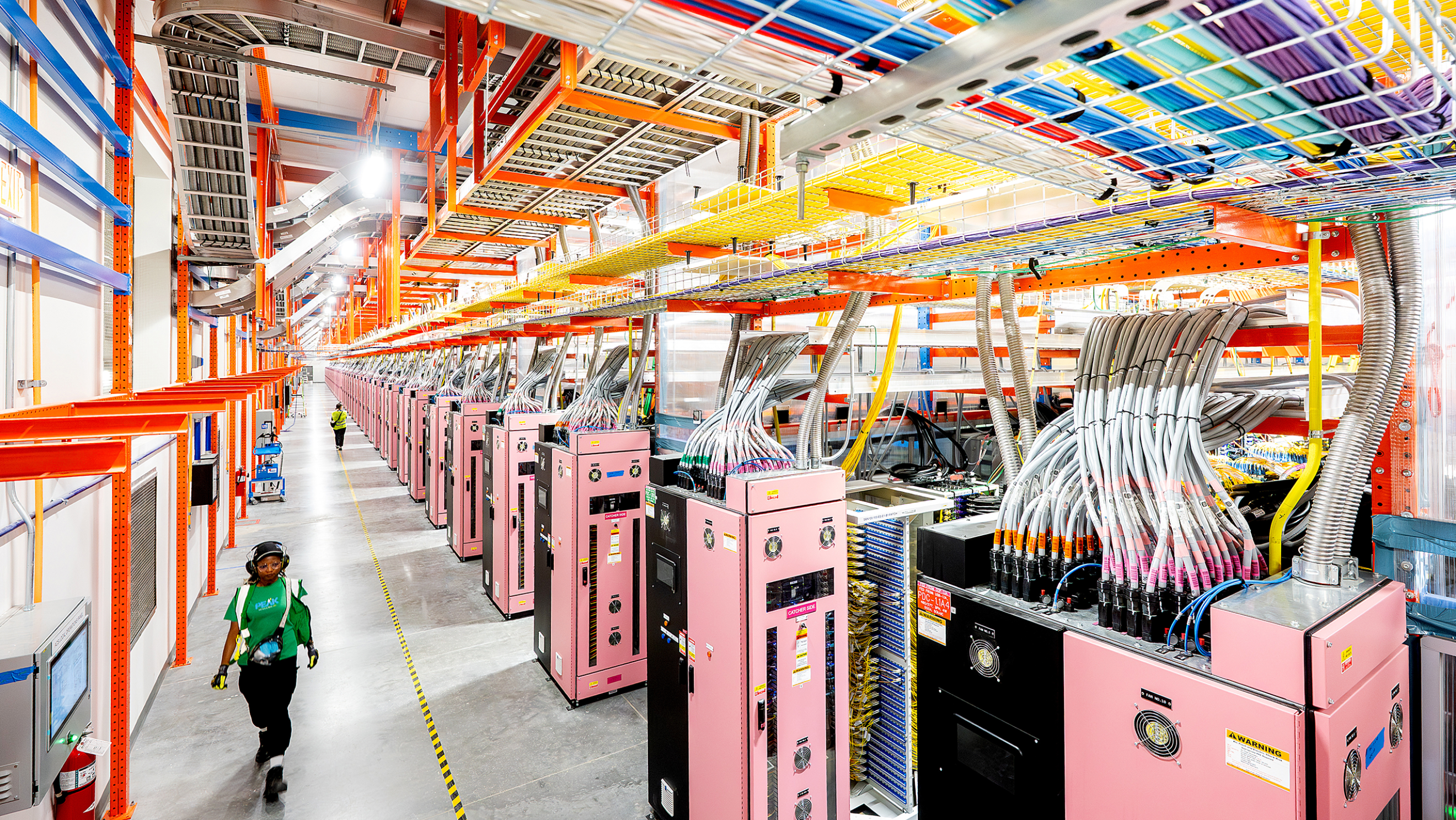
AI training and inference push data centers harder than many older cloud workloads. Dense racks of GPUs or AI accelerators can draw far more power than traditional enterprise servers. That changes the planning math for utilities.
Think of it like adding a pro sports stadium to a small city. The building is impressive, but the real strain appears around it, in roads, policing, parking, hotels, and power demand on game day. AI data centers create a similar spillover. The facility is only one piece. The grid has to carry the load.
Here’s the thing.
Utilities plan infrastructure over years, while AI companies are trying to build capacity in months. That mismatch creates pressure. If a region has cheap land and friendly tax policy but limited transmission, the project can stall or force expensive upgrades. Someone pays for those upgrades. The key fight is whether that cost lands on the company, the utility, taxpayers, or ordinary ratepayers.
What local officials should ask before approval
- How much electricity will the site need at full buildout?
- Will the project require new transmission lines, substations, or backup generation?
- Who pays for those upgrades?
- How much water will the cooling system use during peak heat?
- Will Amazon publish site-level sustainability data?
- What happens if projected jobs are fewer than promised?
Those are not anti-tech questions. They are basic due diligence. A county would ask similar questions about a factory, a refinery, or a major logistics hub.
The Water Issue Is Harder Than the PR
Data centers do not all use water the same way. Some rely more on air cooling. Others use evaporative systems that can reduce electricity demand but consume more water. Climate also matters. A facility in a hot, dry region faces different constraints than one in a cooler area.
Amazon has made public sustainability commitments, including goals tied to renewable energy and water stewardship. The problem is that broad companywide targets do not always answer the question local residents care about. What will this specific site use, on the hottest week of the year, when the local water system is already under stress?
That is where trust gets thin. Companies often report progress at a global or regional level. Communities need site-level numbers. Without them, the public is left with polished promises and incomplete risk.
Why Amazon’s Messaging Is Under Pressure
Amazon wants to be seen as an AI infrastructure winner. It has poured money into AWS capacity, custom chips, and partnerships with AI companies. It also wants to maintain its climate credibility. Those goals can clash when AI demand forces faster construction and higher electricity use.
That tension explains why a warning about data center impacts attracts attention. Corporate blogs usually sand down the sharp edges. If a post acknowledges strain, readers naturally ask what else is being softened elsewhere.
Does that mean Amazon is hiding a disaster? No. It means the public should treat data center expansion as infrastructure policy, not product news. The stakes are too large for vague assurances.
What Businesses Buying AI Should Watch
If your company runs on AWS, Azure, or Google Cloud, this may sound distant. It is not. Infrastructure constraints can shape price, availability, latency, and vendor risk. AI capacity is already a boardroom issue for companies that need reliable compute.
- Ask vendors about region-level capacity. Do not assume every cloud region can handle your AI roadmap.
- Track energy and carbon reporting. Your own sustainability claims may depend on your cloud provider’s footprint.
- Build workload flexibility. If one region gets constrained, you need options.
- Question cheap AI pricing. If power and hardware costs rise, bargain pricing may not last.
Honestly, this is where the hype starts to wobble. Executives talk about AI as if it is pure digital abundance. The bill of materials says otherwise. Chips are scarce, power is local, and permitting can move at the speed of a town meeting.
The Better Standard for Amazon AI Data Centers
Amazon could set a stronger standard by publishing clearer site-level impact data for major AI data centers. That would not satisfy every critic, but it would improve the debate. Right now, too much information arrives in fragments, through utility filings, local hearings, company blogs, and investigative reporting.
A serious disclosure standard should include:
- Projected power demand at opening and full capacity.
- Expected annual water use and peak-day water use.
- Energy sources tied to the facility, not only companywide renewable claims.
- Grid upgrades required for operation.
- Public incentives, tax breaks, and local infrastructure costs.
- Permanent jobs, construction jobs, and contractor roles separated clearly.
That level of detail would also help Amazon. Communities are less likely to assume the worst when they can see the numbers. And if the numbers are difficult, better to own them early than let them leak out through filings and local backlash.
The AI Boom Needs a Harder Accounting
The Verge story lands because it exposes a gap between AI marketing and AI reality. Amazon can keep building. So can Microsoft, Google, and everyone else chasing model demand. But the next phase of AI will be judged by more than benchmark scores and chatbot demos.
The companies that win long term will be the ones that secure power responsibly, share data plainly, and stop treating local communities as footnotes. If Amazon wants AWS to be the backbone of the AI economy, it should act like an infrastructure company in public, not only in private planning rooms.
Your practical next step is simple: the next time a new AI data center is proposed near you, ask for the power, water, and subsidy numbers before the ribbon-cutting photo gets scheduled.