Amazon Decision Model Shows AI Is Moving From Chat to Action
You have probably tested enough chatbots to know the pattern. Ask a question, get an answer, check the answer, then do the real work yourself. The Amazon decision model reported by TechCrunch points to a different phase of AI, one where models are judged less by how well they talk and more by how well they choose. Amazon has released its own Jev-style clone as decision models spread across the web, according to the report. That shift matters now because every major AI vendor is looking past chat interfaces toward agents, workflow tools, shopping assistants, coding systems, and business software that can take the next step without constant hand-holding. The risk is obvious. A model that makes choices can save time, but a bad choice can cost money, trust, or customer data.
What Stands Out
- Amazon is joining the rush around decision models, a class of AI systems built to pick actions, not only generate text.
- The Jev comparison suggests fast follower pressure in AI, where useful product ideas get copied quickly by larger platforms.
- Decision models could affect commerce, cloud software, logistics, and agentic AI tools inside Amazon Web Services.
- The hard part is evaluation. A fluent answer is easy to demo, but a sound decision needs context, constraints, and accountability.
What the Amazon decision model appears to be
Based on TechCrunch’s report, Amazon has released a model that resembles Jev, a tool associated with decision-making rather than open-ended chat. The useful distinction is simple. A chatbot predicts a response. A decision model ranks options, weighs tradeoffs, and chooses a path.
That may sound like a small product tweak. It is not. In practical terms, this pushes AI closer to the messy work people do in software every day, such as approving a refund, choosing a supplier, routing a support ticket, flagging a risky order, or deciding which code change to test first.
That matters.
Amazon has obvious reasons to care. The company runs retail, advertising, logistics, Alexa, Prime Video, and AWS. Each business depends on millions of small decisions. If an AI system can improve even a slice of those calls, Amazon gets a direct operating benefit, not just a flashy demo.
The real test for decision models is not whether they sound smart. It is whether they make fewer costly mistakes than the workflow they replace.
Why the Amazon decision model lands now
The timing is not random. The AI market spent the last few years rewarding models that could write, summarize, code, and chat. Now the center of gravity is shifting toward agents. And agents need decision systems, because an agent that cannot choose is just a chatbot with extra buttons.
Look at the product race around OpenAI, Anthropic, Google DeepMind, Meta, and AI coding startups. Everyone wants models that can plan, call tools, inspect results, and adjust. That chain breaks if the model cannot decide what to do next.
For Amazon, the stronger angle may sit inside AWS. Developers do not only want another model endpoint. They want systems that can help automate cloud operations, security triage, customer service, procurement, and internal analytics. A decision model could become a building block for those tools, especially if Amazon packages it with Bedrock, SageMaker, or enterprise controls.
Jev clones and the speed of AI imitation
The phrase Jev clone says a lot about the current AI cycle. Good ideas do not stay niche for long. A small team proves a pattern, then a platform company rebuilds the idea with more distribution, more compute, and a larger sales channel.
Is that fair? It depends on the details. Tech has always copied. Search copied directories. Stories copied Snapchat. Short video feeds copied TikTok. AI is faster because the core product can often be replicated through model behavior, interface design, and tool connections.
Here is the thing. Copying the interface is the easy part. Copying the judgment is harder.
A decision product succeeds only if it has a clear domain, strong feedback loops, and a way to learn from bad outcomes. Otherwise, it becomes a slot machine in office software. Sometimes useful, sometimes baffling, and hard to trust when the stakes rise.
Where Amazon could use decision models first
Amazon has more possible use cases than most companies, but some are better fits than others. The safest early wins are narrow, repeatable, and measurable.
- Customer support routing: A model can decide whether a case needs a refund, a human agent, fraud review, or technical help.
- Cloud operations: AWS tools could suggest or trigger responses to outages, cost spikes, or security alerts.
- Retail recommendations: A decision layer can balance relevance, margin, delivery speed, inventory, and customer history.
- Warehouse workflows: AI can help prioritize tasks when demand, staffing, and stock levels shift during the day.
- Ad placement: Amazon’s ad business already depends on ranking and bidding. Decision models could refine those calls in real time.
The sports analogy fits here. A language model is like a commentator who explains the play. A decision model is the coach calling the next one with the clock running. You need both skills, but only one gets blamed when the call fails.
The risk is not bad grammar, it is bad judgment
Decision models raise a different kind of trust problem. With a chatbot, the user can often spot weak output. With an automated decision system, the damage may happen before anyone sees the reasoning.
That makes evaluation non-negotiable. Amazon and rivals will need to show how these systems perform under pressure, not only in polished product demos. What happens when data is missing? What happens when two goals conflict? What happens when a customer asks for something unusual?
Strong decision systems need guardrails that are boring by design. Boring is good here.
- Clear limits on what the model can approve without review
- Audit logs that show inputs, choices, and tool calls
- Human review for high-cost or high-risk actions
- Domain-specific testing, not only general benchmark scores
- Fast rollback when a policy, model, or data source causes errors
Regulators will also care. In the European Union, the AI Act puts heavier duties on high-risk AI systems. In the United States, agencies such as the FTC have warned companies against deceptive or unfair automated decision practices. If these models touch credit, employment, health, insurance, or sensitive consumer decisions, the compliance load grows fast.
How buyers should judge the Amazon decision model
If you are a developer, CIO, or product lead, do not judge this category by demo magic. Ask dull questions. Dull questions save budgets.
Start with scope. What exact decisions should the model make, and which ones should stay with people? Then ask how the system explains its choices. You do not need a philosophical essay from the model, but you do need enough detail to debug failures.
Also ask about data boundaries. Amazon has many enterprise customers that care deeply about where data goes, how it is stored, and whether it trains future models. Any decision model used inside AWS or business software will need clean answers on privacy, retention, and tenant isolation.
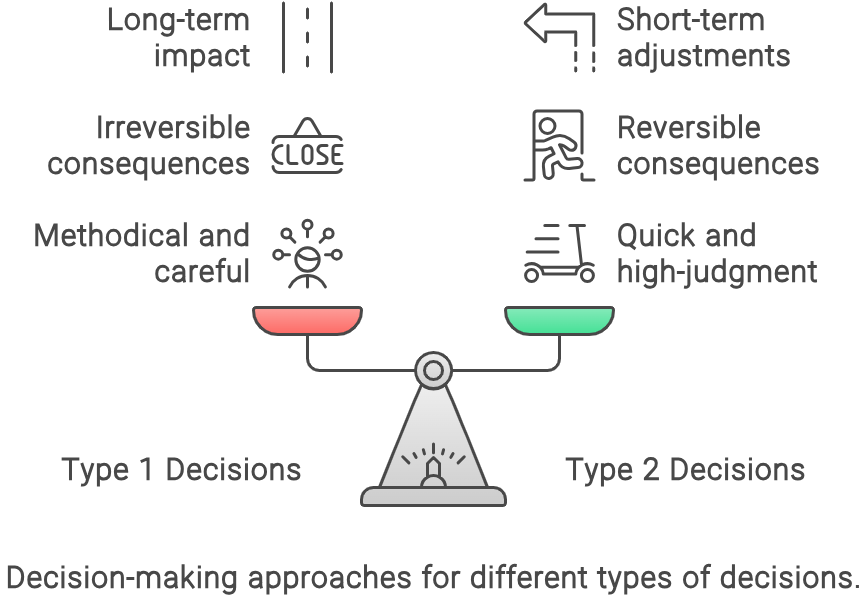
One more test: compare it against your current process. If humans resolve 92 percent of support cases correctly and the model resolves 85 percent, automation may still be useful for triage, but not for final approval. The point is not to replace people by default. The point is to put machine judgment where it is measurable and reversible.
The next AI fight is about who gets to decide
The Amazon decision model is another signal that AI is moving from text generation into operational control. That is a bigger shift than many product launches suggest. Chatbots changed how people ask for work. Decision models may change who, or what, gets permission to act.
My read after years covering platform shifts: the winners will not be the vendors with the loudest agent demos. They will be the ones that make AI decisions inspectable, constrained, and useful in narrow places first. If you are testing these tools, pick one workflow, set a failure budget, and make the model earn more responsibility one decision at a time.


