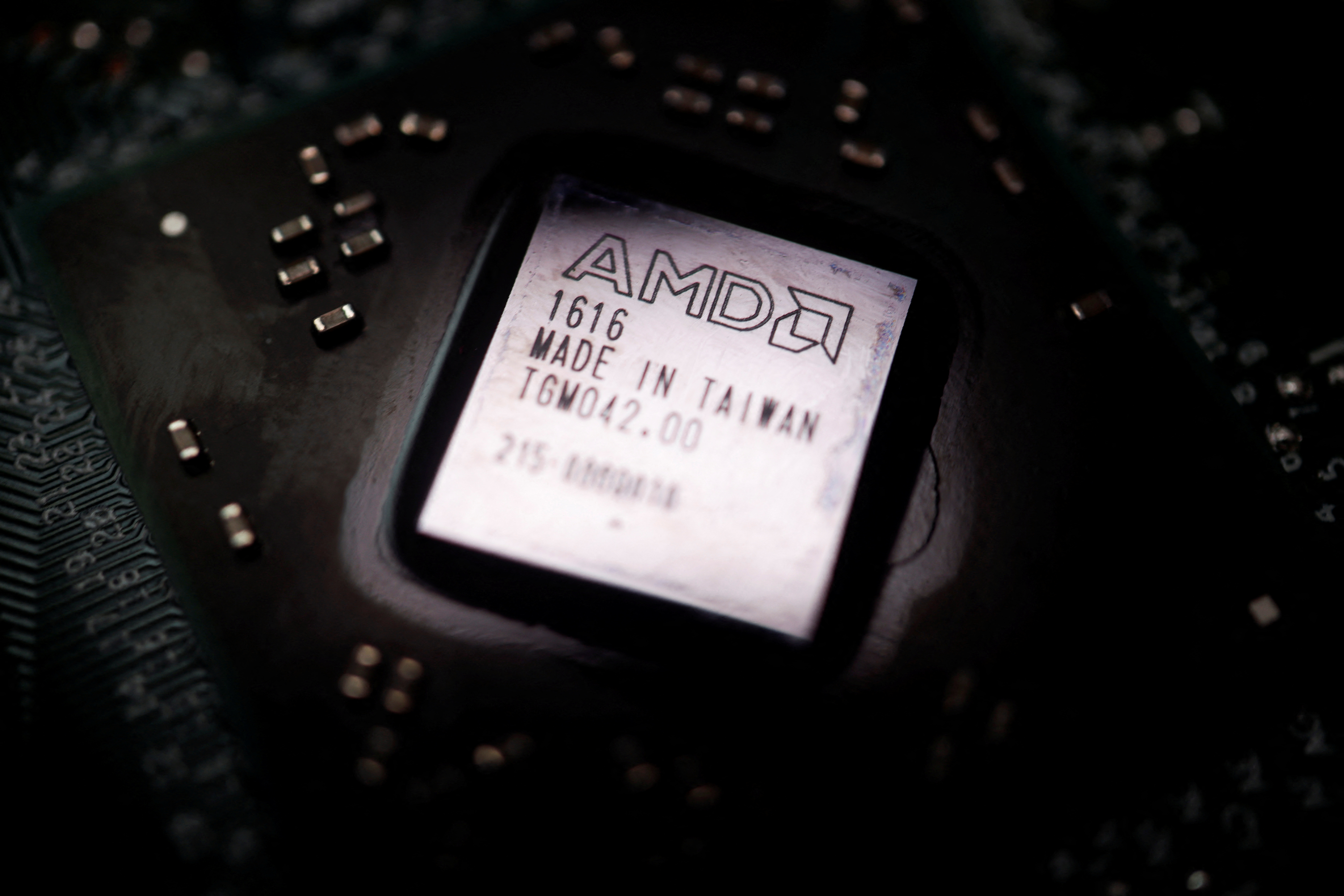
AMD AI Chip Stock Analysis
You have probably seen the same AI stock story on repeat. Nvidia dominates the headlines, while every other chip name gets framed as a distant second. But that misses what matters to investors right now. AMD AI chip stock has become a serious topic because the company is building a larger data center business, winning more GPU demand, and giving buyers another option in a market that badly needs one. That does not mean AMD is about to topple Nvidia. It means the stock deserves a sharper read than the usual hype cycle offers. If you are trying to judge whether AMD has real AI upside or is simply riding the trend, the answer sits in execution, margins, customer demand, and how fast large cloud buyers broaden their chip spending.
Why AMD AI chip stock is getting fresh attention
- AMD is gaining more investor attention as AI infrastructure spending expands beyond one company.
- The strongest case for AMD sits in data center GPUs and server CPUs, not headline chatter alone.
- Its opportunity depends on customer adoption, software progress, and supply discipline.
- Investors should watch revenue mix, margins, and hyperscaler demand more than bold forecasts.
What changed for AMD AI chip stock?
The simple answer is mix. AMD is no longer judged only as a PC chip company. Its data center business has become a bigger part of the story, and AI accelerators now matter far more to how Wall Street values the stock.
Yahoo Finance highlighted this shift by pointing to AMD’s rise into the ranks of the market’s largest companies. That is a real milestone. But size alone is not the point. The market is paying up because investors think AMD can capture a slice of AI infrastructure spending that was once treated as a one-horse race.
That is a big bet.
And it rests on a few concrete things. AMD has its Instinct GPU line for AI workloads, strong EPYC server CPUs, and relationships with cloud providers and large enterprise buyers. In plain English, it has enough product breadth to matter if customers want a second source for AI compute.
Why the AMD AI chip stock case is more than hype
1. The data center business gives AMD a real base
Look, AI investing gets sloppy when people focus only on the flashiest chip. AMD’s data center position matters because AI servers need more than accelerators. They need CPUs, memory, networking, software support, and system integration.
AMD already has a seat at that table through EPYC. That gives it a better shot at expanding AI sales than a company trying to break in from scratch. Think of it like a builder that already supplies the concrete and steel. Adding another part of the structure is hard, but it is easier than showing up with only a blueprint.
2. Customers want alternatives
Nvidia’s grip on AI chips is still strong. No serious observer should deny that. But buyers such as Microsoft, Meta, Oracle, and other hyperscalers usually want more than one viable supplier over time, partly for pricing power and partly for supply resilience.
That creates an opening for AMD. Not a guaranteed win. An opening.
The strongest argument for AMD is not that it will beat Nvidia tomorrow. It is that AI demand is now large enough to support another scaled supplier.
3. AI infrastructure spending is staying elevated
Large tech companies continue to spend heavily on data centers, GPUs, and supporting hardware. Even if spending rates cool from peak levels, the base level looks much higher than it did before generative AI took off. That broader spending wave helps AMD because it does not need to own the whole market to grow fast.
What could limit AMD AI chip stock?
This is where the story gets less comfortable, and more useful.
- Software remains a real hurdle. Nvidia’s CUDA ecosystem still gives it a major edge with developers and AI workloads.
- Execution has to stay sharp. Product delays or weak supply planning would hit confidence quickly.
- Margins matter. Winning share is good, but lower-profit growth is a weaker long-term setup.
- Expectations can run ahead of results. AI stocks often get priced for near-perfect outcomes.
Honestly, this is the core tension. AMD can improve its AI position and still disappoint investors if the stock already reflects too much optimism. That happens all the time in semiconductors.
How to read AMD against Nvidia and the broader AI chip market
Most coverage frames this as a direct cage match. That is lazy analysis. A better question is this: can AMD build a durable position as the number-two AI compute supplier while also strengthening its server CPU footprint?
If the answer is yes, the business can grow nicely without needing to dominate the market. Semiconductor history is full of companies that built huge value from being essential, even without being first in every segment.
Investors should track a few signals each quarter:
- Data center revenue growth
- AI GPU sales commentary
- Gross margin trends
- Named customer traction with hyperscalers
- Software ecosystem progress around ROCm and deployment support
Those numbers tell you far more than social media victory laps do.
Is AMD AI chip stock a smart buy now?
That depends on what you expect. If you want a company that could benefit from AI spending while still having broader chip exposure, AMD looks credible. If you expect it to erase Nvidia’s lead anytime soon, that is a stretch.
The balanced case is straightforward. AMD has real assets, real customers, and a real opening in AI infrastructure. It also faces a rival with a stronger software moat and a bigger installed base. Both things are true at once.
For long-term investors, the setup is attractive if you believe AI data center demand will stay high for years and that major buyers will keep funding multiple vendors. For short-term traders, valuation and quarterly guidance swings can make the ride rough (and chip stocks rarely move gently).
What to watch next for AMD AI chip stock
The next phase is less about narrative and more about proof. Can AMD convert interest into repeat deployments? Can it widen adoption beyond a handful of large buyers? Can it grow AI revenue without giving up too much on profitability?
Those are the questions that count.
AMD has moved past the stage where it can be dismissed as an AI bystander. Now it has to show that it can turn a timely opportunity into a lasting position. If it does, the stock may still have room. If it does not, the market will stop being so patient.