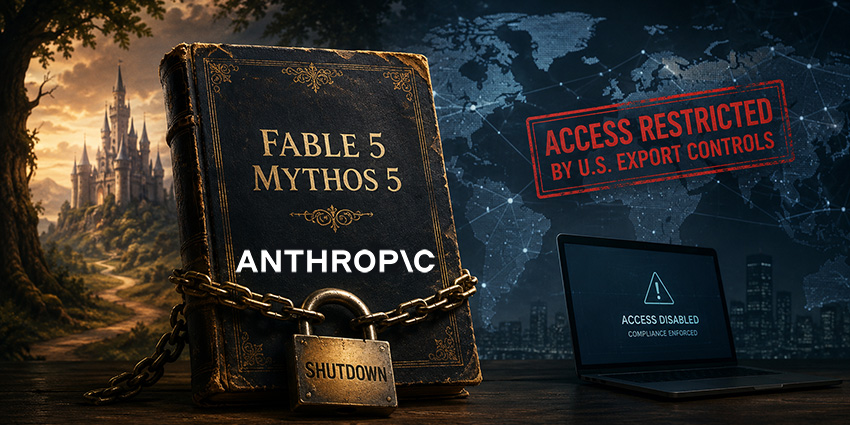
Anthropic Fable and Mythos Shutdown: What the Sovereign AI Lesson Means
Companies keep buying AI systems as if they are permanent infrastructure. They are not. The Anthropic Fable and Mythos shutdown is a clean reminder that your access can change fast, even when the product looks mission critical. That matters now because more businesses are tying customer support, search, internal knowledge, and code workflows to model providers they do not control. The phrase Anthropic Fable and Mythos shutdown sounds like a narrow vendor dispute. It is bigger than that. It points to the messy gap between “sovereign AI” as a sales pitch and sovereignty as real operational control. If you cannot run the model, move the data, or keep service alive on your terms, how sovereign are you really?
- Vendor control still wins when the provider can end access or change terms.
- Sovereign AI is about deployment control, data control, and exit options, not branding.
- Procurement teams need shutdown clauses, portability rules, and fallback plans.
- Model access is fragile if your workflow depends on one API and one billing relationship.
Why the Anthropic Fable and Mythos shutdown matters
The immediate lesson is simple. If a provider can pull the plug, your system is only as stable as that provider’s policy and business judgment. That sounds obvious. Too many enterprises still act surprised when an AI vendor behaves like a vendor.
Fable and Mythos sit inside a bigger argument about sovereign AI. Buyers want to believe they can get all the upside of frontier models without surrendering control. But control has layers. You need control over where data lands, where inference runs, who can inspect logs, and what happens if the provider changes course.
Sovereignty is not a marketing label. It is the ability to keep operating when the supplier changes its mind.
What sovereign AI actually means
People use sovereign AI to mean different things, which is part of the problem. For some, it means local data residency. For others, it means a national or enterprise system that stays inside a legal boundary. But the useful definition is practical, not poetic.
Sovereign AI means you can set the rules and keep the system running without asking permission for every move. That includes four things:
- Where the model runs.
- Who owns the weights, prompts, and output logs.
- How data is stored, deleted, and audited.
- How fast you can switch providers or move to self-hosted infrastructure.
Think of it like owning a building versus renting a room in a building you do not control. You can decorate the room. You can even install better furniture. But the landlord still decides whether the power stays on.
What the shutdown exposes about AI vendor risk
The Anthropic case is useful because it cuts through the hype. AI buyers often focus on model quality, latency, and price. Those matter. But they are not the whole story. A model can be brilliant and still be a poor foundation for critical work if the access model is brittle.
There is also a policy angle here. Contracts for AI services often trail behind reality. Teams negotiate uptime targets and support terms, then ignore the harder questions. What happens to your prompts if the service ends? Can you export fine-tunes? Can you replay historical outputs for audits? If the answer is fuzzy, you do not have a durable system. You have a dependency.
And dependency is fine when the use case is casual. It is a problem when the workflow is central to revenue, compliance, or safety. A chatbot for drafting emails can survive a hiccup. A model embedded in claims review or legal intake cannot.
How you should respond to the Anthropic Fable and Mythos shutdown
Do not panic. But do tighten your standards. The right move is to treat AI like any other critical software stack, with exit planning built in from day one. That is boring. It is also non-negotiable.
Start with these checks
- Ask for export rights. Get written terms for prompts, fine-tunes, logs, and embeddings.
- Test portability. Try moving a workflow to another model or host before you need to.
- Separate data and model risk. Keep sensitive data out of vendor systems unless you have a strong reason not to.
- Plan for service loss. Define a fallback model, a manual process, or a cached mode.
- Review legal language. Watch for vague clauses around termination, suspension, and unilateral policy changes.
Honestly, this is no different from cloud architecture in the early days. Teams that assumed one provider would always be cheap, generous, and available got burned. AI will follow the same pattern unless buyers force discipline.
One more thing. Ask your vendor what happens if their own product line changes direction. Product names come and go. Your workload does not care.
Why sovereign AI is becoming a procurement issue
Procurement used to care about seats, storage, and support. Now it has to care about inference policy and model governance too. That is a seismic shift for enterprise buying, especially in regulated sectors where audit trails and residency rules already matter.
The smartest buyers will stop treating AI as a simple API subscription. They will ask for deployment flexibility, contractual escape hatches, and proof that the system can survive a provider shutdown. That sounds cautious because it is. But caution is cheaper than rebuilding a workflow after a surprise cutoff.
Which brings us to the real test: if your AI stack vanished on a Friday afternoon, could you keep working on Monday?
What to watch next
Expect more tension between frontier model companies and customers who want control without complexity. That tension will shape the next phase of enterprise AI. Providers will keep selling convenience. Buyers will keep asking for ownership-like guarantees. Somewhere in the middle, the contracts will get harder, the architectures will get messier, and the best teams will design for failure instead of hoping it never shows up.
That is the sensible bet. Build for the day your favorite model is unavailable, expensive, or politically inconvenient.

