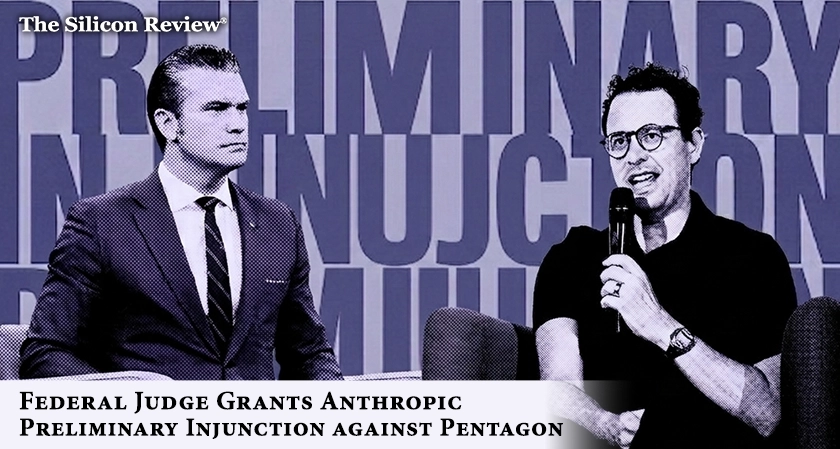
Anthropic’s injunction rocks the Pentagon’s AI playbook
You care about fair AI contracts because they set the rules for how public money fuels private models. The Anthropic injunction puts that question on center stage, forcing the Defense Department to pause a contested program and rethink how it buys safety tech. That fight is not abstract; it decides who shapes the safeguards that ride along with military AI. As someone who has watched procurement fights for years, I see this as a stress test for every vendor pushing the envelope. Anthropic injunction is now a signal flare for the industry.
Why this ruling matters
- The court’s pause pressures the Pentagon to document risk controls before signing checks.
- Competitors now have legal cover to demand transparent bidding instead of fast-tracking favorites.
- Congress gains a fresh case study on whether AI safety tools deserve special contracting lanes.
- Investors will read this as a timing risk for defense-focused AI startups.
Anthropic injunction reshapes defense AI oversight
Judges rarely interfere with defense timelines, so this stop order lands like a whistle from a referee halting play mid-drive. The court pointed to vague evaluation criteria and thin evidence that the program would actually reduce model misuse. That is a polite way of saying the paperwork looked rushed.
Here’s the thing. Agencies have leaned on “urgent need” to bypass normal bidding, but this case shows patience has limits when oversight is weak. The court signaled patience is thin.
I’d argue this is the first time an AI safety vendor forced the Pentagon to prove it can buy prudently, not just quickly.
The Defense Department now has to clarify how it measures bias mitigation, auditability, and fail-safes. Without that, every future award risks the same fate.
How the Anthropic injunction could ripple through industry
Can the Pentagon trust its current scorecards for model alignment? That rhetorical question will echo in boardrooms. Vendors pitching “trust and safety as a service” will need reproducible tests, not marketing decks. Think of it like a kitchen inspection: you must show the thermometer and the cleaning logs, not just the menu.
Investors in dual-use startups will price in legal delay. A program stall adds quarters to revenue timelines, which can spook funds that favor quick defense dollars. On the flip side, vendors with solid compliance playbooks gain leverage because they can survive the extra scrutiny.
Practical moves for AI contractors
- Publish validation methods that match NIST and ISO guidance so reviewers see repeatable evidence.
- Train capture teams to map risks to specific mission outcomes instead of broad “safety” claims.
- Document third-party audits and red-team results with clear remediation timelines.
- Plan for protest scenarios with legal budgets and alternative revenue streams.
If you treat procurement like a marathon, you hydrate early. That means building compliance muscle before the sprint to a final offer.
What the Trump-era program signals for policy
The administration tried to fast-walk AI safety tools into deployment, arguing urgency over process. This injunction suggests courts will not excuse thin process even when national security is invoked. Expect oversight committees to ask for clearer definitions of “trusted AI” and for Inspector General reviews to expand.
I also expect watchdog groups to cite this case when pushing for public disclosure of model testing artifacts. The more sunlight, the harder it is to hide sloppy evaluations.
Next steps for the Pentagon and vendors
The Defense Department must decide whether to appeal or rebuild the procurement from scratch. Rework seems wiser because an appeal risks cementing bad precedent if it fails. Vendors should prepare for revised requests that demand full lifecycle governance evidence.
Think of it like rebuilding a bridge after a stress test. You keep the span, but you reinforce every joint with measurable tolerances.
What I’ll watch next
Will this case trigger a standard playbook for AI safety contracts across agencies? If yes, we may see faster, cleaner awards later this year. If not, brace for more protests as rivals challenge any hint of favoritism.
Either way, the Anthropic injunction just raised the bar for transparency, and that is a healthy jolt for an industry that loves to move fast.