Anthropic IPO Voting Control: What Founders Want
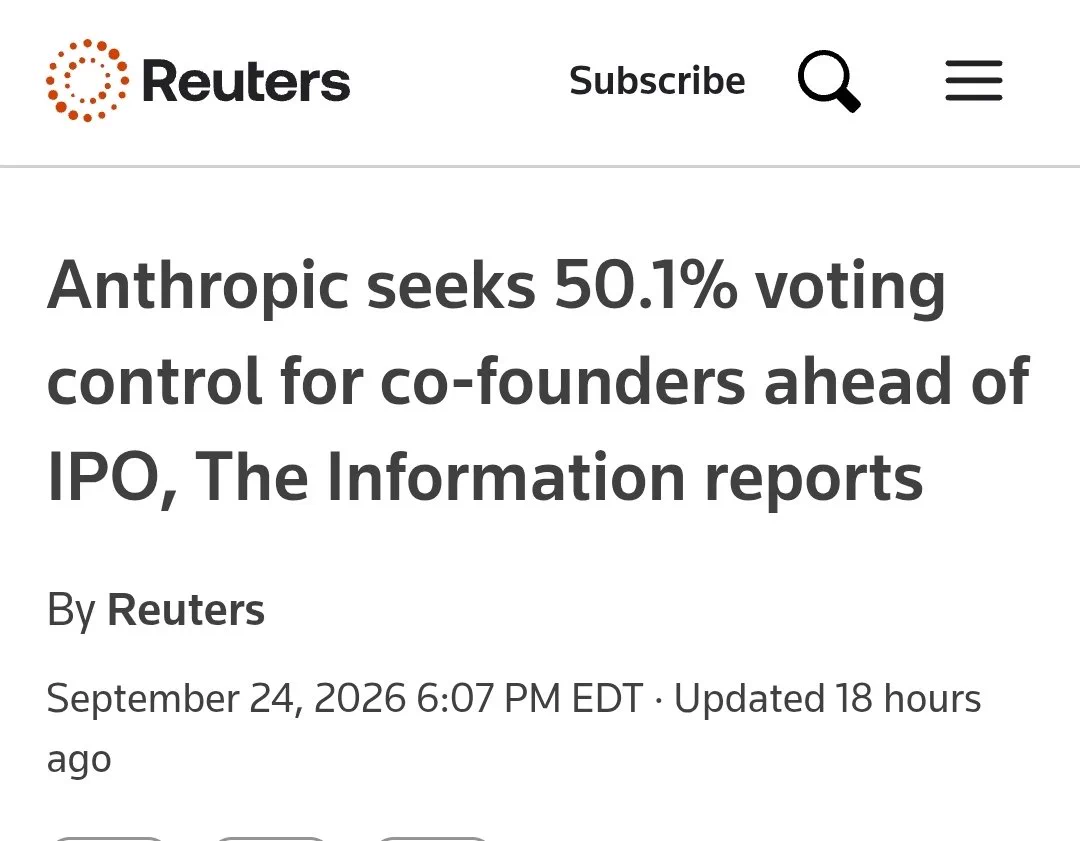
If you own AI stocks, work with Claude, or track the next wave of public tech listings, Anthropic IPO voting control should be on your radar. TechCrunch reported that Anthropic’s founders are seeking voting control ahead of a possible IPO, a move that could shape how the company answers to investors once it hits public markets. That matters now because AI companies are raising huge sums, signing deep cloud deals, and asking the public to trust them with systems that touch coding, search, customer support, and office work.
What Stands Out
- TechCrunch reports that Anthropic’s founders want voting power before a potential public listing.
- The move would echo dual-class structures used by firms such as Meta, Alphabet, and Snap.
- Founder control can protect a long-term AI safety strategy, but it can also weaken shareholder oversight.
- For Anthropic, the hard part is matching control with credible governance, not slogans.
Why Anthropic IPO Voting Control Matters
Founder control is not new in Silicon Valley. What makes this case sharper is the kind of company Anthropic has become: a major AI lab, a public benefit corporation, and a key supplier of enterprise AI through Claude.
According to TechCrunch, the founders are looking to secure voting control before an IPO. If that happens through a dual-class share structure, public investors may get economic exposure without much power over board elections, strategy, or leadership changes.
Control is the product.
That may sound blunt, but it is the real issue. In AI, voting rights affect more than quarterly targets. They can shape model release decisions, safety spending, defense contracts, cloud partnerships, and how aggressively a company chases revenue.
Founder voting power can steady a company under market pressure. It can also turn public investors into passengers, and that trade-off deserves plain language.
How Anthropic IPO Voting Control Could Work
The most common route is a dual-class share setup. Founders and early insiders hold shares with more votes per share, while public investors buy shares with fewer votes.
Meta is the obvious comparison. Mark Zuckerberg kept voting control through a share structure that let him steer the company through scandals, acquisitions, and massive product shifts. Alphabet used a similar model to shield long-term bets from Wall Street pressure.
Snap pushed the idea further by selling public shares with no voting rights at all in its 2017 IPO. Investors bought in anyway, but governance groups hated it. And they had a point: if you take public money, how much voice should public shareholders get?
Possible structures to watch
- High-vote founder shares: Founders receive shares with 10 votes, 20 votes, or more per share.
- Sunset clauses: Extra voting power expires after a set number of years or when founders leave the company.
- Mission-based triggers: Voting rights remain tied to safety or public benefit duties, though this is harder to enforce.
- Board protections: Independent directors gain authority over audits, compensation, safety, or conflict reviews.
The sunset clause is the one I would watch. If Anthropic asks investors for trust with no expiry date, that is a much bigger ask than founder control for, say, seven to ten years.
The Case for Founder Control at Anthropic
Here’s the thing: the pro-control argument is not silly. Anthropic was built around AI safety, constitutional AI methods, and a public benefit structure. If the company goes public, it will face pressure to grow revenue, cut losses, and prove that huge model-training costs can produce solid margins.
A standard public company structure can reward short-term thinking. Investors may push for faster releases, looser usage rules, or cheaper safety testing if those decisions raise near-term numbers. Founder voting power could help Anthropic resist that pressure.
Think of it like a restaurant with a strict head chef. The investors may want faster table turns, but the chef controls the kitchen because food safety and quality can collapse when speed becomes the only goal (and nobody enjoys the fallout).
In Anthropic’s case, that kitchen includes frontier model training, enterprise deployments, and relationships with Amazon and Google. One reckless decision can affect customers, regulators, and the wider AI market.
The Risk Behind Anthropic IPO Voting Control
Control cuts both ways. Founders can protect a mission, or they can protect themselves.
Public benefit status does not erase that risk. A company can say it serves broader stakeholders while still making decisions that investors cannot meaningfully challenge. If voting power sits with a small founder group, the board needs real independence and clear authority.
Investors should ask a few hard questions before buying any future Anthropic listing:
- Who holds the high-vote shares? Is control spread across multiple founders, or concentrated in one person?
- What ends the arrangement? Does voting power expire after time, death, departure, or a sale?
- How independent is the board? Names matter less than actual committee power.
- What safety disclosures will investors get? Vague mission language is not enough.
- Can shareholders vote on major governance changes? If not, the structure is unusually tight.
Honestly, public investors should not accept “trust us” as a governance model. Anthropic may have a stronger safety culture than many rivals, but culture changes when billions of dollars and public-market expectations enter the room.
What This Means for AI Startups and Investors
If Anthropic pulls this off, other AI companies will take notes. OpenAI has already wrestled with its own governance drama, including the 2023 board crisis that briefly removed Sam Altman before his return. That episode showed how fragile AI governance can be when mission, money, and power collide.
Public markets are also learning how to price AI companies. Chip suppliers, cloud providers, and software firms have already seen the upside. Pure AI labs are trickier because training costs are heavy, competition is fierce, and regulation remains unsettled.
So what should investors value more: founder stability or shareholder power?
There is no clean answer. But the better IPO candidates will spell out the trade-off before the roadshow, not bury it in legal language. Anthropic has a chance to set a higher bar if it explains who controls what, why that control exists, and how outsiders can hold leaders accountable.
The Governance Bar Anthropic Has to Clear
Anthropic can make a credible case for founder voting control only if it pairs power with limits. That means sunset provisions, independent safety oversight, clear investor reporting, and board committees that can challenge management.
TechCrunch’s report puts the issue in public view before any IPO paperwork lands. Good. Investors, customers, and policymakers should press for specifics now, while the structure is still being shaped.
If Anthropic wants public money and private control, the next move is simple: show the receipts before Wall Street is asked to applaud.


