Anthropic Model Progress on the Collatz Problem
AI keeps getting sold as a shortcut to hard thinking, but most of the claims crumble once you look closely. That is why the latest report about an Anthropic model making progress on the Collatz problem matters. The Collatz conjecture is one of math’s famous unsolved puzzles, and even modest progress can tell you something real about what current models can do. Or cannot do.
For people who follow AI, this is not just another flashy benchmark story. It asks a sharper question. Can a model do more than imitate proof language and actually help with open mathematical work? That distinction matters because math is a brutal test of reasoning, patience, and error control. If a system can contribute here, even in a narrow way, you should care.
But you should also keep your feet on the ground. One reported result does not mean the machine has become a mathematician. It does mean the field is inching into stranger territory.
What stands out about the Anthropic model result
- The claim centers on an unreleased Anthropic model, not a public product.
- The target was the Collatz conjecture, a problem with a deceptively simple setup and no known proof.
- Any progress on an open math problem is unusual, because these problems punish shallow pattern matching.
- The result suggests models may help with search, hypothesis testing, or proof exploration.
- It does not mean the model solved the conjecture.
Why the Collatz problem is such a hard test
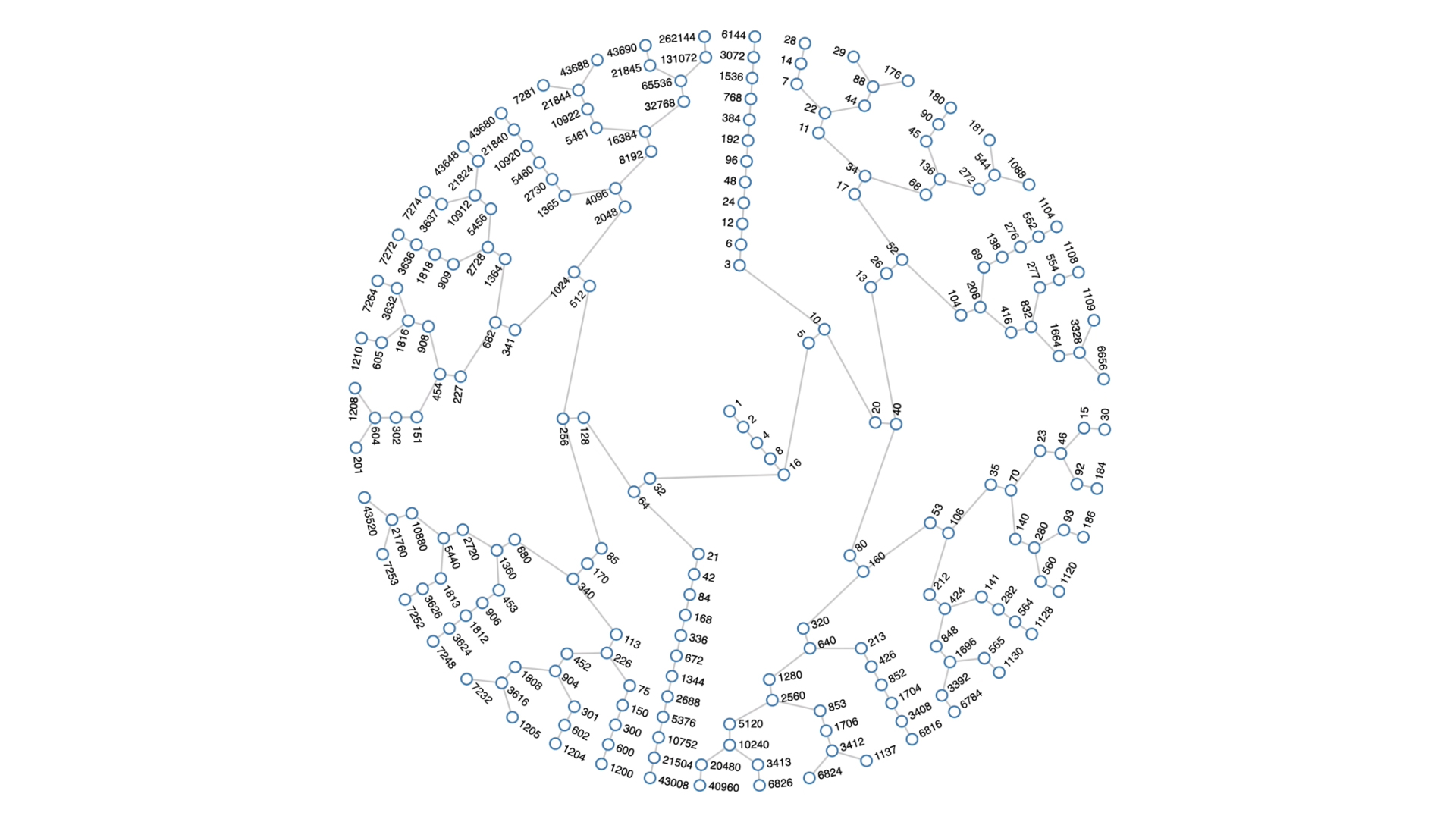
The Collatz conjecture is easy to state. Take any positive integer. If it is even, divide by 2. If it is odd, multiply by 3 and add 1. Repeat. The conjecture says every starting number eventually reaches 1. Simple on paper. Sticky in practice. Why has no one proved it yet?
Because the sequence behaves like a messy machine with rules that look orderly but refuse to settle into a clean proof. Mathematicians have checked enormous ranges of numbers by computer, and the conjecture still holds. That kind of brute-force testing is useful, but it is not a proof. A proof has to cover every case, including the ones you do not expect.
“A model that helps on Collatz is interesting because it is working at the boundary between pattern recognition and real reasoning.”
How an AI model can help with open math
Look, models are not magic theorem engines. But they can still be useful in a few narrow ways. Think of them like a very fast assistant in a workshop. They can hand you tools, sort parts, and spot obvious mistakes. They cannot, by themselves, build the whole house.
- Search. A model can explore many candidate steps faster than a human.
- Pattern generation. It can suggest structures that a researcher may not have tried.
- Error spotting. It can catch weak links in a draft argument.
- Compression. It may help restate a complex idea in a cleaner form.
That last point matters more than people think. In math, a useful insight is often not a new giant leap. It is a cleaner view of the same terrain. A model that helps you see the terrain differently can still save real time.
What this does not prove about AI reasoning
One strong result does not settle the bigger debate about AI reasoning. Models can look impressive on tasks that reward fluent exploration, then fall apart when the task demands airtight logic. That tension is still here.
And the unreleased part matters. If the model is private, the public cannot test the claim, inspect the setup, or check how much human guidance shaped the outcome. Without that context, the result is a signal, not a verdict.
Do you want a true measure of progress? Then ask whether the model can help researchers find new lemmas, reduce dead ends, or generate leads that survive expert review. That is a tougher bar than sounding smart.
Why researchers should care anyway
Even with the caveats, this kind of result is worth attention. Math is a clean proving ground because the rules are strict and the feedback is unforgiving. If a model can contribute here, it may also help in adjacent work, like formal verification, code correctness, and symbolic search.
But the payoff will probably look more like collaboration than replacement. The best systems may act like a high-speed junior researcher with terrible taste but decent stamina. Useful? Yes. Reliable on its own? Not yet.
The real story is not that AI cracked a famous problem. It is that the gap between language fluency and useful reasoning may be narrower than many skeptics assumed. Narrower, not gone.
What to watch next with Anthropic model progress
- Whether Anthropic publishes technical details or benchmarks.
- Whether independent mathematicians can reproduce the result.
- Whether the model helps with other open problems, not just one headline case.
- Whether the gains come from better search, better prompting, or actual reasoning improvements.
That distinction will matter. A lot. If the progress comes from better scaffolding around the model, then the real advance is in the system, not the model alone. If the model itself has stronger mathematical search behavior, that is a bigger deal.
For now, the sensible read is restrained optimism. The model did something notable, but the field still needs proof, replication, and far less swagger. The next real test is simple: can it keep helping when the problem stops being famous?