Anthropic Share Access Warning Explained
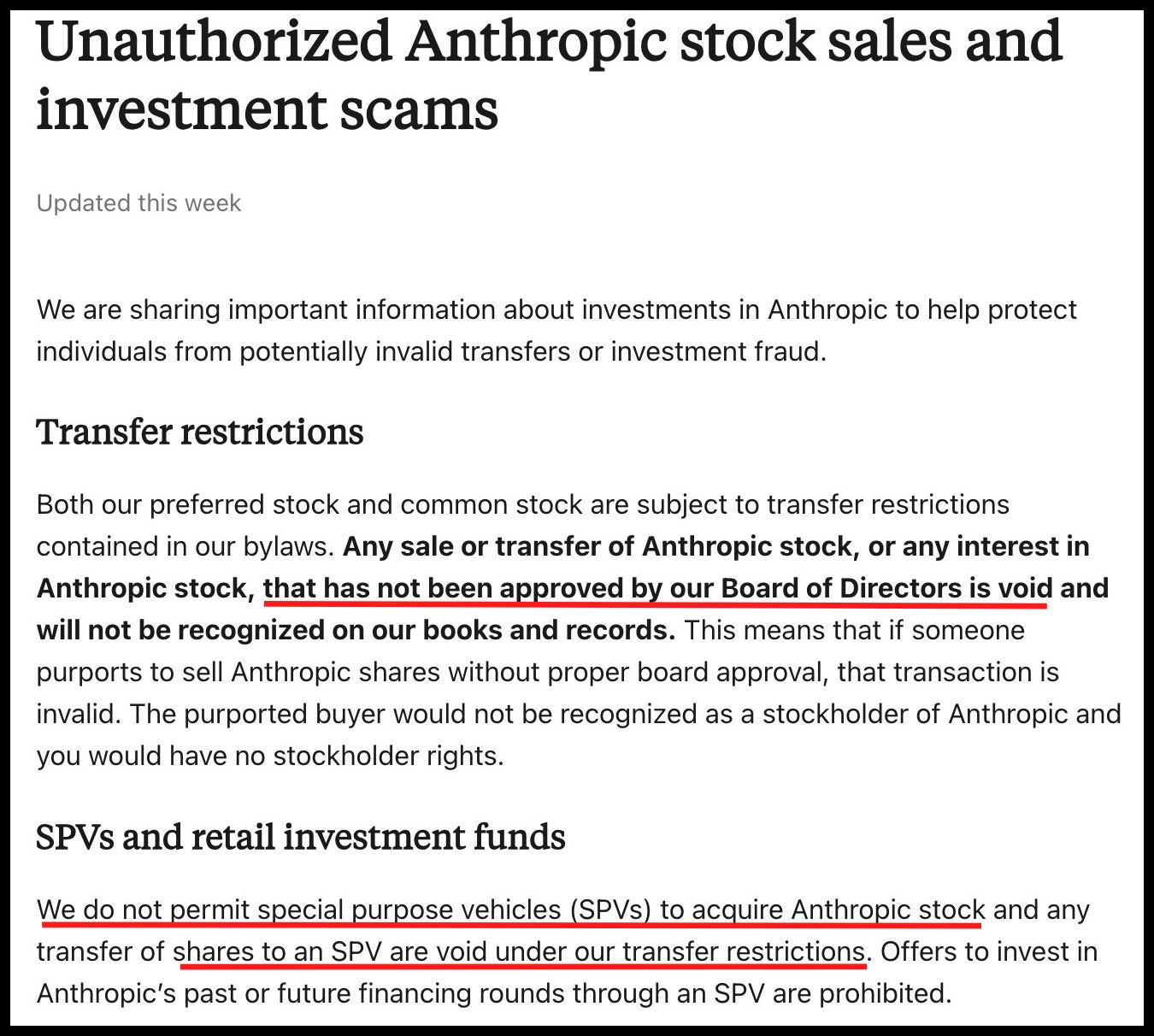
If you have been looking for a way to buy into hot private AI companies, you have probably seen marketplaces or special purpose vehicles that promise early access. That pitch gets attention fast, especially around Anthropic. But an Anthropic share access warning changes the picture. The company has reportedly told investors to be careful with secondary platforms offering exposure to its shares, which matters because private stock deals can look cleaner on the surface than they really are.
Private company share sales sit in a gray zone for many retail and smaller institutional buyers. Access is limited. Terms vary. And the thing being sold is not always a direct stake in the company. If you are trying to judge whether one of these offers is real, overpriced, or restricted, you need the fine print, not the hype.
What stands out here
- Anthropic is pushing back on platforms that claim to offer access to its private shares.
- Many secondary deals involve indirect exposure through SPVs or intermediaries, not direct ownership.
- Transfer restrictions and company approval rights can block or complicate a sale.
- Hot AI names attract speculative pricing, which can leave late buyers holding expensive paper.
Why the Anthropic share access warning matters
Anthropic is one of the most watched private AI companies in the market, so any mention of its stock tends to pull in demand. That makes it a prime target for secondary deal marketing. Look, the issue is not that every private share listing is fake. The issue is that some offers can be incomplete, loosely described, or structured in ways that leave buyers with less than they think they are getting.
Private company stock is not like buying a listed tech share through a brokerage account. A transfer may require company approval. Existing investors may hold rights of first refusal. And the seller may not even own unrestricted shares they can freely move. That is where the risk spikes.
In private markets, access is often the product being sold. Ownership terms are the part too many buyers skim.
How secondary platforms usually offer Anthropic share access
There are a few common paths. Some are legitimate in structure. Some deserve a harder look.
- Direct secondary sale. An existing shareholder sells shares to a new buyer, subject to company rules and transfer terms.
- SPV access. Investors buy into a special purpose vehicle that holds, or aims to hold, shares. You may own a slice of the vehicle, not the underlying shares.
- Forward contracts or contingent rights. Buyers pay now for a future claim if shares become transferable later.
That distinction matters more than the sales pitch. Buying an SPV tied to a private company is a little like buying a seat reservation for a sold-out game. You might get in. You might get moved. You might find the seat is not where you thought.
That is the real trap.
What investors should ask before buying Anthropic share access
If a platform says it can get you exposure to Anthropic, slow down and ask direct questions. Honestly, if the answers come back vague, that tells you plenty.
1. Is this direct ownership or indirect exposure?
Ask whether you will hold actual Anthropic shares in your name, a fund interest, or an SPV interest. Each structure changes your rights, fees, liquidity, and tax treatment.
2. Has the company approved the transfer?
Many private firms control transfers tightly. If approval has not happened, the offer may depend on a future event that never lands.
3. What rights come with the position?
Do you get information rights, voting rights, pro rata rights, or nothing beyond economic exposure? In many cases, the answer is far less than buyers expect.
4. What is the markup?
Secondary platforms and intermediaries often add fees or price premiums. In a frothy AI market, that premium can get silly fast.
5. What happens if there is no liquidity event soon?
Can you resell the position? Are you locked in for years? What if Anthropic delays an IPO or stays private through another funding cycle?
The bigger market context behind the Anthropic share access warning
This is not happening in a vacuum. Demand for elite AI exposure has outpaced supply for months, and maybe longer by the time you read this. Companies like Anthropic, OpenAI, and xAI sit at the center of that frenzy because public market investors cannot easily buy them outright.
So what happens? Intermediaries step in. They package access, promise scarcity, and let fear of missing out do the rest. I have covered private tech markets long enough to know this pattern well. Late-stage private stock can be a smart buy, but only when the structure is clean and the valuation is sane. Those two things do not always show up together.
And in AI, prices can detach from fundamentals with alarming speed.
What TechCrunch’s report suggests
According to TechCrunch, Anthropic warned investors against secondary platforms offering access to its shares. That kind of pushback usually signals one of two things, and sometimes both. First, the company may not want unauthorized or loosely controlled share marketing around its cap table. Second, it may believe buyers are getting an unclear picture of what they are being offered.
Either way, the message is plain. If you see Anthropic exposure for sale on a private marketplace, treat the listing as the start of your work, not the end of it.
How to evaluate private AI stock offers without getting burned
- Read the structure first. Start with the legal form of the offering before you look at the brand name.
- Verify transfer rules. Ask for documents that show whether a transfer is allowed and under what conditions.
- Check fees and carry. Layered costs can eat returns even if the company performs well.
- Compare valuation references. A stale funding round or thin secondary trade is not a clean price anchor.
- Use counsel for larger checks. A securities lawyer or experienced private markets adviser can spot weak terms fast.
One more thing. Ask yourself a basic question that gets ignored in bull runs. Are you buying a great company, or are you buying a story about access to a great company?
What this means for the private AI market
The Anthropic share access warning is really a stress signal for the broader secondary market in AI. Demand is real. So is the temptation to package that demand in ways that blur who owns what. Expect more companies to tighten transfer controls, monitor marketplace listings, and push back when third parties overstate access.
That may frustrate buyers who want in before an IPO. But it is probably healthy. Private markets work better when the plumbing is visible, the rights are clear, and the markup is not hidden behind buzz.
Where smart buyers go from here
If you want exposure to private AI leaders, patience may be your best asset. Wait for verified transactions. Press for documents. And if a listing leans too hard on scarcity and too little on structure, walk away.
The next phase of AI investing will reward discipline more than speed. That is a better market, even if it feels less exciting.