Arena’s $3.1B Valuation Tests the AI Benchmark Boom
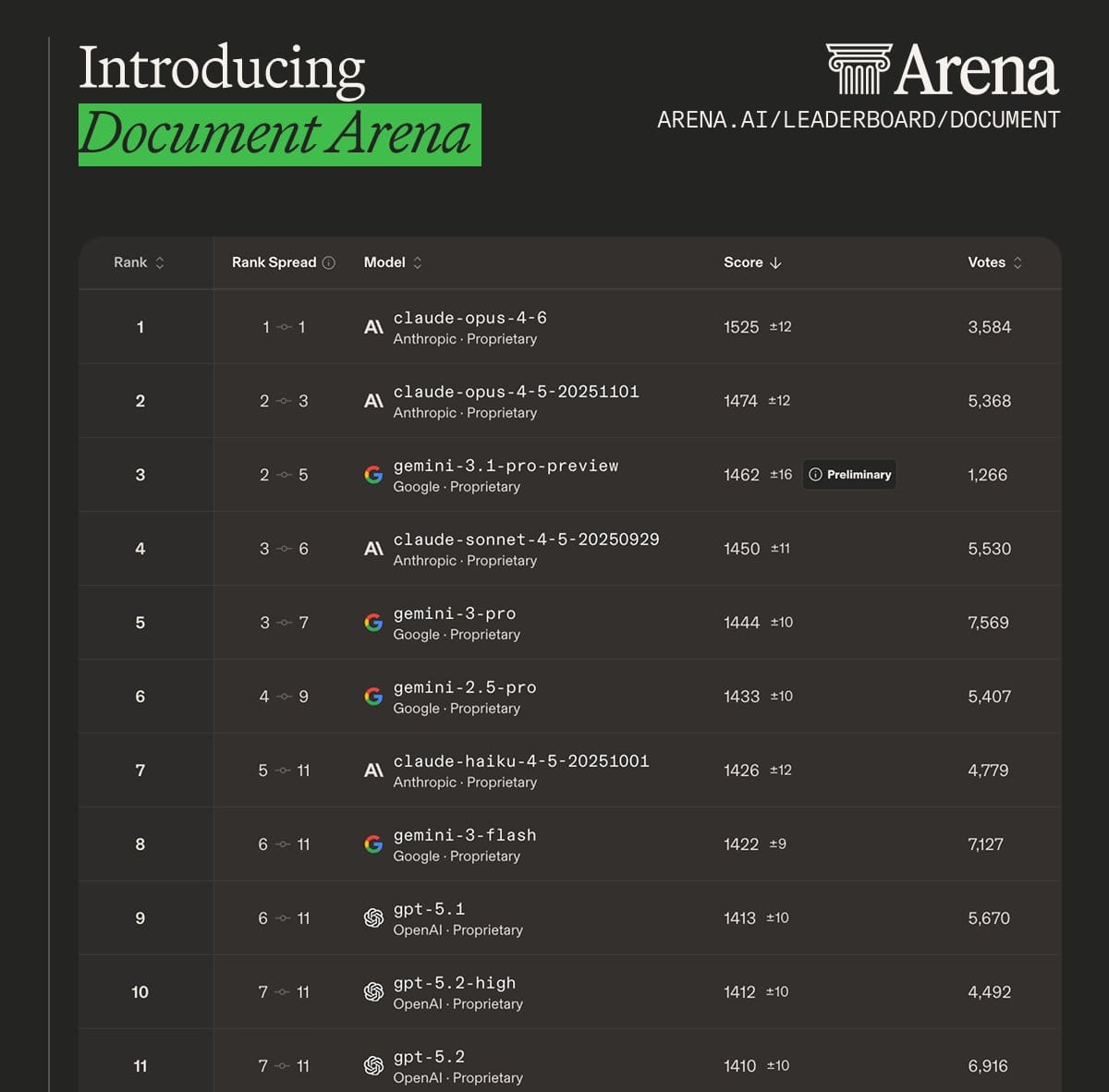
You rely on AI benchmarks to cut through noise, but the noise has started selling picks and shovels. Arena, the company behind a popular AI leaderboard, has nearly doubled its valuation to $3.1 billion in 10 months, according to TechCrunch. That makes the Arena AI leaderboard more than a scoreboard. It is becoming infrastructure for how investors, developers, and buyers judge model quality.
That matters because model choice is no longer a parlor debate. Enterprises are comparing OpenAI, Anthropic, Google, Meta, Mistral, xAI, and open-source models for real workloads. A leaderboard can shape procurement, press coverage, and product roadmaps. But here is the hard question. If the referee becomes a multibillion-dollar company, how much trust does the game still deserve?
What stands out
- Arena’s reported valuation reached $3.1 billion, nearly double its level from 10 months earlier.
- The Arena AI leaderboard sits at the center of a bigger fight over trusted model evaluation.
- Leaderboards are useful, but they can reward crowd preference over task-specific performance.
- Enterprise buyers still need private tests using their own data, risk rules, and latency targets.
- The benchmark market is starting to look like a new layer of AI infrastructure.
Why the Arena AI leaderboard matters now
The Arena AI leaderboard became popular because it offered something simple. Users compare two anonymous model responses and vote for the better one. Over time, those votes produce rankings that many people treat as a signal of model quality.
That format has a clear strength. It captures human preference, not just performance on a static exam. If a chatbot gives a warmer, clearer, or more useful answer, people can reward it.
But preference is slippery.
A model can win a head-to-head test by sounding confident, writing longer answers, or matching a voter’s style. That does not mean it is better at legal review, medical summarization, code migration, customer support triage, or compliance-heavy work. Like judging a basketball player only by free throws, the metric is real, but the picture is incomplete.
A leaderboard can tell you which model people prefer in a controlled arena. It cannot tell you which model will survive your messy production stack.
What a $3.1B valuation says about AI evaluation
Arena’s reported jump to a $3.1 billion valuation shows how much pressure has built around AI evaluation. Models are improving fast, marketing claims are hard to verify, and enterprise buyers need a way to compare systems without trusting vendor decks.
That creates a business opening. Evaluation platforms can sell testing tools, data infrastructure, analytics, and decision support. They can become the measuring tape for a market where every vendor claims to be faster, cheaper, smarter, or safer.
Look, this is not strange. Every major technology wave creates measurement companies. Cloud computing had cost monitoring and uptime tools. Cybersecurity has independent labs and threat scoring. AI now needs its own audit layer, but the stakes are higher because models produce answers that can be persuasive and wrong at the same time.
Where the Arena AI leaderboard helps, and where it falls short
The Arena AI leaderboard is most useful as a directional signal. It can show momentum, reveal strong general-purpose models, and expose changes in user taste. For developers, it is a fast way to see which models deserve a closer look.
For serious buying decisions, though, you need more than a public rank. You need evaluation that matches your actual use case.
Use public rankings for shortlisting
A leaderboard can help you narrow the field. If a model consistently performs well across public comparisons, it probably deserves a pilot. If it lags badly, ask why before spending engineering time.
Test with your own data
Your internal documents, support tickets, codebase, product catalog, or contract language will expose problems public tests miss. This is where many polished models stumble. They may be smooth in general chat and brittle in your domain.
Measure the boring stuff
Accuracy matters, but so do latency, cost per task, refusal behavior, context handling, tool use, data retention, and failure recovery. These decide whether a model works in production.
- Define the task you need the model to perform.
- Create a test set from real examples, with sensitive data removed where needed.
- Score outputs against a written rubric.
- Track cost, speed, and error types.
- Repeat tests after model updates, because rankings can shift fast.
The trust problem hiding inside AI leaderboards
Once an AI leaderboard becomes influential, incentives get complicated. Model companies want higher rankings. Users want clear winners. Investors want growth. The leaderboard operator needs revenue. Those pressures do not automatically corrupt results, but they do demand transparency.
The questions are practical. Who supplies the prompts? How are votes filtered? Are model providers paying customers? Are sponsored tests labeled? How often do rankings change after model updates? Can outside researchers inspect the method?
Honestly, the AI industry has been too casual about benchmarks. We have seen models trained against public tests, eval sets that leak into training data, and claims that hold up poorly under domain-specific review. The market needs trusted evaluators, but trust is earned through boring governance, not slick charts.
How buyers should read the Arena AI leaderboard
If you are choosing an AI model, treat the Arena AI leaderboard as one input. Not the gospel. A high ranking should start your evaluation, not end it.
Use it to form hypotheses. Then break those hypotheses with your own tests. Ask whether the top-ranked model is still best when prompts are longer, context is noisy, answers need citations, or the task requires tool calls. What happens when users ask ambiguous questions?
A practical buying scorecard should include:
- Task accuracy: Does the model produce correct answers for your actual workload?
- Reliability: Does performance hold across edge cases and repeated runs?
- Cost: What is the full price after tokens, routing, storage, and monitoring?
- Latency: Can it respond fast enough for your product or internal team?
- Security: What happens to your data, prompts, logs, and outputs?
- Governance: Can you audit decisions and explain failures?
Arena AI leaderboard and the next phase of model competition
The leaderboard race is moving beyond bragging rights. If Arena turns its visibility into enterprise products, it could become a serious player in AI procurement and monitoring. That would put it closer to a ratings agency, testing lab, and developer platform rolled into one.
That also raises the bar. A company valued at $3.1 billion cannot act like a casual community project forever. It will need clearer methodology, better safeguards against gaming, and deeper tests for industry-specific tasks.
And rivals will come. Expect more evaluation startups, more open benchmark suites, and more in-house testing by large enterprises. Regulators may also take interest as AI systems enter finance, healthcare, education, and hiring.
The smart move from here
Arena’s valuation tells you the market wants a trusted scoreboard for AI. I think that demand is real. But the winning evaluation company will not be the one with the flashiest ranking. It will be the one that helps you answer a plain question: which model should you trust with this job, under these constraints, at this price?
If you use the Arena AI leaderboard, use it with discipline. Shortlist from it, question it, and test against your own reality. The next phase of AI will not be won by the model that looks best on a public chart. It will be won by the one that keeps working after the demo ends.


