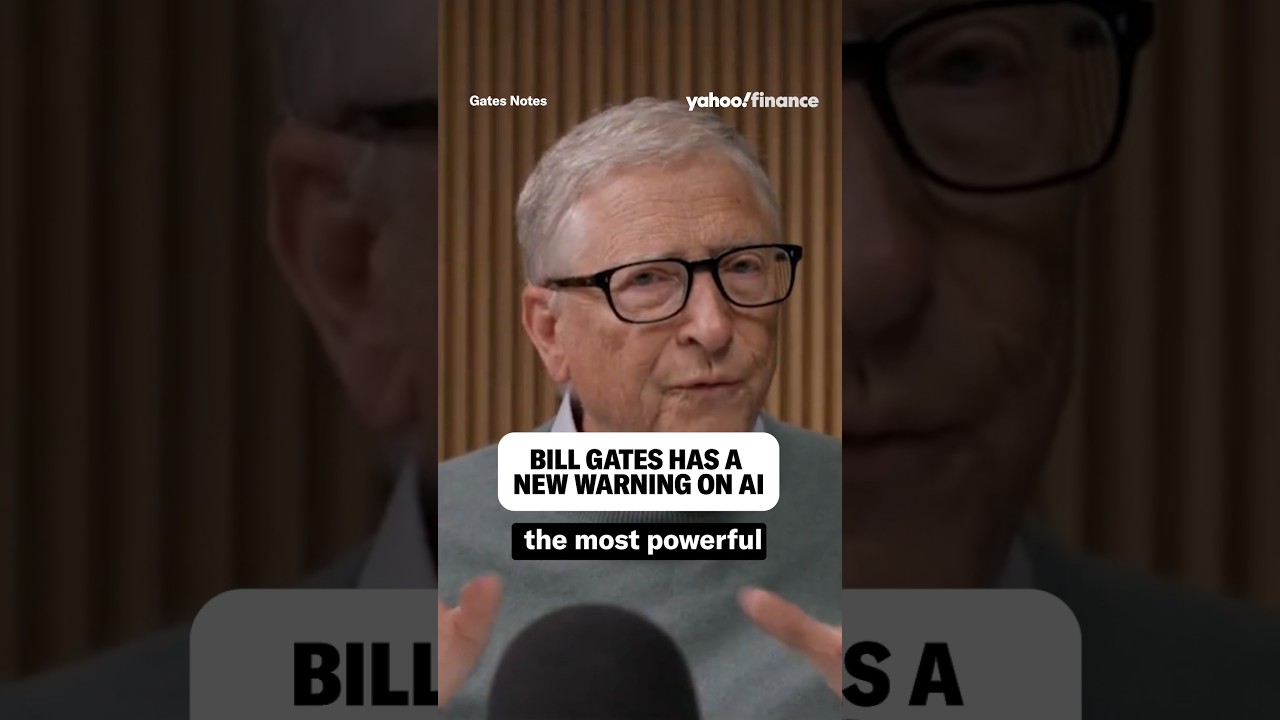
Bill Gates AI Warning: The Problem and the Prescription
Bill Gates has a familiar message about AI, and it matters because the stakes keep climbing. The Bill Gates AI warning is not about stopping progress. It is about what happens when a powerful tool spreads faster than the rules, the training, and the judgment needed to use it well. That gap is already visible in workplaces, schools, and customer service systems that push answers before they are ready. So the real question is simple. Are we treating AI like a product launch, or like infrastructure that can shape decisions at scale?
Look, this is where the hype gets sloppy. AI can save time, cut routine work, and surface useful patterns. But it can also produce confident nonsense, amplify bad data, and make weak processes look modern. Gates is pointing at that tension. And if you run a team, ignore it at your own risk.
- The risk is not abstract. Bad outputs can move into real decisions fast.
- Quality control matters more than model size. A bigger system still makes mistakes.
- Human review stays non-negotiable for high-stakes work.
- Speed without guardrails usually creates cleanup work later.
What is the Bill Gates AI warning really about?
The core of the Bill Gates AI warning is that AI adoption is outrunning judgment. Companies see a chance to cut costs or move faster, then they plug a model into support, search, drafting, or analysis and assume the job is done. It is not. A language model is more like a junior analyst than an all-knowing expert. It can be useful, but it needs supervision, context, and a clear job description.
That distinction matters because AI systems do not know when they are wrong. They generate plausible text based on patterns in training data. If your workflow rewards speed over verification, the system will happily feed you polished errors.
AI does not replace accountability. It just changes where the mistakes show up.
Why the fix is harder than the diagnosis
Gates can point to the problem, but fixing it takes boring work. Policies, testing, access controls, and review steps are not glamorous, which is exactly why teams skip them. Then they end up with an AI rollout that looks slick in the demo and messy in practice. Ever seen a kitchen where the new equipment is perfect, but nobody trained the staff? Same idea.
There are three common failure points:
- Bad inputs. If your source data is thin or biased, the output will reflect that.
- Weak oversight. No one checks the answer before it reaches a user.
- Vague purpose. Teams use AI because they can, not because they defined the task clearly.
Where companies should be stricter
High-stakes settings need tighter rules. Health, finance, legal work, hiring, and public services are obvious examples. But low-stakes systems can cause damage too, especially when they shape customer trust or internal decisions. A chatbot that gives a bad refund policy or a faulty sales summary can waste time and money fast.
And the fix is not to ban the tools. It is to set boundaries. Use AI for drafting, sorting, summarizing, and pattern-finding. Keep humans in charge of final calls, especially when the cost of a mistake is real.
How the Bill Gates AI warning applies to your team
If you want a practical response to the Bill Gates AI warning, start with the workflow, not the model. Ask where AI adds value and where it creates exposure. Then make the rules explicit. Who approves the output? What gets checked? What gets logged? What gets blocked?
That approach is less flashy than buying the newest model, but it works better. Treat AI like building code, not interior decor. You do not decorate a house before the foundation is set.
A simple rollout checklist
- Pick one task with clear limits.
- Define the acceptable error rate.
- Require human review for edge cases.
- Track failures and update prompts or rules.
- Train staff on what the system can and cannot do.
That last step gets ignored too often. A tool is only as disciplined as the people using it. If your team thinks AI is a magic wand, the mistakes will stack up.
What this means for AI in the next phase
The next phase of AI will not be decided by bigger demos. It will be decided by trust. Users will stick with systems that are accurate, transparent, and easy to challenge. They will ditch tools that waste time or break things. That is why the serious companies are moving toward evaluation, audit trails, and narrower use cases instead of wild promises.
Maybe that sounds less exciting than a total reinvention of work. Fine. But dependable systems usually win. The companies that treat AI as a disciplined utility will outlast the ones chasing headlines.
What happens when the novelty fades and the errors still remain?
What to watch next
Keep an eye on how leaders talk about verification, not just adoption. Watch whether they fund human review, testing, and governance, or only model subscriptions and marketing. That split tells you everything. If the money goes only to speed, the Bill Gates AI warning is already being proved right.
For your own team, the next move is clear. Pick one AI use case, tighten the guardrails, and measure the misses. Then decide whether the tool is saving time or just making problems look efficient.