California Heat Wave Safety Guide
Extreme heat can turn an ordinary week into a health risk fast, especially if you work outside, commute long distances, or live in a place that traps heat after sunset. This California heat wave safety guide gives you the basics that matter most right now: how to protect yourself, when conditions become dangerous, and what to do before your home or routine starts working against you. Heat is not a minor inconvenience. According to the U.S. Centers for Disease Control and Prevention, extreme heat causes hundreds of deaths each year in the United States, and many cases are preventable. If the forecast is climbing and staying there, you need a plan before the hottest part of the day hits.
What to do first
- Drink water early and often, not only when you feel thirsty.
- Avoid outdoor activity in peak afternoon heat when possible.
- Check on older adults, children, and neighbors who may not have reliable cooling.
- Never leave kids or pets in a car, even for a short stop.
- Know the signs of heat exhaustion and heat stroke so you can act fast.
Why a California heat wave safety guide matters
California heat is not one-size-fits-all. The Central Valley, inland Southern California, and desert areas can post punishing daytime highs, while some urban neighborhoods hold heat deep into the night. That last part matters more than people think. If your body never gets a cooler overnight break, stress builds day after day.
Look, heat risk is a lot like a long road game in August. You do not fall apart in the first quarter. Problems stack up. Dehydration, poor sleep, hot indoor air, and physical effort can push a manageable day into a dangerous one.
“High temperatures kill more people on average than any other weather hazard,” the National Weather Service has warned in public heat safety guidance.
California heat wave safety guide for your body
How much water do you need?
Start drinking before you feel dried out. If you are sweating, walking long distances, working outdoors, or spending time in non-air-conditioned spaces, your water needs rise. The exact amount varies by age, body size, activity level, and medical conditions, but the rule is simple. Sip consistently through the day.
And if you lose a lot of sweat, consider drinks or foods that help replace electrolytes. But skip heavy alcohol use in extreme heat. It can make dehydration worse.
What are the warning signs?
Heat exhaustion often shows up as heavy sweating, weakness, dizziness, nausea, headache, cool or clammy skin, and muscle cramps. Move to a cooler place, loosen clothing, and sip water.
Heat stroke is a medical emergency. Warning signs can include confusion, fainting, a body temperature above 103 degrees Fahrenheit, hot red skin, or loss of consciousness. Call 911 right away.
Fast matters.
How to keep your home safer during extreme heat
If you have air conditioning, use it strategically. Close blinds and curtains during the brightest hours. Run major heat-producing appliances, such as ovens and dryers, later in the evening if you can. Seal obvious drafts around doors and older windows. Small fixes help.
If you do not have air conditioning, focus on limiting heat gain during the day and using cooler night air when outdoor conditions improve. Fans can help, but the CDC notes that fans alone may not prevent heat-related illness when temperatures are very high. That is where public cooling centers, libraries, malls, and community buildings can become non-negotiable options.
Simple steps that lower indoor heat
- Shut blinds on sun-facing windows by late morning.
- Use stovetops and ovens less during heat spikes.
- Turn off unnecessary lights and electronics.
- Sleep in the coolest room available.
- Leave for a cooling center if indoor temperatures stay unsafe.
California heat wave safety guide for travel, work, and pets
Driving in dangerous heat
Cars become ovens fast. The National Highway Traffic Safety Administration has long warned that cabin temperatures can rise sharply within minutes, even with windows cracked. Keep water in the car, but do not store temperature-sensitive medication there. Check tire pressure too, because heat can stress tires during long drives.
What if your car breaks down on a scorching road? Pull over safely, call for help, and conserve your energy. If you have cell service, use it early.
Outdoor work and exercise
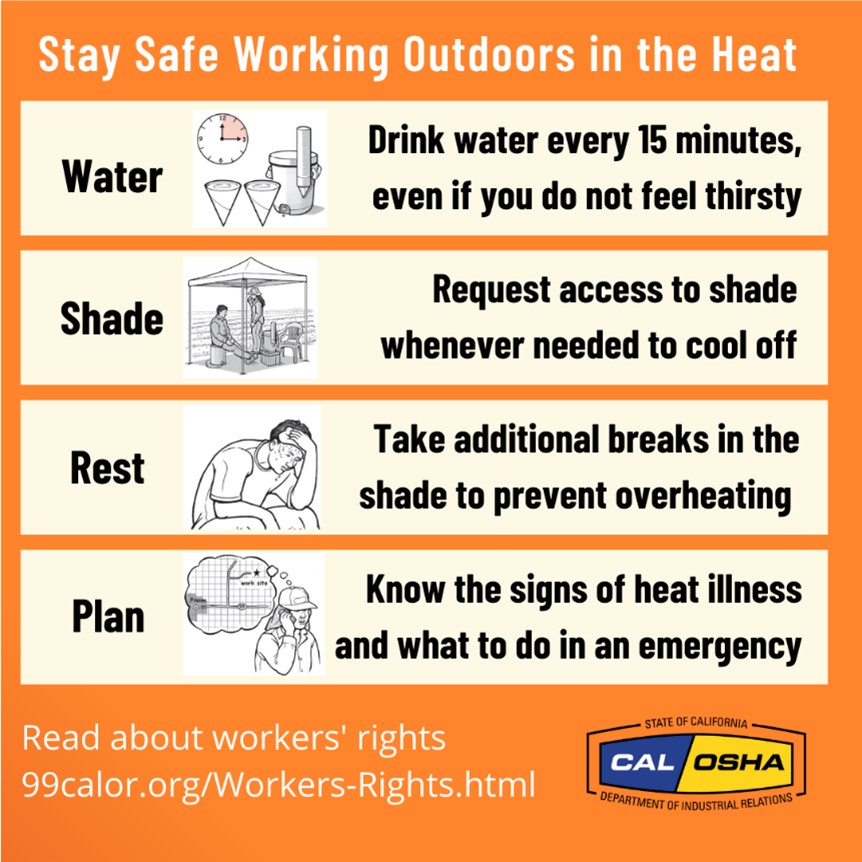
If your job keeps you outside, shift tasks to early morning where possible. Take rest breaks in shade or air conditioning. Wear light, loose clothing and a hat when appropriate. California employers also face heat illness prevention rules for outdoor workers through Cal/OSHA, including access to water, shade, and rest.
Exercise can wait. Honestly, this is where people make avoidable mistakes. A hard run at 4 p.m. during a heat wave is like trying to sear fish in a pan that is already smoking. The margin for error disappears.
Pets need a heat plan too
Dogs and cats overheat faster than many owners realize. Make sure they have shade, cool water, and indoor relief during the hottest hours. Walk dogs early or after sunset, and test pavement with your hand. If it is too hot for you, it is too hot for paws.
Who faces the highest heat risk?
Some groups face sharper danger in a heat wave. Older adults, infants, pregnant people, people with chronic illness, outdoor workers, unhoused residents, and households without reliable cooling are at higher risk. So are people taking medications that affect hydration or body temperature regulation.
This is where a smart heat plan becomes community work, not only personal work. Check in with one or two people. A quick text or knock on the door can matter more than another weather app alert.
How to follow a heat alert without getting lost in jargon
Weather alerts can sound technical, but the basic question is easy. How hot will it get, and for how long? A short burst of heat is one thing. Several days of high temperatures, especially with warm nights, is where strain grows.
Use trusted sources such as the National Weather Service, your county public health department, and local emergency management updates. Local reporting also helps because it often includes cooling center locations, school schedule changes, and road or utility impacts tied to the heat event referenced by Fresno-area coverage.
The best heat plan is boring on purpose. Water. Shade. Rest. Cooler indoor air. Repeat.
Before the next hot spell hits
A solid California heat wave safety guide is only useful if you act before the temperature peaks. Stock water. Test your air conditioner or fan setup. Save local cooling center information on your phone. And make a short contact list for family or neighbors who may need a check-in.
Heat waves are getting harder to shrug off across many parts of California. The people who do best are usually the ones who treat extreme heat as a real hazard, not background weather. The next hot week is coming. Are you set up for it?