ChatGPT Visual Ads: OpenAI’s Next Revenue Test
If you use ChatGPT to research products, compare services, or plan purchases, ads may soon become part of that experience. ChatGPT visual ads are now a serious question after The Verge reported signs that OpenAI is exploring ad formats inside its chatbot experience. That matters because ChatGPT is no longer a novelty box for prompts. It is becoming a search tool, shopping assistant, writing partner, and customer support layer. If paid placements enter that flow, the line between advice and advertising gets thinner. OpenAI needs more revenue to support costly AI infrastructure, but users need clarity. Is the chatbot recommending something because it is useful, or because someone paid for the slot?
What Stands Out
- OpenAI appears to be testing or preparing ad-related features, according to reporting from The Verge.
- Visual ads could fit naturally into shopping, travel, local search, and product research chats.
- The main risk is trust. ChatGPT must separate paid placement from organic answers.
- Advertisers may love the intent signals, but regulators will watch disclosure closely.
- Users should expect AI assistants to feel more commercial as companies chase revenue.
Why ChatGPT Visual Ads Make Business Sense
OpenAI has a simple problem with a hard edge. Running large AI models costs serious money, and subscriptions alone may not cover the scale the company wants.
Ads offer a familiar answer. Google built a giant business by matching intent with sponsored results, and ChatGPT may sit even closer to intent because people ask it full questions, not clipped keyword strings.
Ads inside ChatGPT would not be a side business. They would change how people judge every answer the system gives.
Look at a basic prompt like, “What laptop should I buy for video editing under $1,500?” That is not idle browsing. That is a hot buying signal, and brands will pay to appear in that moment if OpenAI lets them.
How ChatGPT Visual Ads Could Actually Look
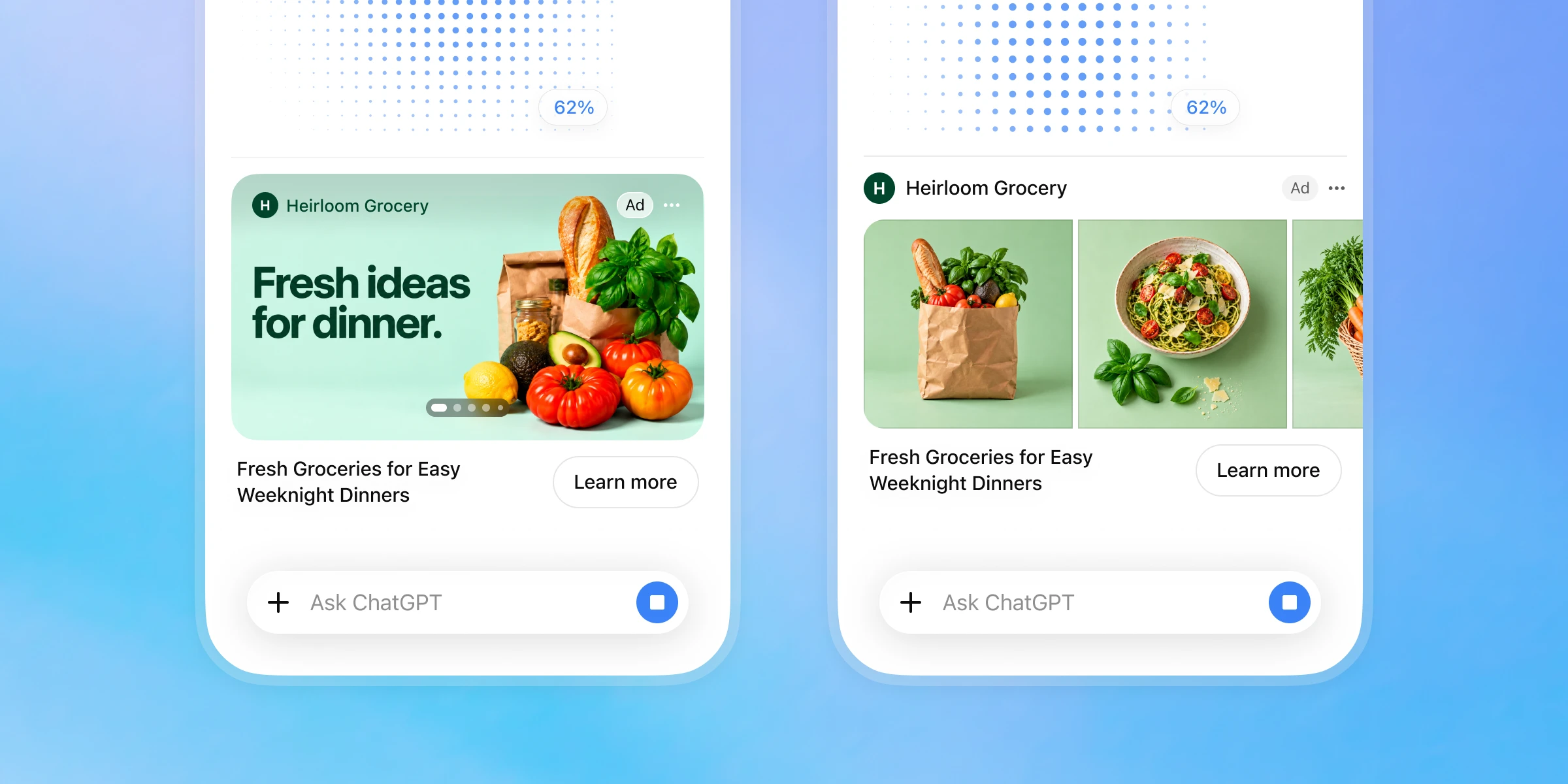
Visual ads would likely be more than plain text links. The obvious format is a card with an image, price, brand name, rating, and a label that marks it as sponsored.
That format could appear in product comparisons, recipe planning, hotel searches, software recommendations, or local service queries. Think of it like a shelf talker in a grocery store, small, commercial, and placed right where your attention already sits.
Possible ad placements
- Sponsored product cards: A brand pays to appear beside organic recommendations.
- Shopping carousels: ChatGPT shows several items, with some marked as sponsored.
- Local service ads: A plumber, clinic, or restaurant appears in a location-based answer.
- Travel and booking units: Hotels, flights, and tours show up inside planning chats.
- Software recommendations: SaaS tools compete for placement in business workflow prompts.
The design details matter more than they sound. If sponsored content blends too closely with the answer, OpenAI will invite backlash from users who already worry that AI systems sound more certain than they should.
The Trust Problem With ChatGPT Visual Ads
Search ads have trained people to scan for labels. Chatbot ads are trickier because users often treat the answer as a single piece of advice.
That is the pressure point.
What happens when ChatGPT says one accounting app is best for freelancers and a sponsored card for that app appears beside the answer? Even with a label, users may assume the recommendation and the ad share the same editorial logic.
OpenAI should be blunt here. Paid placements need clear labels, separate ranking rules, and an easy way for users to understand why an ad appeared.
What good disclosure should include
- A visible “Sponsored” or “Ad” label on every paid unit.
- A short explanation of why the ad appeared, such as query topic or location.
- No paid influence on the unpaid answer unless OpenAI says so plainly.
- User controls for ad personalization, especially around sensitive topics.
- Strict bans on ads in medical, financial, legal, or crisis contexts without strong safeguards.
The Federal Trade Commission has already made clear that online advertising must be identifiable as advertising. AI interfaces do not get a free pass because the screen looks new.
Why Advertisers Will Push Hard for ChatGPT Visual Ads
Advertisers chase intent, and ChatGPT has plenty of it. A person asking for “best running shoes for flat feet” is far more valuable than someone scrolling past a random banner.
The appeal gets stronger if ChatGPT can connect queries across a session. A user might ask about marathon training, knee pain, shoe rotation, and local stores in one thread, which creates a detailed commercial context (and a privacy headache).
For brands, this could become a new performance channel. For users, it could make the assistant feel less neutral, especially if recommendations start sounding like a sales floor.
What Users Should Watch For
You do not need to panic about ads in ChatGPT. You do need to become more alert about how answers are framed and what sits next to them.
Ask follow-up questions when a recommendation appears. Request alternatives, compare sources, and ask whether the answer is based on current data, paid placement, user reviews, or general model knowledge.
Practical habits if ads arrive
- Look for sponsored labels before clicking product cards.
- Ask ChatGPT for non-sponsored options when comparing products.
- Check prices and reviews outside the chatbot before buying.
- Use privacy settings to limit personalization where possible.
- Be extra skeptical in health, investing, insurance, and legal searches.
Honestly, this is the same media literacy people needed for search engines, but the stakes feel higher with chat. A chatbot answers with confidence, and confidence can blur the commercial signal.
ChatGPT Visual Ads Could Reshape AI Search
If OpenAI moves ahead, competitors will watch the reaction closely. Google, Microsoft, Perplexity, Anthropic, and Meta all face the same basic tension between user trust and revenue pressure.
The winner may not be the company with the flashiest ad format. It may be the one that makes paid placement obvious while keeping the core answer useful.
There is also a publisher angle. If AI assistants summarize the web while selling ads against those summaries, newsrooms and review sites will ask why their work feeds a system that competes for the same ad dollars.
What OpenAI Needs to Get Right Next
OpenAI can sell ads without wrecking ChatGPT, but the margin for error is thin. The company should treat ad labeling, sensitive-category limits, and ranking transparency as product features, not legal footnotes.
The bigger question is whether users will accept a chatbot that mixes help with commerce. If OpenAI wants ChatGPT to be your default assistant, it has to prove that sponsored answers will not quietly become the house edge.