China AI Jobs Are Reshaping Tech Work
If you work in tech, the rise of AI is no longer an abstract story about future disruption. It is a hiring story, a salary story, and for many people, a job security story. The latest debate around China AI jobs matters because China’s tech sector is moving fast to staff AI roles while pressure builds on workers whose skills sit outside that push. That shift does not stay inside China. It affects global competition, supply chains, product roadmaps, and the talent strategies of companies everywhere. So what should you watch if you are trying to make sense of it? Start with the basics. Firms want engineers, researchers, and product staff who can work with large models, automation tools, and AI infrastructure, while many traditional tech roles face a colder market.
What stands out right now
- China AI jobs are expanding as companies race to build products and infrastructure around artificial intelligence.
- Demand is tilting toward machine learning, data engineering, chip expertise, and product roles tied to AI deployment.
- Workers in older internet and platform roles may face weaker hiring demand and tougher competition.
- The bigger story is strategic. China wants AI talent for economic and geopolitical reasons, not only for near-term profits.
Why China AI jobs matter beyond China
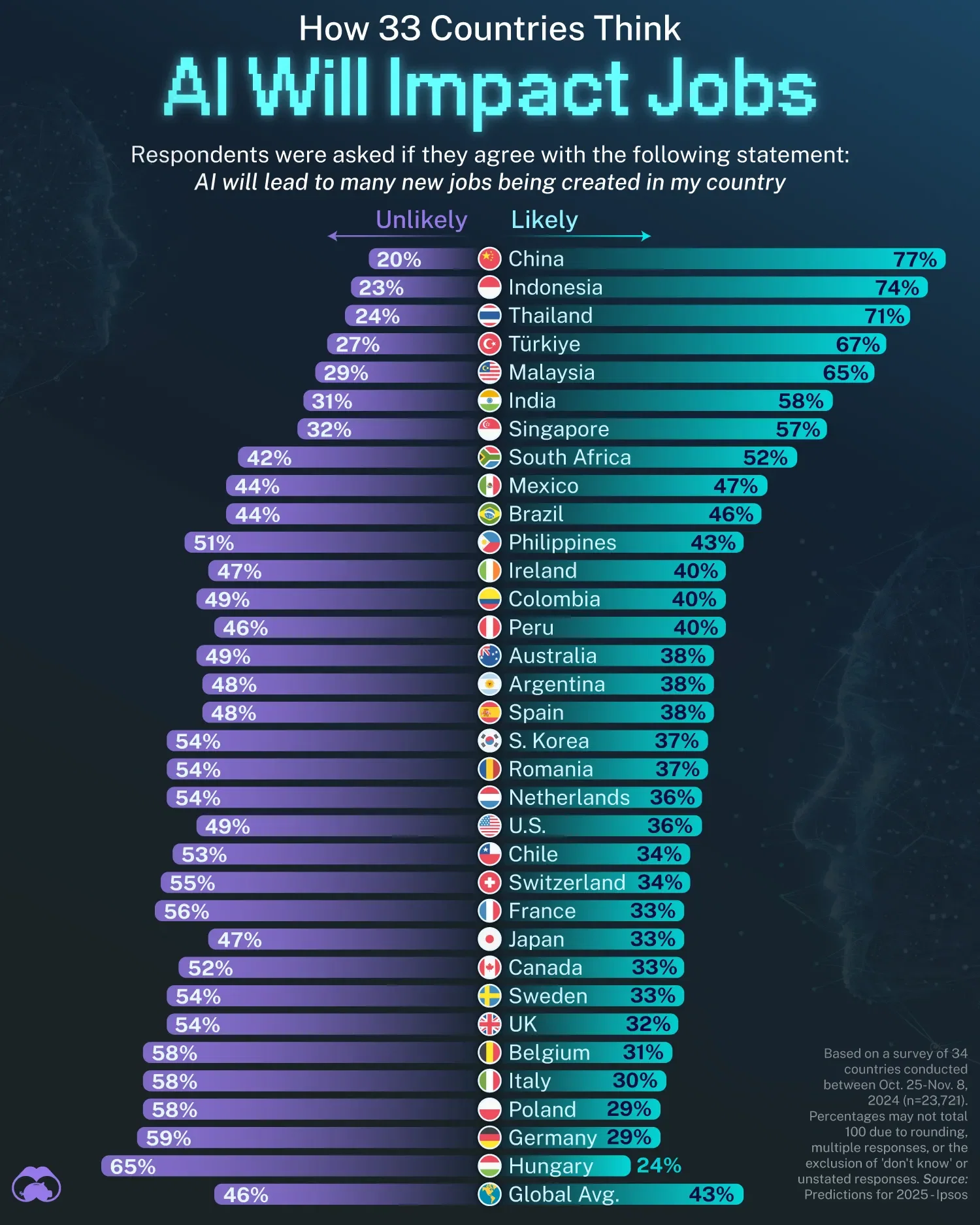
China has treated AI as a national priority for years, and that gives this labor shift extra weight. Hiring patterns in a market that large can ripple outward, especially in semiconductors, cloud services, robotics, automation, and consumer apps.
Look, labor markets tell you what executives actually believe. Press releases can say anything. But when firms spend real money on machine learning engineers, model optimization specialists, and AI product managers, you are seeing where they think the next revenue and strategic advantage may come from.
Hiring is strategy with a payroll attached.
That is why this trend deserves attention from workers outside China too. If Chinese firms build stronger internal AI teams at scale, they can move faster on products, lower some costs, and compete more aggressively across sectors.
Which skills are driving China AI jobs
The hiring shift is not evenly spread. Companies are not simply asking for “AI skills” in the vague way that recruiters often do. They want people who can help ship systems, tune models, clean and structure data, and connect research to products.
Roles getting the most attention
- Machine learning engineers who can train, fine-tune, evaluate, and deploy models.
- Data engineers who can build pipelines that feed AI systems usable, well-structured data.
- AI infrastructure specialists focused on compute, cloud systems, chips, and performance optimization.
- Product managers for AI tools who can turn technical capability into practical software.
- Applied researchers who can bridge academic progress and commercial use cases.
And there is a second layer. Firms also need people who understand compliance, model safety, enterprise sales, and localization. AI products do not win on model quality alone. They win when they fit the market they serve.
That part gets missed a lot.
What this means for tech workers in a tighter market
For workers, the message is blunt. If your background sits in functions that companies now see as easier to automate or cheaper to trim, you may have less leverage than you did a few years ago. If your work helps companies build, deploy, measure, or govern AI systems, your odds improve.
Honestly, this looks a lot like a roster shakeup in professional sports. Teams still need veterans, but they pay a premium for players who fit the new system. If your skill set does not match the playbook, you need to retrain fast or risk being left on the bench.
That does not mean every worker needs to become a machine learning scientist. Most do not. But you should understand how AI touches your function, whether that is software development, design, security, operations, or customer support.
How to respond to the China AI jobs shift
If you are a worker trying to stay valuable, the smart move is practical repositioning, not panic. Ask yourself a simple question. Where does your experience connect to AI deployment, not just AI theory?
- Map your current skills to AI-adjacent work such as data quality, workflow automation, model evaluation, or security.
- Learn one technical layer deeper than your current role requires. For a product manager, that might mean prompt evaluation or model metrics. For a developer, it might mean inference, APIs, or vector databases.
- Build evidence. A small shipped project beats a long list of course certificates.
- Study the business side. Companies pay for results, not enthusiasm.
A worker who can connect domain knowledge to AI use cases often beats someone who only knows the buzzwords. That is especially true in healthcare, finance, logistics, education, and manufacturing.
What companies are really buying when they hire for China AI jobs
They are buying speed. They are buying optionality. And they are buying a shot at staying relevant in a market that is moving under their feet.
Some firms will overhire and some projects will stall. That always happens in hot technology cycles. But the broad direction still looks solid because AI is no longer treated as a side lab. It is moving into core products, internal tooling, coding assistance, search, customer service, and industrial systems.
For employers, the lesson is not “hire AI people” and hope for the best. It is to define where AI can create measurable gains, then hire against those use cases. A company that wants to improve logistics planning needs different talent from one building a consumer chatbot (and the salary math will differ too).
The bigger pressure behind China AI jobs
This is not only about productivity. It is also about national competition in advanced technology. China’s push into AI talent sits alongside larger efforts in semiconductors, cloud computing, and industrial modernization.
That framing matters because it makes the demand for AI workers more stubborn than a passing trend. A flashy app can fade. A strategic labor push backed by major companies and policy support is harder to dismiss.
NPR’s reporting points to the human side of this shift, especially for workers trying to hold their place in a changing market. That is the part many policy debates flatten. Behind every hiring surge is a real worker wondering whether their current skills still count.
Where this goes next
Expect the market to split more sharply. One lane will reward workers who can help businesses apply AI in clear, measurable ways. The other lane will grow more crowded, with generalist tech workers competing for roles that companies no longer view as non-negotiable.
If you are early in your career, bias toward work that sits close to data, software, automation, and model-enabled products. If you are mid-career, pair your existing expertise with one AI-adjacent capability that employers can price and understand. What else is the smarter bet?
The people who do best in this shift will not be the loudest AI evangelists. They will be the ones who can prove they solve a business problem that AI has made more urgent.