China’s Humanoid Robot Training Push
You are seeing a new robotics race take shape, and it is not about flashy demos. The real story is humanoid robot training, the grind of teaching machines to move, grab, sort, and recover when things go wrong. That matters now because the companies building these systems need data, not hype. They need warehouses, test rigs, human operators, and millions of small repetitions before a robot can do useful work outside a lab. China’s hardware hubs are becoming the place where that work happens. Why there? Because they already have the supply chains, component makers, and low-friction access to physical prototypes that robot builders need. The result is a faster path from prototype to deployment, and maybe a faster path to overpromising too.
What stands out about humanoid robot training
- Training is the bottleneck. Hardware is only half the battle. Robots need huge amounts of motion data and real-world feedback.
- China has an edge in physical production. Dense supplier networks help teams iterate faster and cheaper.
- Simulation is useful, but not enough. Real floors, real boxes, and real failure modes still matter.
- The labor angle is hard to ignore. These machines are being trained for tasks humans still do today.
- The market is still early. A polished demo is not the same thing as a reliable worker.
Why China’s hardware capital matters for humanoid robot training
Humanoid robot training depends on a loop. Build a body. Test it. Break it. Fix it. Repeat. That loop gets expensive when every motor, joint, sensor, and control board has to cross borders or wait weeks for a supplier quote. In places like Shenzhen, that cycle can move with far less drag because the parts ecosystem sits close together.
Think of it like a restaurant kitchen. If the stove, knives, ingredients, and repair crew all sit in the same building, you can change the menu fast. If each item comes from a different city, dinner gets delayed. Robotics is the same kind of ugly logistics problem.
“The hard part is not making a robot look human. The hard part is making it repeat a useful task hundreds of times without failing in awkward ways.”
That is why hardware clusters matter. They do not magically create better robots. But they shorten the path between failure and the next test, and in robotics that is everything.
How humanoid robot training actually works
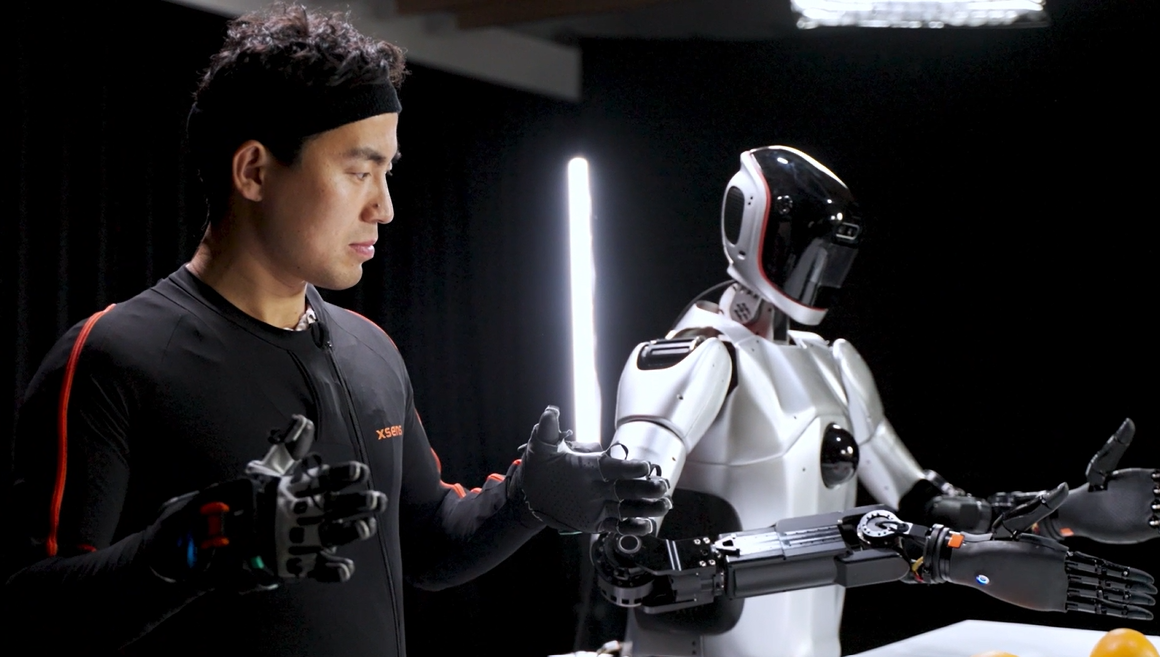
Most people picture a robot learning from video or a giant model in the cloud. The reality is messier. Teams use teleoperation, motion capture, reinforcement learning, and simulation, then push the robot into physical tasks like lifting, placing, balancing, or walking over uneven ground. Some groups build task-specific datasets. Others try to generalize across many jobs.
Here is the catch. Simulated training can teach motion patterns, but real hardware introduces friction, slippage, battery drain, sensor noise, and wear. That gap between simulation and reality is where many robotics projects stall.
- Collect motion data. Human operators or cameras record how tasks are done.
- Train in simulation. Models practice in virtual settings to reduce cost and risk.
- Test on hardware. Robots try the same task on real equipment.
- Patch the failures. Engineers adjust control systems, grips, and body mechanics.
- Repeat at scale. The robot improves only if the loop stays fast.
Is this a labor story or a manufacturing story?
It is both. That is the part people keep trying to split apart, but they should not. Humanoid robot training is tied to factory work, warehouse work, and the economics of repetitive tasks. If a robot can sort, carry, inspect, or stack with enough consistency, it competes with human labor in places where wages, safety, and turnover shape margins.
But the manufacturing side is just as important. China’s advantage is not only cheap labor, as lazy commentary would suggest. It is the sheer density of suppliers, contract manufacturers, and engineers who can turn a CAD file into a physical machine quickly. That makes hardware iteration faster. And faster iteration often beats prettier branding.
What to watch next in humanoid robot training
Look for three signals. First, whether companies can show long-run reliability, not just a two-minute demo. Second, whether they can train robots for messy environments instead of controlled labs. Third, whether the economics start to make sense at scale, because a robot that costs too much to maintain is just an expensive prop.
There is also a policy angle here. Countries that care about industrial capacity will start asking who controls the training data, the chips, the actuators, and the factories. That question is not abstract. It shapes which companies can ship, which ones can scale, and which ones stay stuck in the demo loop.
The next test is simple. Can these robots survive real workdays, or are we still watching very polished practice rounds?
Where the hype breaks
Robotics headlines love the same trick. A robot walks, a robot waves, a robot folds a shirt, and suddenly everyone talks as if the future has arrived. It has not. Not yet. The hard part is boring, repetitive, and deeply physical. That is where humanoid robot training gets real.
And that is why China’s hardware centers matter so much. They make the boring part less painful. They do not erase the problem. They just move faster through it. If the next wave of humanoid robots works, this is where a lot of the proof will come from. Watch the training loops, not the stage demos.