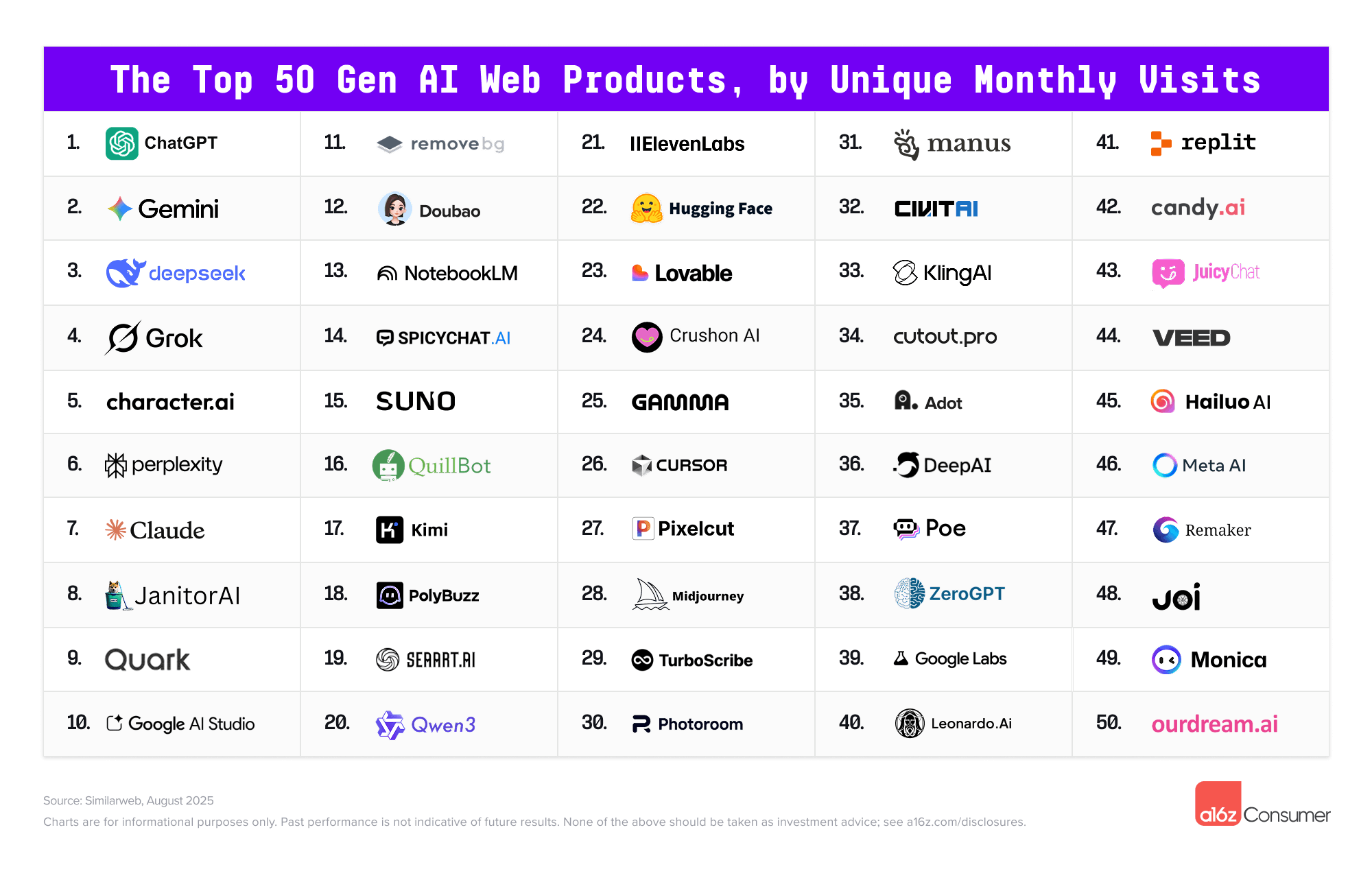
Consumer AI Apps Are Still Looking for Their Moat
You can launch an AI app faster than ever. That is the opportunity, and the problem. The consumer AI apps market is crowded with photo editors, tutors, companions, search tools, note-takers, and agents that promise to remove friction from daily life. But speed cuts both ways. If a feature can be copied in a weekend, users may leave just as quickly as they arrived. That is why a16z partner Olivia Moore’s view of consumer AI, shared with TechCrunch, matters right now. She tracks the category from the investor side, where growth graphs look exciting until retention, distribution, and margins get tested. The hard question is simple: which AI products become habits, and which ones become demos?
What Stands Out
- Consumer AI apps need more than model access. The model layer is powerful, but it rarely creates a durable edge on its own.
- Distribution is becoming a moat. Social sharing, creator channels, app store placement, and community loops can separate winners from clones.
- Retention matters more than launch buzz. A viral spike means little if users do not return after the novelty fades.
- Personalization may be the next battleground. Apps that learn your taste, workflows, and history can feel harder to replace.
Why Consumer AI Apps Are Harder Than They Look
Consumer software has always been brutal. AI makes the first version easier, but it does not make the business easier. A small team can wrap a frontier model, add a clean interface, and ship something useful in weeks. Then ten competitors appear with similar prompts, similar pricing, and similar screenshots.
Here’s the thing: most consumers do not care which model sits underneath the product. They care whether the app solves a nagging problem with less effort than their current habit. If it does, they stay. If it feels like homework, they churn.
“A good consumer AI product does not win because it says AI on the label. It wins because it gives you a result you wanted, faster than you expected.”
I have covered enough platform shifts to be wary of easy victory laps. Mobile apps, social video, crypto wallets, and generative AI all produced early gold rushes. The pattern is familiar. First comes the tool explosion. Then the purge.
What Olivia Moore’s Consumer AI View Gets Right
Moore’s core point, as reported by TechCrunch, is that consumer AI is still early, but the shape of winners is starting to show. That is the useful framing. Not “AI will eat every app,” which is lazy. The better question is where AI changes user behavior often enough to support a real company.
Look at the categories getting traction. AI companion apps lean on frequency and emotional context. Creative tools benefit from instant output and easy sharing. Education apps can adapt to a learner’s level. Productivity apps promise time savings, though they face heavy competition from incumbents like Google, Microsoft, Notion, and Apple.
One sharp filter helps: would someone use this every week without being reminded?
Consumer AI Apps Need a Distribution Plan From Day One
Founders often obsess over model choice. GPT, Claude, Gemini, open models, fine-tunes, retrieval, agents. All of that matters, but distribution can matter more. Without it, even a clever product sits in the app store like a great restaurant hidden behind a loading dock.
Strong consumer AI distribution usually comes from one of four places:
- Built-in sharing. The output itself spreads, such as images, videos, avatars, songs, or summaries.
- Creator-led adoption. TikTok, YouTube, Reddit, and Discord can move niche tools fast when the use case is visual or surprising.
- Workflow embedding. The app becomes part of an existing routine, such as studying, journaling, editing, or planning.
- Community memory. Users invest identity, history, preferences, or relationships that make switching less attractive.
And yes, paid acquisition can work. But if every new user must be bought through expensive ads, margins get ugly fast, especially when inference costs remain part of each interaction.
The Real Moat in Consumer AI Apps
The word “moat” gets abused in AI circles, but the issue is real. A model wrapper with no user data, no brand pull, no network effect, and no workflow lock-in is exposed. Someone with better distribution can copy the surface and outrun it.
Durability may come from several layers working together:
- Personal context: The app remembers your preferences, files, tone, goals, and past choices.
- Proprietary data: The company owns or earns data that improves the product in a specific domain.
- Network effects: The product gets better when friends, classmates, coworkers, or fans join.
- Brand trust: Users believe the app handles sensitive content responsibly.
- Habit loops: The product fits into a daily or weekly routine.
Personalization is the one I would watch most closely. If an AI tutor knows where you struggle, an AI fitness coach knows your schedule, or an AI shopping assistant knows your taste and budget, switching becomes annoying. Not impossible. Annoying is enough to matter.
Where Consumer AI Apps Can Still Break Out
Some categories already look packed. General chatbots are dominated by OpenAI, Anthropic, Google, Meta, and xAI. Basic image generation is also crowded. A startup can still win there, but it needs a wedge that is more specific than “chat with an AI.”
Better openings sit closer to identity, taste, and repeated need. Think of it like cooking. Anyone can buy the same ingredients, but the restaurant that knows its regulars, controls the menu, and gets the timing right has the edge.
AI companions and social apps
Companion apps are controversial, but they show strong consumer pull. Users return because the product creates continuity. The risk is safety, especially for younger users or people in distress. This category needs serious guardrails, not PR polish.
AI education tools
Tutoring is one of the cleanest consumer AI use cases. The value is clear, and the market is large. Still, trust matters. Parents and students need accuracy, age-appropriate design, and proof that the tool improves learning instead of doing the work for the student.
AI creativity apps
Creative AI spreads well because the output is visible. A strange video effect or polished headshot can travel across social feeds. The challenge is retention after the first fun result. Professionals need control, not random magic.
AI productivity for individuals
Personal productivity is tempting, but it is a knife fight. Big platforms already sit inside email, documents, calendars, and browsers. Startups need a narrow job done better, such as meeting follow-up for freelancers or research management for students.
How to Judge a Consumer AI App Before You Bet on It
Whether you are a founder, investor, or power user, skip the demo glow. Ask practical questions. The answers usually reveal whether the product has legs.
- Does it save time or create something people truly want? A neat trick is not enough.
- Will users come back without a notification? Voluntary repeat use is the signal.
- Does the product improve with personal history? Memory can raise switching costs.
- Can it survive platform copycats? If Apple or Google adds the feature, what remains?
- Do unit economics work at scale? Heavy model usage can strain margins.
- Is trust part of the product? Privacy, safety, and transparency are non-negotiable in intimate use cases.
One more test: can you explain the app’s value without using the word “AI”? If not, the positioning is probably weak.
Consumer AI Apps and the Incumbent Threat
The biggest pressure on consumer AI startups may not come from other startups. It may come from platforms that already own user attention. Apple can place AI features inside iOS. Google can add them to Search, Gmail, Photos, and Android. Meta can push AI across Instagram, WhatsApp, and Facebook.
That does not mean startups are doomed. Incumbents move slowly in messy, emotionally sensitive, or niche categories. They also tend to design for broad use, which leaves room for sharper products. But founders should not pretend platform risk is theoretical.
Small teams win by being specific.
The Next Test for Consumer AI Apps
The first phase of consumer AI rewarded novelty. The next phase will reward memory, distribution, taste, and trust. That is a tougher bar, which is good. It means the market is starting to grow up.
Moore’s read on the category is useful because it avoids the worst hype trap. Consumer AI is not one market. It is a set of behavior changes across entertainment, education, productivity, social connection, and commerce. Some will be seismic. Many will be forgettable.
If you are building in this space, do not start with the model. Start with the habit you want to earn, then ask whether AI makes that habit easier, cheaper, or more personal. That is where the next durable consumer AI company is likely to come from.


