CPO in Nature Electronics: What It Means for AI Hardware
Data centers are hitting a wall. Power use keeps climbing, traffic inside AI servers keeps getting denser, and the old way of wiring chips together is starting to look clumsy. That is why CPO in Nature Electronics matters now. Co-packaged optics, or CPO, pushes optical engines closer to the switch chip so signals do not have to travel as far over power-hungry electrical links. The promise is simple. Lower power. Higher bandwidth. Less heat. But the real story is messier, and far more interesting. Can this approach move from lab-grade promise to production gear that operators trust at scale? That is the question behind the latest work and the reason this topic has turned into a serious hardware debate.
What stands out in CPO in Nature Electronics
- CPO moves optics closer to the chip, which can cut signal loss and save power.
- AI clusters need denser interconnects as model size and rack-scale traffic keep rising.
- Thermal design gets harder because optics and logic now share tighter real estate.
- Manufacturing and repair remain tricky, so adoption will depend on system-level reliability.
Why CPO in Nature Electronics matters for AI servers
Modern AI systems are less like single computers and more like crowded warehouses full of synchronized workers. Every GPU, switch, and accelerator needs fast communication, and those links now consume a painful slice of the power budget. Electrical SerDes lanes work well for short distances, but they get expensive in watts as bandwidth rises.
CPO in Nature Electronics points to a different path. By putting optical components near the switch ASIC, designers can reduce the electrical reach and keep more of the data path in a lower-loss form. That matters because the interconnect problem is no longer a side issue. It is the bottleneck.
For AI infrastructure, the fight is not only about faster chips. It is about moving data with less waste, less heat, and fewer compromises.
How CPO in Nature Electronics works
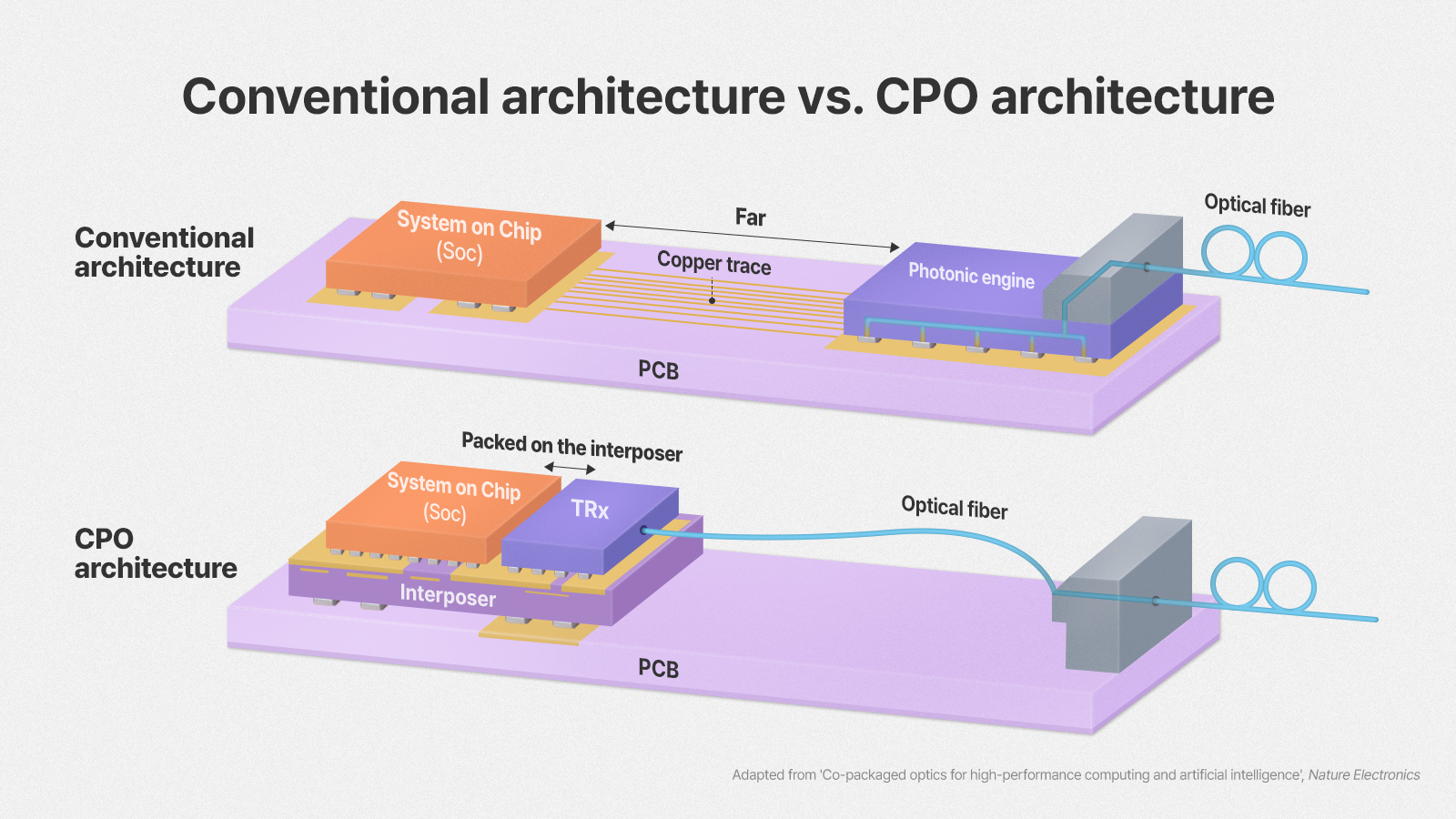
CPO uses optical engines that sit close to the silicon switch chip, often on the same package or in very close proximity. The chip handles electrical processing, while the optical side converts signals to light for longer-distance transmission. That shortens the electrical path and can reduce the need for power-hungry retimers and longer board traces.
Think of it like moving the kitchen next to the dining room instead of running every meal through a long hallway. The food gets there faster, and less gets lost along the way. But you also have to redesign the whole house (ventilation, plumbing, layout, all of it).
What the article’s focus suggests
The Nature Electronics angle is important because it signals that this is not just vendor marketing. Research coverage usually means the field is pushing on core problems like packaging, optical alignment, and thermal behavior. Those are the real gates. Not slide decks.
And here is the catch. CPO does not magically erase system complexity. It shifts it.
CPO in Nature Electronics and the hard engineering trade-offs
The upside is easy to see. The trade-offs take more work.
- Heat management. Optical parts add thermal constraints near hot switch silicon. Cooling becomes a board-level and package-level problem.
- Assembly precision. Optical alignment has to be exact. Tiny errors can hurt performance or yield.
- Serviceability. Replacing one part in a tightly integrated module is harder than swapping a pluggable transceiver.
- Supply chain maturity. The ecosystem needs reliable packaging, test, and validation methods before deployments can scale.
This is why CPO adoption will likely start in the most demanding environments first, such as hyperscale AI fabrics. Enterprise buyers usually wait until the rough edges are sanded down. And they are right to wait.
Who benefits first from CPO in Nature Electronics
Hyperscalers stand to gain the most. They run giant clusters where a few watts saved per link can add up across thousands of ports. They also have the engineering muscle to absorb early integration pain.
Network switch makers and optical module suppliers are next in line, because CPO changes where value sits in the stack. The old pluggable module model gave operators flexibility. CPO asks them to trade some of that flexibility for better efficiency. That is a tough sell unless the performance gain is clear.
AI training clusters are the strongest use case because they depend on rapid east-west traffic between accelerators. If a workload is constantly shuttling tensors across a fabric, interconnect efficiency becomes a first-order concern. Not a nice-to-have.
What to watch next
Three signals will tell you whether CPO is moving from promising research to real deployment.
- Yield improvements in packaging and optical integration.
- Thermal data from full system tests, not just lab demos.
- Operator adoption in AI clusters where power and bandwidth are both under pressure.
If those pieces line up, CPO could become a standard part of next-generation switch design. If they do not, it may stay in the same place a lot of clever hardware ideas end up. Interesting papers. Limited shipping volume.
The practical read on CPO in Nature Electronics
The safest way to read CPO in Nature Electronics is not as hype, but as evidence that the interconnect problem has become central to AI infrastructure. The chips are getting stronger. The links between them are now the constraint. That shift is seismic.
So the real question is not whether optical packaging sounds elegant. It does. The question is whether operators will accept a more complex package in exchange for a cleaner power profile and better bandwidth scaling. If you run a platform team, that trade is worth modeling now, before your next rack design locks in old assumptions. What would you change first if every watt inside the cluster suddenly mattered more than the chip count?