DoorDash AI Chatbot Ordering: Prompts, Photos, and What It Changes
DoorDash AI chatbot ordering is another sign that food delivery apps want to act less like menus and more like assistants. That matters because the old search box is clumsy for a task that is often fuzzy. You do not always know the restaurant name, the dish name, or even the exact thing you want. You may only have a photo, a craving, and five minutes before lunch is over.
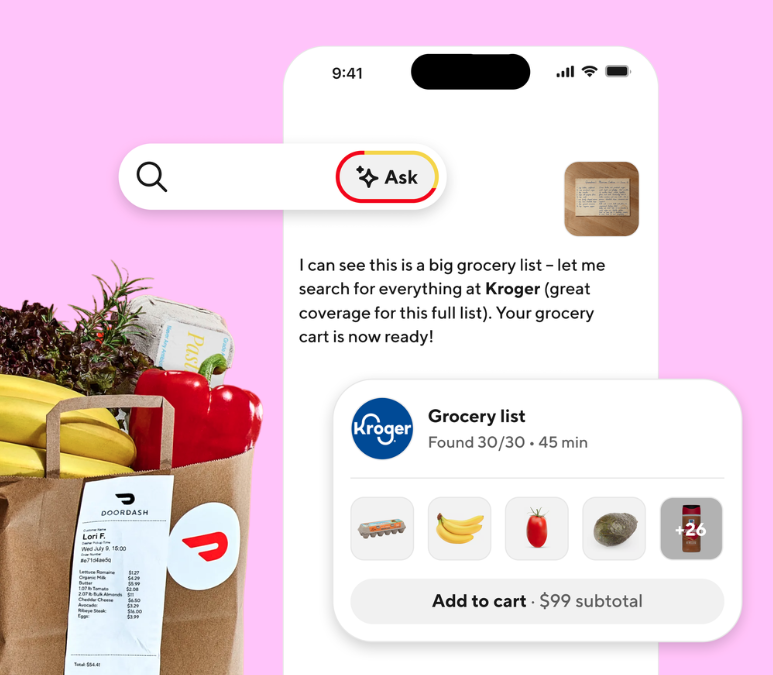
DoorDash is pushing into that gap with prompts and photos, which sounds simple until you think about the operational mess behind it. Matching a blurry image to a dish, then turning that into a usable order, is harder than it looks. But if it works well, the experience could feel less like sorting receipts and more like handing a request to a smart concierge. And yes, that could change how people use delivery apps.
- DoorDash AI chatbot ordering aims to reduce search friction with prompts and image input.
- Photos can help users describe food they cannot name, which is common in delivery apps.
- The feature points to a shift from browsing menus to conversational ordering.
- Execution will depend on accuracy, speed, and how often the chatbot gets the wrong item.
- This is part convenience play, part data play, and part platform defense.
Why DoorDash AI chatbot ordering matters now
Food delivery is full of tiny points of friction. You open the app, type a dish, get too many options, then filter again. Sometimes you know the restaurant. Sometimes you only know the meal you saw on social media or the takeout box sitting on a coworker’s desk. DoorDash AI chatbot ordering tries to compress that search into a conversation.
That shift is bigger than it sounds. Search boxes work well when you know the exact words. Chat works better when you do not. The same idea has already spread across commerce, customer support, and travel. Why should food delivery stay stuck in keyword mode?
The real bet is not that people want to chat with an app. The bet is that people want less effort between craving and checkout.
How prompts and photos change the ordering flow
Prompt-based ordering lets you describe a meal in plain language. You can ask for something fast, spicy, vegan, or cheap, and the system can narrow choices without making you tap through endless filters. That is a cleaner path for indecisive users, especially on mobile.
Photos add another layer. A user can point the app at a dish, a menu item, or even a social post image, then let the system infer what to serve up. Think of it like a diner asking a veteran waiter, “What is that plate?” except the waiter has a giant database and no memory for faces.
The upside is convenience. The risk is mismatch. A chatbot can confuse similar dishes, miss local slang, or surface the wrong restaurant if the image is vague. That is not a small bug. It is the core product challenge.
What has to work behind the scenes
- Image recognition must identify food with enough confidence to be useful.
- Menu matching must connect a visual guess to real items from local restaurants.
- Ranking logic must balance relevance, availability, and delivery speed.
- Fallback behavior must recover cleanly when the model is unsure.
Without that chain, the chatbot becomes a fancy detour. People will try it once, then go right back to search. That is exactly what happened to plenty of “smart” shopping tools over the last few years.
Is this really about ordering, or about control?
It is both. DoorDash wants to make ordering easier, but it also wants to own the front door to decision-making. If the app can interpret your prompt or photo, it becomes the first place you ask the question. That is a powerful position. It keeps users inside the platform longer and gives DoorDash more signals about what people want, where they live, and how they decide.
For restaurants, this could be a mixed bag. Some will benefit from extra discovery if the chatbot steers hungry users toward the right dish. Others may worry about losing control over how their menu is presented. If the AI rewrites the search experience, who gets blamed when the burger you wanted turns into a chicken sandwich?
Here’s the thing. The product is not just a convenience feature. It is also a gatekeeper feature. Platforms love those.
What you should watch next
Two things will tell you whether DoorDash AI chatbot ordering is real progress or just another demo trick. First, accuracy. Does it understand a messy prompt, a partial photo, or a vague craving without getting weird? Second, speed. Does it save time, or does it add one more step before checkout?
Look for how often the chatbot offers clarifying questions, how it handles dietary constraints, and whether it can keep up when restaurants change menus or run out of items. Those are the moments that separate a useful tool from a polished toy.
If the system can handle uncertainty well, it could become the default way people order from delivery apps. If it cannot, users will treat it like a party trick. And they are not shy about abandoning clunky features.
What this says about the next phase of delivery apps
Delivery apps are moving from catalogs to assistants. That is the real story. Once a platform can interpret intent from text and images, the old browse-and-filter model starts to look dated, like a restaurant menu printed for a room full of people who already know what they want.
DoorDash is not alone in chasing that future, but it is making a visible bet on the idea that food ordering can feel conversational. The question is whether users want a chatbot to help them order dinner, or whether they simply want the fastest path to fries. Probably both. Which one wins will tell you how far this category can go.
For now, the smart move is to watch the friction points. If the experience trims taps, shortens decisions, and keeps mistakes low, it matters. If not, the chatbot will end up where many AI features do, buried under the search bar, waiting for a second chance that never comes.