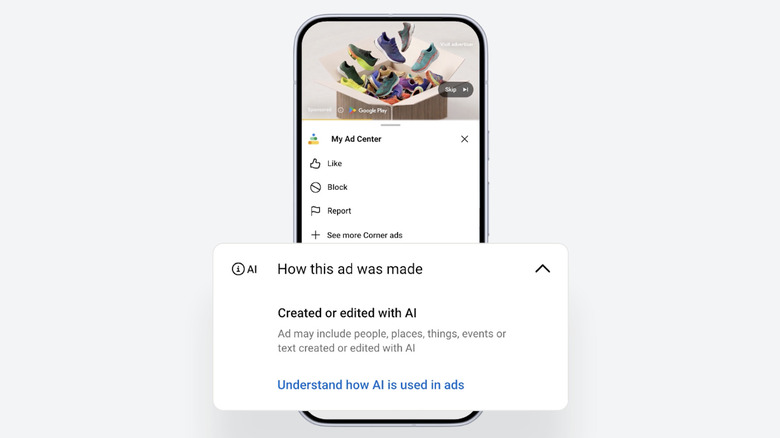
Google AI Ad Disclosure Changes
If you buy ads, build ads, or review them for compliance, the new Google AI ad disclosure rules matter right now. Google will now disclose which ads are made with AI, and that changes how you judge trust, quality, and accountability across Search, YouTube, and display placements. The shift sounds small. It is not. Once AI-generated creative gets a visible label, marketers cannot hide behind vague claims about “assisted” production. They will have to explain what was generated, what was edited, and who signed off. That matters because ad platforms are getting flooded with synthetic copy and images, and users are getting harder to impress. Who wants to click something if they do not know whether a human or a model wrote it?
What stands out in Google AI ad disclosure
- Google AI ad disclosure will make synthetic creative easier to spot.
- Brands will need tighter review steps before ads go live.
- Disclosure could raise user trust for some campaigns and hurt others.
- Marketers may have to rethink how much AI they use in final ad assets.
Why Google AI ad disclosure matters now
Google has been under steady pressure to show that AI in advertising is being handled with more care than hype. This move gives advertisers a clearer signal that AI-generated assets are no longer living in a gray zone. If your team uses Gemini, generative image tools, or AI copy helpers, you should expect more scrutiny, both from platforms and from the public.
And yes, disclosure can cut both ways. A label may reassure users when AI is used for background work like resizing, versioning, or localization. But it can also expose cheap, lazy creative. That is the real story here. Bad ads often fail because they feel assembled, not because they were machine-made.
Disclosure does not fix weak creative. It just makes weak creative easier to notice.
How marketers should respond to Google AI ad disclosure
Start with your production process. If AI helps draft copy or generate images, document where it enters the workflow and who reviews the final output. Treat it like a kitchen pass, not a free-for-all. A chef can use prep tools, but the plate still needs a final check before it leaves the line.
- Audit your current ad workflow. Map every place AI touches text, visuals, targeting, or editing.
- Set a human approval step. Someone on your team should own the final version.
- Test disclosure impact. Compare click-through and conversion performance on labeled creative versus fully human-made ads.
- Update brand policy. Spell out what AI is allowed to do and what stays manual.
Look, this is not only a compliance issue. It is a brand issue. If your creative team leans on AI for speed, fine. But speed without taste produces noise, and noise does not sell much.
What users may actually think
Some people will not care. Others will care a lot. The split will depend on the category. For a routine consumer product, an AI label may barely register. For finance, health, politics, or anything sensitive, that label can shape perception fast.
That is why Google AI ad disclosure could push advertisers toward more honest creative choices. If your ad is strong, the label should not hurt you. If it does, the problem may be the ad itself. Do you want your campaign to win because it is clear, or because it is hidden?
What to watch next
The big question is how consistently Google will apply the disclosure and how much detail it will provide. Will it identify fully generated ads, lightly edited assets, or both? Will disclosure appear in the ad itself, in a transparency panel, or somewhere users rarely check? The answer will decide whether this is a meaningful policy or just another compliance footnote.
My read is simple. Google AI ad disclosure is a signal that synthetic marketing is moving from experiment to standard practice. The brands that win next will not be the ones that use the most AI. They will be the ones that use it with discipline, then leave a human fingerprint on the final result.
That is the next test. And it is coming fast.