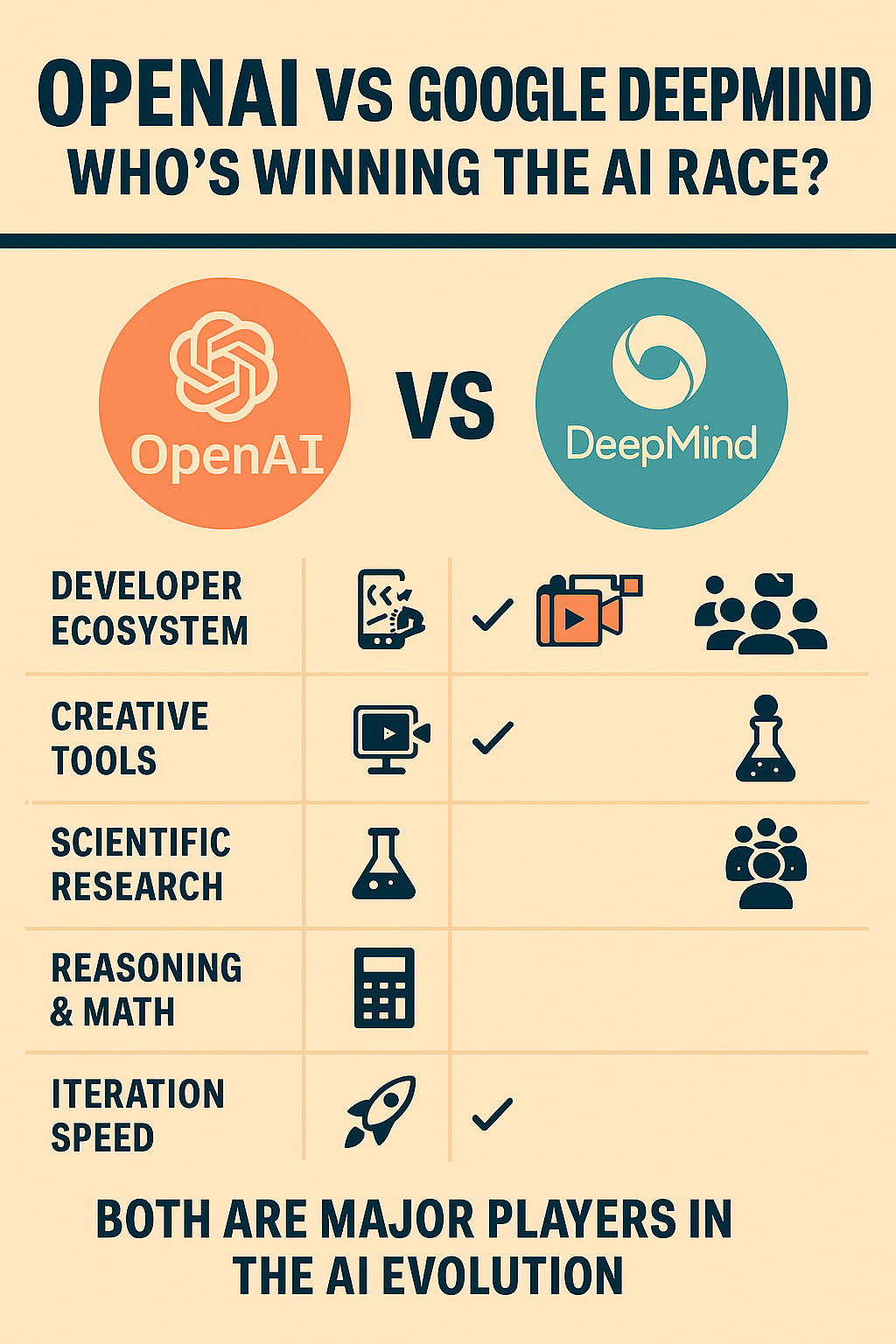
Google DeepMind and the AI Race
Google DeepMind sits at the center of the AI race, and the pressure is obvious. You want the best models, the fastest product gains, and a clear path from research to revenue. That is hard enough for any company. It gets tougher when your rivals can ship features fast, grab headlines, and turn every demo into a market signal.
For Google, the problem is not a lack of talent. It has Jeff Dean, Demis Hassabis, and one of the deepest research benches in tech. The real issue is execution. Can Google DeepMind turn elite research into products people use every day, before the rest of the field moves again? That question matters now because the pace of model releases has become brutal, and patience is not a strategy. The companies that win this phase will look a lot like well-run sports teams. Strong roster, clean plays, no wasted motion.
What matters in the Google DeepMind AI race
- Research still matters, but shipping matters more.
- Product integration is where Google can separate itself.
- Model quality alone does not win users.
- Distribution through Search, Android, and Workspace is a real advantage.
- Speed and focus will decide whether the advantage sticks.
Why Google DeepMind has a real edge
Google DeepMind has something many AI labs want and few have. It can connect frontier research to huge consumer surfaces. Search, Gmail, Docs, Android, YouTube, and Chrome give Google a built-in path to scale that startups cannot match.
That matters because AI adoption is not only about benchmark scores. It is about where the model lands, how often you touch it, and whether it saves time in a way you can feel. A model inside a product is like a new kitchen layout. If it cuts steps and removes friction, people notice fast.
Deep research is valuable. But in this market, the lab that ships is the lab that gets paid.
Where the pressure is coming from
OpenAI forced the market to care about chat interfaces and general-purpose assistants. Anthropic pushed hard on safety and enterprise credibility. Meta made open models a serious strategic weapon. And smaller teams keep finding narrow ways to move faster than giants.
Google DeepMind has to respond on all of those fronts without losing its own identity. That is a messy brief. You cannot be the cautious research giant and the aggressive product machine unless your internal wiring is tight (and a lot of large companies are not built that way).
Speed is the new quality bar
For years, Google’s reputation rested on technical excellence. Now the market also asks a harder question. How quickly can you turn a model into something useful, stable, and available at scale?
That is why the AI race keeps punishing hesitation. If your rival ships first and learns from real users, your better model may arrive too late. Pretty brutal. But that is the game.
What Google DeepMind should do next
- Pick fewer bets. Focus on the products with the biggest user impact and the clearest revenue path.
- Tighten the feedback loop. Research teams need direct signals from product teams, not quarterly summaries.
- Make Gemini feel obvious. Users should know when and why they should use it instead of another assistant.
- Exploit distribution. Put AI where people already work, search, write, and browse.
- Keep trust visible. Clear controls, citation paths, and predictable behavior matter more than flashy demos.
Look, nobody needs another grand AI manifesto. They need tools that answer better, draft faster, and make fewer weird mistakes. If Google DeepMind can keep that focus, it can still set the pace.
The Google DeepMind AI race is not just about models
The biggest mistake observers make is treating the AI race like a model leaderboard. That is too narrow. Real competition includes distribution, user habit, developer trust, and how well a company handles the boring parts of deployment.
Google has an unusual mix of strengths. It can train serious models, fund long bets, and place AI inside products billions of people already use. But none of that guarantees a win. The company has to stay disciplined, avoid internal sprawl, and keep its product story simple. What good is a brilliant model if users cannot tell what makes it the better choice?
Where this goes from here
Google DeepMind does not need to win every headline. It needs to win enough real use cases that people keep coming back. That is the part that lasts. If Google can turn its research muscle into a clean product habit, the AI race gets a lot more interesting. If not, the field will keep moving without it.
The next year will show whether Google DeepMind is a research powerhouse that also ships, or just a very expensive lab with great demos. Which one do you think the market rewards?


