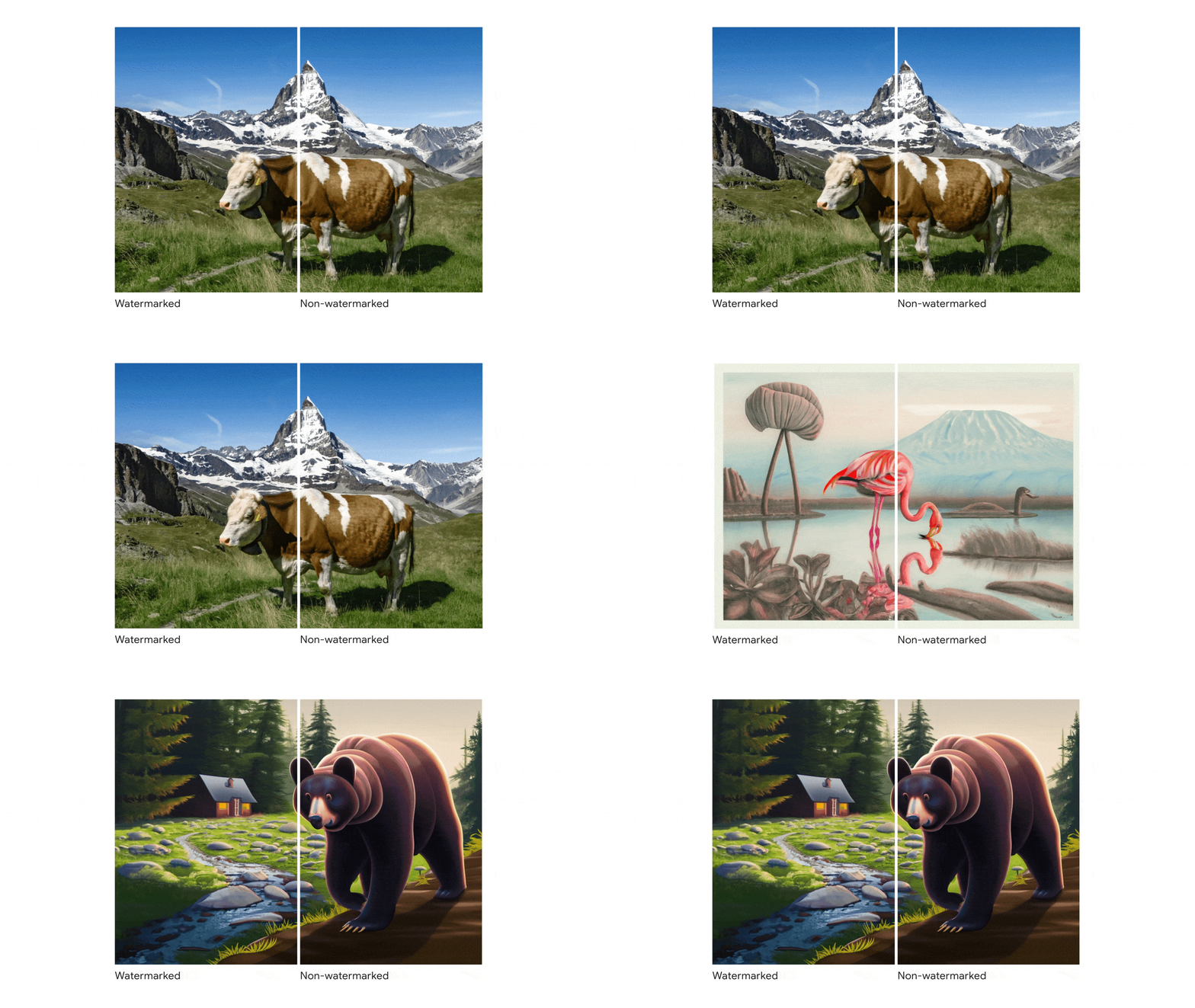
Google’s SynthID Watermark Cracked: What This Means for AI Transparency
You rely on AI images more each week, but you also need to know when a picture is synthetic. That is why Google’s SynthID watermark landed as a big promise for accountability. Now researchers say they can strip or spoof the SynthID watermark with off-the-shelf tools, and that should make you rethink how you trust AI visuals. The gap between a promised safety net and a working one is where creators, platforms, and readers get burned. mainKeyword sits at the center of the debate because it was supposed to be the easy tell. So what happens when the tell is easy to hide?
Rapid Fire Facts
- SynthID watermark aimed to tag AI images invisibly without hurting quality.
- A team replicated the watermark patterns and showed removal and spoofing attacks.
- Attacks use simple image transforms available in common editors.
- Google has not rolled out a fix, only a promise to improve.
Why SynthID Watermark Fails the Trust Test
SynthID watermark rested on subtle pixel tweaks that survive resizing and mild edits. Researchers found that slight rotations, noise, and color shifts knock the signal below detection thresholds. I have seen this movie before with DRM: when the incentive to break it is high, open tools appear fast.
Security through obscurity rarely survives first contact with motivated users.
This cat is out of the bag.
Google pitched SynthID as a reliable marker for platforms that need to flag AI images. But if anyone with free software can erase or forge the mark, the system erodes trust instead of building it.
How Attackers Cracked the SynthID Watermark
The team reverse engineered the embedding pattern by running many images through the model and analyzing pixel-level shifts. Then they trained a small network to predict the watermark layer. From there, removal was as basic as subtracting that layer, while spoofing meant pasting the learned pattern onto clean photos. Think of it like swapping team jerseys in a sports replay: the refs get fooled because the colors match.
- Collect watermarked samples from the public model outputs.
- Estimate the watermark distribution across channels.
- Apply counter-noise and mild transforms to sink the signal.
- Optionally add the learned pattern to an unmarked image to forge provenance.
Each step runs on consumer GPUs or even CPUs, so scale is not a barrier.
SynthID Watermark and Platform Policy
For platforms that planned to rely on SynthID detection, the risk is clear. False negatives let synthetic images pass as organic. False positives tag real photos as fake. Either outcome fuels confusion. Editors now need backup signals such as EXIF consistency checks, model fingerprints, and human review.
Should platforms wait for Google to patch SynthID or move on? The better move is to treat watermarking as one layer among many. You would not trust a single password for your bank; provenance should get the same redundancy.
Practical Steps for Creators and Teams
You cannot fix Google’s watermark, but you can protect your workflow.
- Use multiple provenance tags: Pair any watermark with visible disclosures and signed metadata.
- Log your edits: Keep a simple change log so you can defend authenticity if a watermark fails.
- Test your detectors: Run your own images through common transformations to see what survives.
- Track updates: Monitor Google’s responses and patch notes before trusting SynthID watermark again.
Where Google Goes Next with SynthID Watermark
Google says it will strengthen the system, but harder-to-remove signals often mean more visible artifacts or heavier compute. That trade-off will annoy artists and product teams. A more promising path is standards-based provenance with cryptographic signatures like C2PA, combined with lighter watermarks as hints.
Can Google regain confidence after this public crack? Only if it opens the design to outside review and ships measurable resilience improvements.
Final Take
Watermarking will stay part of the toolkit, but treating SynthID watermark as a single source of truth is over. Layer your defenses, demand transparent tests from vendors, and assume attackers will keep probing. Ready to trust your next AI image, or will you ask for receipts?