How to Get Better at AI Fast
You can spend hours testing chatbots, image generators, and coding assistants and still feel like you are getting shallow results. That is the real problem with getting better at AI. Access is easy. Skill is not. Right now, that gap matters because AI tools are moving from novelty to daily work. Teams expect faster research, cleaner writing, better analysis, and sharper judgment from people who know how to use these systems well. But here is the part many people miss. Being good at AI is less about chasing every new model and more about building a repeatable way to think, test, and verify. I have covered tech long enough to know the pattern. The winners are rarely the loudest early adopters. They are the people who learn the limits, ask better questions, and keep their hands dirty.
What actually moves the needle
- Use AI every day on real tasks, not toy prompts.
- Learn prompt structure so outputs get more precise.
- Check every claim because polished errors are still errors.
- Build a workflow that mixes AI speed with human judgment.
Why getting better at AI starts with repetition
The fastest way to improve is simple. Use AI on work you already do. Summarize a report. Draft an email. Compare product specs. Rewrite a rough paragraph. Then test the output against your own standard.
That repetition teaches you something demos never will. You start to see where models are sharp, where they bluff, and where they need tighter instructions. Think of it like a basketball jump shot. One flashy clip means nothing. Form comes from reps.
People who get strong at AI do not treat it like magic. They treat it like software that needs direction.
How to get better at AI prompts without sounding like a robot
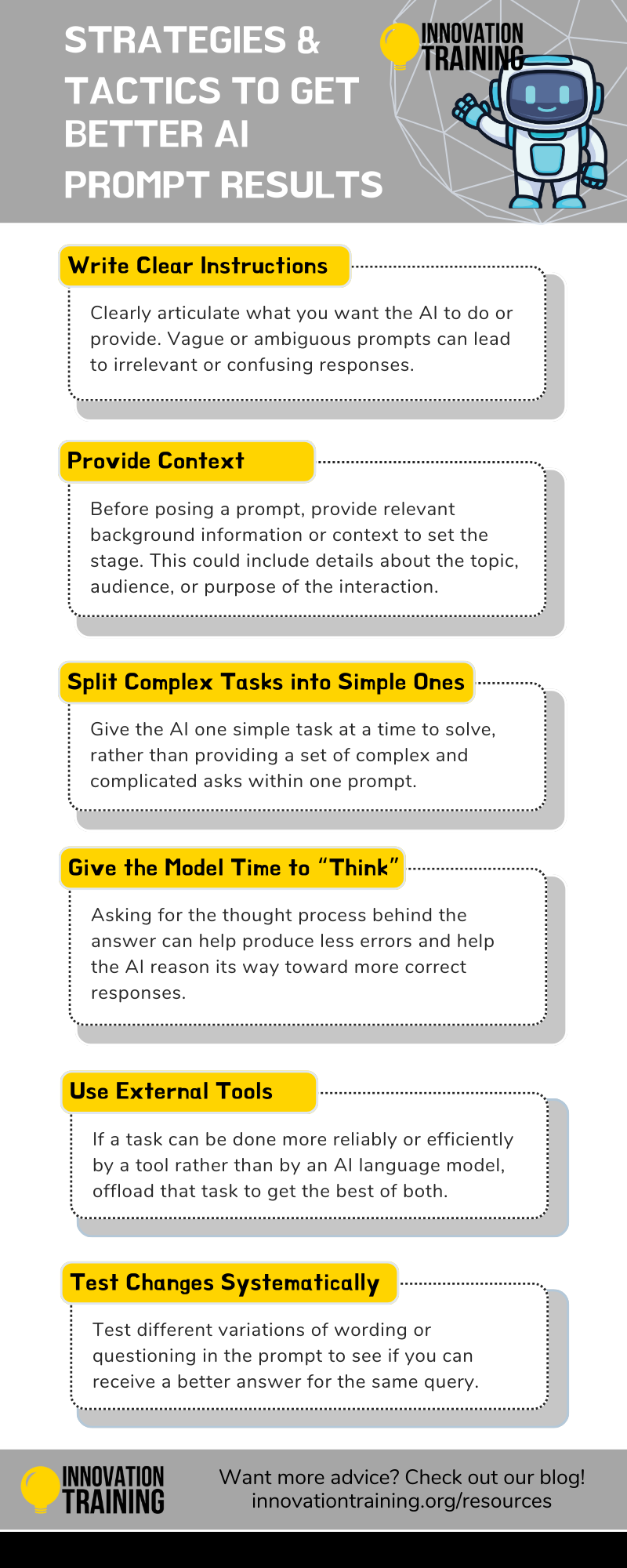
Prompting matters, but prompt hype gets silly fast. You do not need a secret spell book. You need clearer inputs.
Start with the basics:
- State the task in plain language.
- Give context the model would not know.
- Set the format you want.
- Add constraints such as length, audience, or tone.
- Ask for revisions if the first result misses.
Here is a simple example. Instead of asking, “Explain this sales report,” say, “Review this quarterly sales report for a SaaS company, find the three biggest trends, flag any weak assumptions, and summarize it for a VP in 150 words.” That is better because it reduces guesswork.
Specificity wins.
And yes, follow-up prompts are part of the job. Good AI users iterate. They do not expect perfect output on the first pass.
Learn the models by breaking them
If you want real skill, push the tools until they fail. Ask for citations. Feed them messy data. Give them conflicting instructions. Test edge cases. Why? Because limits teach faster than success.
This is where a lot of AI advice gets soft. People celebrate the wow moment and skip the audit. Bad move. If a model invents a source, misreads a chart, or loses context halfway through a long task, you need to know that before it touches client work.
Try this habit for a week:
- Keep a running log of failures.
- Note what type of task caused the miss.
- Rewrite the prompt and test again.
- Record what improved the result.
That gives you your own field guide, which is worth more than a dozen hype threads on social media.
Build a workflow, not a party trick
Strong AI use is usually a system problem, not a tool problem. One model might help you brainstorm. Another can transcribe meetings. A third may be better at coding or spreadsheet formulas. The trick is knowing where each fits (and where it does not).
Look, this is the difference between dabbling and working like a pro. You want a repeatable flow:
Research
Use AI to scan a topic, list open questions, and suggest angles. Then verify facts with primary sources, company filings, academic papers, or named reporting.
Drafting
Use it to produce a rough structure, alternate phrasings, or tighter summaries. But keep your own voice. If the copy sounds sterile, it probably is.
Analysis
Feed in data, notes, or transcripts and ask for patterns, gaps, and counterarguments. Then challenge the output. What is missing? What seems too neat?
Editing
Ask for cuts, stronger verbs, or clearer logic. This is one of AI’s best jobs because the target is narrow.
That workflow saves time without handing over judgment. Big difference.
Why verification is the non-negotiable AI skill
The better these systems sound, the more careful you need to be. Large language models can present falsehoods with total confidence. Researchers, including teams at OpenAI and major universities, have repeatedly documented hallucinations and citation errors across model families. Wired’s reporting on AI literacy points to the same hard truth. Fluency is not reliability.
So build a verification routine:
- Check names, dates, numbers, and quotes.
- Open cited links and confirm they exist.
- Compare sensitive claims with trusted sources.
- Use domain experts when the stakes are high.
Honestly, this is where real professionals separate themselves. Anyone can generate text. Fewer people can tell if it deserves to survive contact with the real world.
Use AI to sharpen your thinking, not replace it
The best users I have seen treat AI like a sparring partner. They ask for objections, edge cases, and alternate frames. They do not want soft agreement. They want pressure.
Try prompts like these:
- “Argue against this plan like a skeptical CFO.”
- “What assumptions am I making that could fail?”
- “Give me three stronger ways to structure this argument.”
- “What would an expert in this field challenge first?”
That approach makes your own thinking stronger. It is a lot like having an extra editor in the room, or a practice opponent who keeps exposing your weak footwork.
Stay current without chasing every shiny release
New models drop constantly. New benchmarks flood your feed. Most of it does not matter to your daily output.
Here is the sane approach. Track a small set of sources, test major model updates on your own tasks, and ignore the noise in between. Wired is one useful source for broad AI coverage. So are official release notes from OpenAI, Anthropic, Google, and Meta. If you work in technical roles, arXiv papers and benchmark reports can help, but only if they connect to your actual use case.
Ask yourself one blunt question. Does this new model improve speed, accuracy, cost, or control for work I really do? If the answer is no, move on.
The habit that makes getting better at AI stick
Set a tiny weekly drill. Thirty minutes is enough. Pick one recurring task and improve it with AI each week. Maybe that means better prompts. Maybe it means a stronger review checklist. Maybe it means comparing two models side by side.
Over time, those small tests stack up. You stop being impressed by demos and start building judgment. That is the whole game, really.
Where this goes next
AI skill is starting to look less like a niche advantage and more like basic digital competence. The people who stand out will not be the ones posting the flashiest screenshots. They will be the ones who can get reliable work out of messy systems, under deadline, without fooling themselves. So the next step is simple. Pick one real task you already own and rebuild it with AI this week. Then ask the only question that matters. Did the work get better, or just faster?