Kog GPU Inference Optimization: Why Deeper Tuning Matters
You do not need another startup promising faster AI. You need lower inference bills, steadier latency, and fewer surprises when traffic spikes. That is why Kog GPU inference optimization deserves attention. It points at a problem most teams hit after the demo phase: model serving gets expensive fast, and generic tooling only gets you so far.
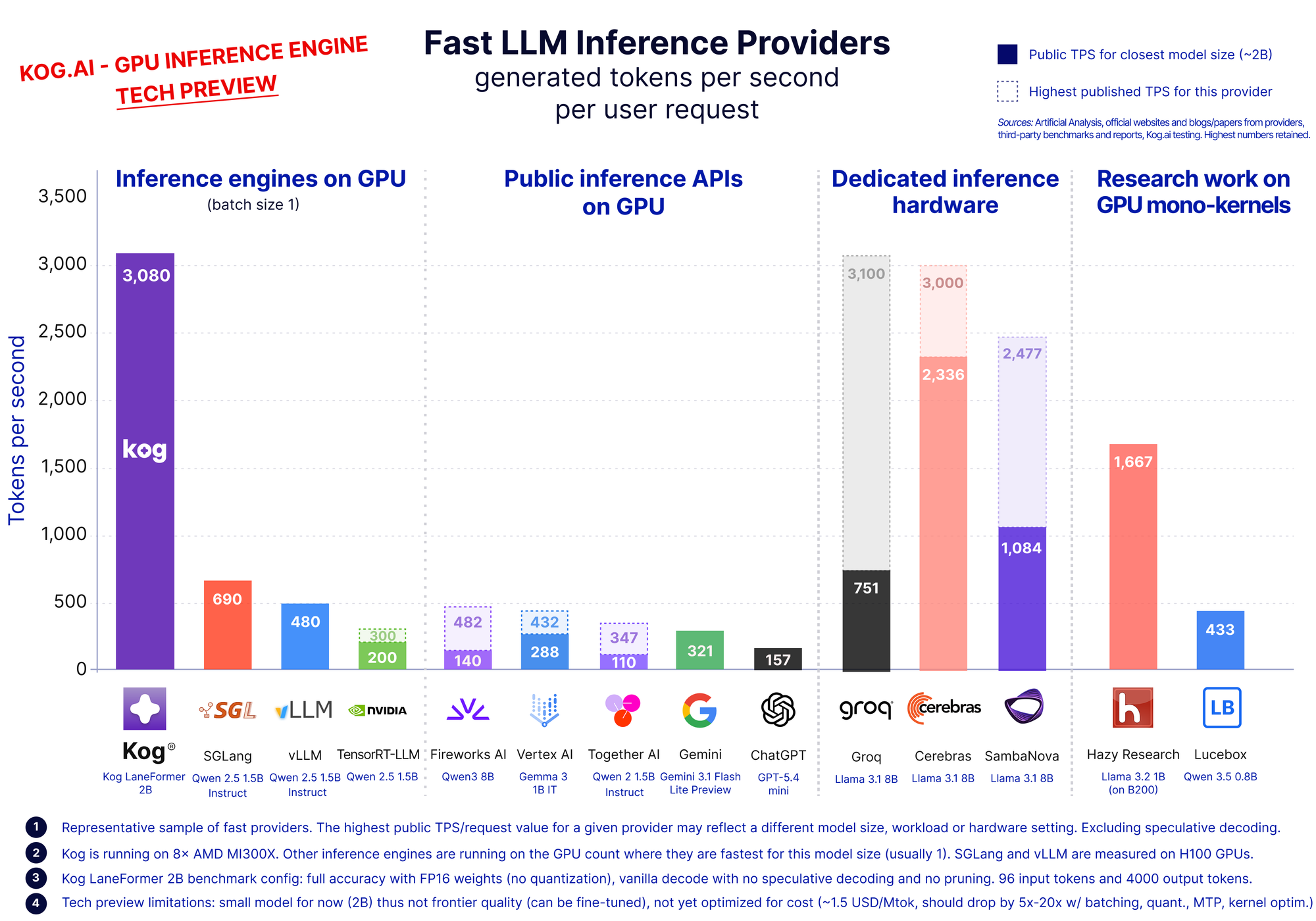
Look, the hard part is not running a model once. The hard part is running it all day, at scale, without wasting GPU cycles. Kog is betting that deeper control over kernels, memory movement, and scheduling can squeeze more useful work out of the same hardware. That is a practical bet, not a flashy one. And it matters now because every extra token per second changes your unit economics.
What should you make of that? If you run LLMs, vision models, or any high-volume inference stack, the answer is simple. Pay attention. The next round of advantage may come from who wastes less compute, not who trains the biggest model.
What stands out about Kog GPU inference optimization
- It targets inference, not training. That is where many teams spend the most money once usage grows.
- It goes deeper into the stack. Lower-level work often beats surface-level tuning when you are chasing real gains.
- It is about density. More throughput per GPU means better margins and easier capacity planning.
- It fits a painful market reality. OpenAI, Anthropic, Google, and other large model vendors have trained people to expect fast responses, which raises the bar for everyone else.
Why GPU inference still wastes so much money
Most teams start with a model server, then add batching, quantization, and maybe speculative decoding. Those steps help. But they can leave a lot on the table if the system still moves data poorly or schedules work badly.
GPU inference is like running a busy kitchen with one expensive stove. If the pans are the wrong size, the cooks wait too long, and ingredients sit around cold, your best burner still does not save the meal. The same logic applies here. Compute is only part of the story. Memory access, kernel efficiency, and queue behavior decide how much of that compute becomes output.
Kog is leaning into the part of AI infra that operators actually feel in their budgets: wasted GPU time, uneven latency, and throughput that looks fine in a demo but falls apart under load.
How deeper optimization usually works
Deep GPU inference tuning can mean several things at once. It can mean custom kernels, fused operations, better KV cache handling, smarter batching, or tighter control over how tensors move through memory. Each one trims a different kind of waste.
- Reduce memory traffic. GPUs are fast, but moving data can bottleneck the pipeline.
- Fuse operations. Fewer kernel launches often means less overhead and better throughput.
- Improve scheduling. Good queue logic keeps the GPU busy without creating ugly tail latency.
- Match the workload. A text-generation stack does not behave like an image model or an embedding service.
That is why broad claims about “faster inference” are usually thin. Real gains come from matching the software to the exact workload. Not every model needs the same treatment, and pretending otherwise is how teams burn months.
What this means for AI teams buying infrastructure
If Kog delivers, the first benefit is obvious. Lower cost per request. But there is a second effect that matters just as much. Better inference density can delay new GPU purchases, which gives operators breathing room when hardware supply or cloud pricing gets ugly.
There is also a product angle. Faster, steadier inference lets you ship more demanding features without forcing users to wait. That matters for copilots, agents, real-time assistants, and search tools where lag kills trust. Who wants a smart assistant that stalls every third answer?
For buyers, the right question is not whether a vendor sounds clever. The right question is whether the system improves the numbers you can verify:
- tokens per second per GPU
- p95 and p99 latency
- cost per 1,000 requests
- GPU utilization under mixed traffic
Where the hype should stop
Some AI infrastructure startups talk as if better software makes hardware limits disappear. It does not. Physics still wins. If memory bandwidth is the bottleneck, no amount of polish turns an old card into a new one.
But the opposite mistake is just as bad. Many teams assume all serious gains already came from quantization and batching. That is too neat. Inference stacks still hide waste, especially once they support multiple models, longer contexts, and spiky traffic. Kog’s pitch lives in that leftover space.
That is the real test. Can it hold up outside synthetic benchmarks, under messy production load, with real users hitting the system at odd hours?
What to watch next
If you are evaluating GPU inference tools, ask for workload-specific numbers and not glossy slides. Ask how the system behaves with long prompts, bursty traffic, and mixed request sizes. Ask what happens when you swap models or increase context length.
And if Kog is serious, that is where it should be strongest. The market does not need another vague AI platform. It needs tools that make expensive hardware act less wasteful. The next wave of winners may be the ones that treat every GPU cycle like it costs real money. Because it does.
The next question is simple. Which teams will keep paying for slack when the better answer is to tune the stack until it stops wasting compute?