Labor Department AI Jobs Data Puts Tech Giants on the Spot
Tech companies love to talk about AI as if it is a clean upgrade. Faster workflows. Leaner teams. Better products. But the Labor Department AI jobs data story is messier, and that is why it matters now. If you work in tech, hire in tech, or sell into tech, you need to know whether AI is changing headcount, shifting tasks, or just giving executives a polished excuse for cuts they already wanted to make.
Axios reports that fresh Labor Department data is intensifying questions around how big tech firms are describing AI’s impact on jobs. That matters because the public debate is still running on anecdotes, while payrolls, openings, and layoffs tell a different story. Are companies replacing workers with models, or are they using AI as cover for restructuring? The answer affects investors, regulators, and anyone who still thinks automation arrives in one dramatic sweep. It does not. It creeps in, department by department, like a remodel you can hear behind the walls.
What the Labor Department AI jobs data is really testing
- Job counts show whether companies are shrinking, hiring, or freezing roles.
- Occupational data can reveal which tasks are changing first.
- Layoff timing helps separate AI adoption from broader cost cutting.
- Public claims from executives can be checked against labor trends.
The Labor Department does not publish a neat AI scoreboard. That is the point. Most official data is indirect, which means you have to read between the lines. A drop in customer support openings, for example, may reflect automation, offshoring, a demand slump, or all three.
That ambiguity gives companies room to spin. It also gives journalists, analysts, and regulators reason to press harder. If AI is truly transforming work, the effect should show up in hiring patterns, wage pressure, and job design. If it does not, then the hype is outpacing the evidence.
Labor Department AI jobs data and the limits of the headline number
One number rarely settles anything. Headcount can rise while work gets reorganized. Openings can fall while output stays flat. That is why the best reading of the Labor Department AI jobs data is not a single statistic, but a pattern across time.
“AI impact” is often a vague label for several different business decisions. If you want the real story, ask which roles changed, which tasks changed, and which costs changed first.
Think of it like watching a baseball box score and trying to judge the whole game from one pitch count. You miss the context. You miss the pressure. You miss whether the manager was already planning a bullpen move.
What to watch instead
- Job postings for repetitive knowledge work, especially support, marketing ops, and routine analysis.
- Internal mobility, since companies may shift workers rather than cut them.
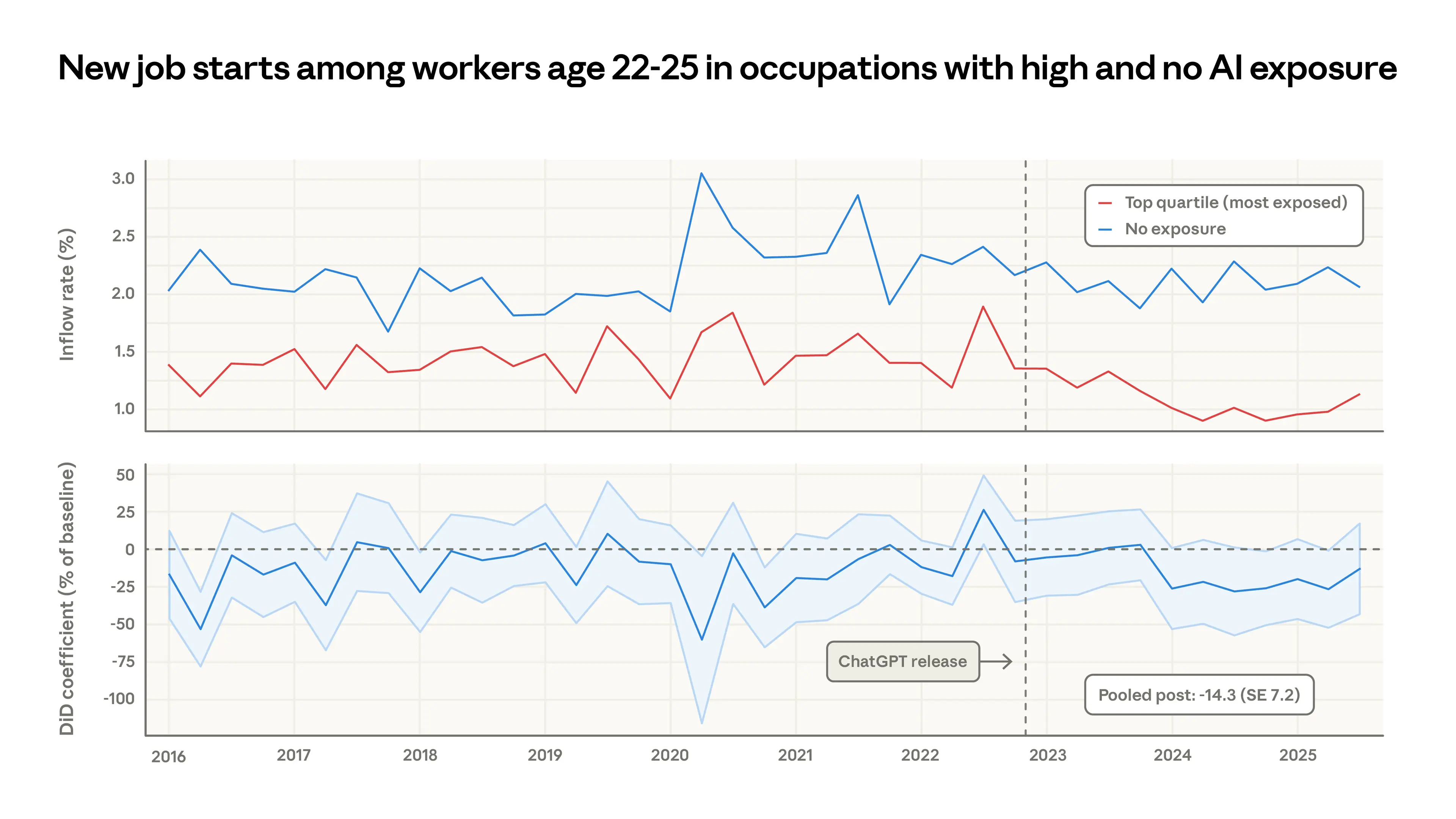
- Entry-level hiring, which often gets squeezed before senior roles do.
- Productivity language in earnings calls, where executives sometimes hint at labor savings before saying the word AI.
Look, companies do not need to announce a grand replacement plan for AI to matter. They can quietly reduce backfills, stretch teams, and rewrite job descriptions. That is slower than the robot-apocalypse narrative, but it is far more realistic.
What tech giants gain from the AI jobs story
Big tech has a strong incentive to frame AI as a productivity win. It reassures investors. It supports margin expansion. And it helps explain why a company can post strong revenue while trimming staff. Nobody on a quarterly call wants to say, “We found a cheaper way to do the same work,” but that is often the subtext.
There is a second incentive, and it is political. If firms present AI as a job creator in the long run, they can soften scrutiny in the short run. That argument may be true in some sectors. It is also convenient. The tricky part is that both things can happen at once. AI can eliminate some roles, reshape others, and create new ones elsewhere. Which effect dominates depends on the company, the time frame, and the labor market.
How you should read future Labor Department AI jobs data
Do not chase dramatic headlines. Track changes by role, not just by industry. A software company and a call center may both use AI, but the labor impact will look very different. The useful question is not whether AI is “taking jobs.” It is which jobs, at what pace, and for whose benefit?
Here is the practical filter I would use.
- Short term, watch for slower hiring and fewer junior roles.
- Medium term, watch for job redesign and tighter staffing ratios.
- Long term, watch for wage pressure in tasks that AI can standardize.
And keep one more thing in mind. The companies talking loudest about AI efficiency are often the same ones with the strongest incentive to blur causation. That does not make their claims false. It makes them incomplete.
What this means for workers, managers, and investors
Workers should treat AI as a change in job content before it becomes a change in job title. Managers should map which tasks are easy to automate and which ones still need human judgment. Investors should stop rewarding vague AI narratives and ask for labor metrics that can be checked.
The Labor Department AI jobs data will not hand you a perfect answer. It will, however, expose who is serious and who is performing. And that split is becoming harder for tech giants to hide. If the numbers keep pointing in the same direction, how long before the story stops being about AI and starts being about accountability?
What comes next
Watch the next earnings season. Watch hiring data by function. Watch whether executives keep saying AI is driving efficiency while their labor disclosures stay fuzzy. The market can live with uncertainty for a while. Workers cannot. That is why the next round of Labor Department data matters more than the last one.