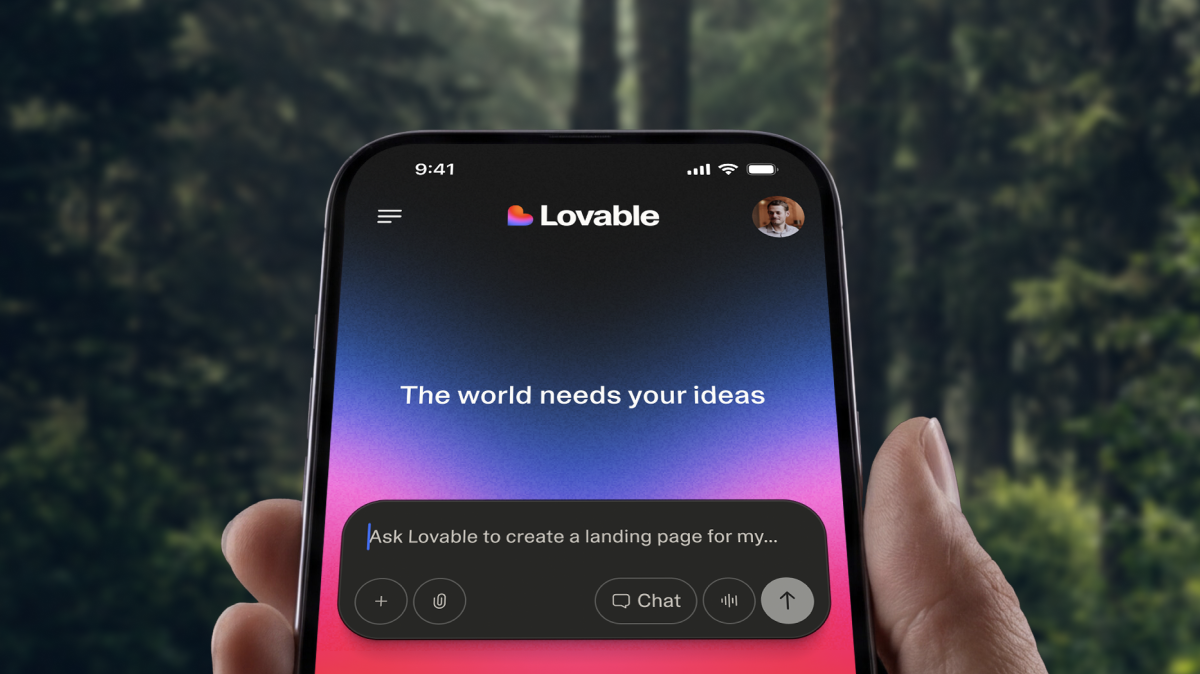
Lovable Mobile App Brings Vibe Coding to iPhone and Android
If you follow AI software tools, you have probably seen the rise of vibe coding. The pitch is simple. You describe what you want in plain language, and the tool builds an app or feature for you. Now the Lovable mobile app is bringing that idea to iPhone and Android, which matters because it shifts AI app building from the desktop to the phone in your pocket. That sounds convenient. It also raises a more useful question. Can mobile actually handle meaningful product work, or is this mostly a fast demo machine? I have covered enough developer platforms to know the difference matters. For founders, product teams, and curious solo builders, Lovable’s move is worth watching because it points to where AI coding tools are heading next, and where the friction still refuses to budge.
What stands out
- Lovable has launched a mobile app for both iOS and Android.
- The app extends vibe coding, or prompt-based app creation, beyond the desktop.
- Mobile makes quick edits, ideation, and sharing easier than traditional development setups.
- Serious debugging, architecture work, and production oversight still fit better on larger screens.
What the Lovable mobile app actually changes
The headline is not just that Lovable shipped a phone app. Plenty of companies ship phone apps. The real shift is that Lovable mobile app turns AI-assisted software creation into something more casual, frequent, and immediate.
That matters because behavior follows convenience. If building a prototype requires you to sit at a laptop, open a browser, and block off an hour, you will do it less often. If you can sketch an idea while commuting or waiting for coffee, usage patterns change fast.
Lovable is betting that app creation can start with the same low-friction habits that power texting, note-taking, and image generation on mobile.
Look, that is a smart bet. Phones are where many ideas first show up. A founder thinks of a feature. A marketer wants a landing page tweak. A seller wants a lightweight internal tool. Mobile lowers the barrier to start.
But start is the key word.
Why vibe coding fits mobile better than old-school development
Traditional coding on a phone is awkward. Tiny keyboard. Cramped file views. Too many tabs. Too little context. It is like trying to plate a restaurant meal on an airplane tray table. Possible, maybe. Pleasant, no.
Vibe coding changes the input method. Instead of typing every line, you describe intent. That makes mobile less hostile. Voice input, short prompts, and quick iteration fit the device much better than raw code editing ever did.
Where mobile AI app building works well
- Idea capture. You can turn a rough concept into a working prototype before the idea goes stale.
- Quick revisions. Changing copy, layout, or simple flows is easier when you are not tied to a desk.
- Team sharing. A mobile-first prototype is easy to pass around for feedback.
- Non-technical access. People who would never open a code editor might try prompting an app into existence.
That last point could be the biggest one. AI coding tools keep claiming they broaden who can build software. On mobile, that claim gets a real test.
Where the Lovable mobile app will hit limits
Here is the part companies tend to gloss over. Building software is not only about generating an interface from a prompt. It is also about constraints, debugging, data models, security, testing, and maintenance. Phones are weak environments for that kind of work.
Honestly, this is where hype tends to outrun reality. A slick mobile prompt-to-app flow can impress in 30 seconds. Production-grade work is a different beast.
Expect the Lovable mobile app to be strongest in these cases:
- prototypes
- internal tools
- landing pages
- simple consumer app experiments
- quick visual changes
Expect friction in these cases:
- deep debugging
- multi-step backend logic
- security review
- version control heavy workflows
- complex team collaboration
That does not make the product weak. It makes it specific. And specificity is healthy in a market full of inflated claims.
Who should pay attention to the Lovable mobile app
Not every AI coding launch deserves oxygen. This one does, because it hints at where software tooling is moving.
Founders and solo builders
If you test ideas constantly, mobile matters. You can rough out concepts on the move, show them to users quickly, and keep momentum. Speed is not everything, but early-stage work runs on speed.
Product managers
PMs often sit between idea and execution. A mobile AI builder could help them mock flows and communicate intent without waiting for design or engineering bandwidth every time.
Developers
Developers should watch this category with clear eyes. It is not replacing serious engineering work tomorrow. But it may absorb more of the low-end prototype and front-end scaffolding work than many expect.
Enterprises
Big companies will care if these tools become safe enough for internal apps. That is the real money path. Consumer wow is nice, but enterprise repeatability pays the bills.
What this launch says about the AI coding market
The AI coding market is getting crowded. Everyone wants to own the jump from idea to software. Some tools target developers. Others go after non-technical users. Lovable’s mobile move suggests the next fight is not only about model quality. It is about where creation happens.
Desktop-first AI coding tools still own depth. Mobile-first experiences may win on frequency. That split matters.
Think of it like basketball. The half-court offense gets the highlight package, but fast breaks pile up easy points. Mobile AI builders may become the fast-break layer of software creation, even if the full game still belongs to desktop tools.
And there is another angle. If users get comfortable building from prompts on phones, their expectations change everywhere else. They will want software creation to feel conversational, instant, and forgiving across devices.
Questions smart users should ask before buying in
Before you treat the Lovable mobile app as your next core workflow, ask a few boring but non-negotiable questions.
- Can you export or own the generated code?
- How does the app handle authentication, databases, and integrations?
- What review steps exist before something goes live?
- How well does mobile work once a project grows beyond a small prototype?
- Does the tool fit your current stack, or force a new one?
These are not glamorous questions. They are the ones that decide whether a tool stays in your workflow after the first week.
(And yes, every AI software company would rather lead with magic than maintenance.)
What to watch next
The next milestone is not more mobile launches by themselves. It is whether users keep building after the novelty fades. Retention will tell the story.
If Lovable can make the mobile experience useful for repeat work, not just quick experiments, it will stand out in a noisy field. If not, the app risks becoming another polished demo surface for ideas that still need a laptop to survive contact with reality.
So should you care? Yes, if you want a clearer view of where AI app creation is headed. The big question now is whether tools like Lovable can turn phone-first convenience into software people actually trust to run something that matters.


