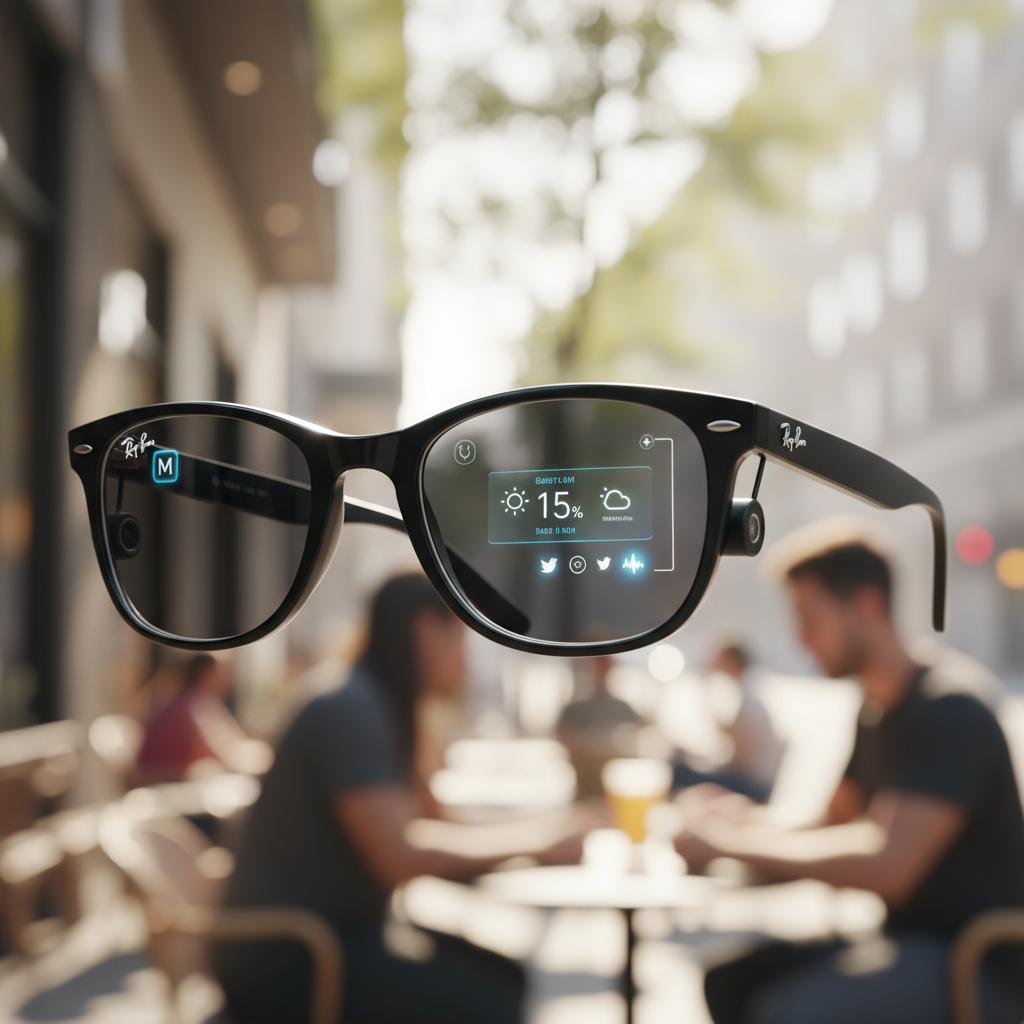
Meta AI Glasses Put Zuckerberg’s Next Bet on Your Face
You may not care about smart glasses yet, but Meta AI glasses are inching toward the same place smartphones reached years ago: useful enough to become hard to ignore. In a recent Verge podcast interview, Mark Zuckerberg talked about AI glasses, teen safety, surveillance concerns, and the data centers needed to power Meta’s next wave of products. The pitch sounds simple. Put a camera, microphone, display, and AI assistant close to your senses, then make it feel normal. The problem is less simple. A wearable that can see and hear the world raises sharper questions than a phone in your pocket. Who gets recorded? What happens to the data? And how much of your daily life does Meta need to process to make the product feel smart?
What Matters Most
- Meta AI glasses are becoming the company’s clearest hardware bet, especially as phones feel mature and mixed reality remains expensive.
- Zuckerberg is framing glasses as the natural home for personal AI, because they can see what you see and respond in context.
- Privacy is the pressure point. A face-worn camera changes the social contract in public spaces.
- Teen safety remains a trust problem, even when Meta describes stronger controls and policy changes.
- Data centers are the hidden cost. Personalized AI at scale needs huge compute, power, and capital spending.
Why Meta AI Glasses Are More Than a Gadget
Meta has tried plenty of hardware stories. Portal faded. Quest has a loyal base but still has not become a daily device for most people. Ray-Ban Meta glasses, though, have a cleaner pitch: they look close to normal glasses, take photos, capture video, play audio, and now tie into Meta AI.
That matters because form factor wins in consumer tech. If a device makes you look strange, most people leave it at home. If it blends into your day, it has a fighting chance.
Here’s the thing: AI makes the glasses more useful than the first wave of camera glasses. A camera alone is a recording tool. A camera plus an assistant can identify objects, translate signs, summarize what you are looking at, and respond to spoken questions. That is where Zuckerberg’s argument gets stronger.
Glasses are the first Meta hardware product in years that feel aimed at normal daily behavior rather than a future that users have to cosplay.
But the pitch still depends on restraint. If Meta treats glasses as another feed surface, people will reject them. If it treats them as a quiet assistant, the product has room to grow.
Meta AI Glasses and the Privacy Problem
A phone camera is visible. You lift it, aim it, and people can tell what is happening. Glasses blur that signal, even with a recording light. That is the core issue with Meta AI glasses: they make capture feel casual.
Anyone who covered Google Glass remembers the backlash. The word “Glasshole” did not come from nowhere. People disliked the sense that they might be recorded without consent in bars, offices, gyms, classrooms, or sidewalks. Meta faces the same social wall, only now the AI layer adds more tension.
What changes when the device can interpret the scene too? It may not only record a stranger in a coffee shop. It may analyze the brand of laptop in front of them, read a sign behind them, or answer a question about what it sees. That creates a gap between what the wearer experiences and what bystanders understand.
Small design choices will matter.
- Make recording indicators obvious in daylight and indoors.
- Give users clear controls for camera, microphone, and AI memory.
- Limit sensitive-use cases by default, including face recognition on strangers.
- Explain what data is stored, what is processed briefly, and what trains future models.
- Build social norms into the product, not only into help pages.
Look, privacy policies do not fix awkward human moments. If someone across the table feels watched, the product has already lost that interaction.
What Zuckerberg’s AI Pitch Gets Right
Zuckerberg’s strongest point is that AI needs context. Chatbots inside text boxes are useful, but they are still waiting for you to describe the world. Glasses can skip part of that step. They can see the broken appliance, the menu in another language, or the trail marker you cannot read from a distance.
That is a real usability shift. Think of it like a cooking assistant standing beside you rather than a recipe book on the counter. The assistant can see that the pan is too hot, that you used the wrong bowl, or that the onions are already browning. The interface gets less abstract.
Still, context is not magic. The AI must be fast, accurate, and modest about what it does not know. A wrong answer from a phone chatbot is annoying. A wrong answer in your field of view, while you are walking or making a decision, can feel more invasive.
Meta AI Glasses Need Trust Before They Need Hype
Meta’s history follows the product into the room. Facebook’s privacy scandals, Cambridge Analytica, ad targeting debates, and years of moderation failures all shape how people hear the glasses pitch. That is not ancient history for regulators, parents, or users who grew up with social media.
Teen safety is part of that trust gap. Zuckerberg often argues that Meta has added parental controls, age-based protections, and limits around sensitive content. Those steps matter. They also arrive after years of criticism from lawmakers, researchers, and families who say social platforms moved too slowly.
So what should you watch for?
- Default settings: Are teens protected automatically, or do parents have to hunt through menus?
- Data separation: Does Meta treat teen data differently for AI features and recommendations?
- Clear reporting: Can outside researchers inspect safety claims in a meaningful way?
- Product incentives: Does the system reward healthier use, or does it still chase time spent?
Parents do not need another dashboard that looks good in a press briefing. They need fewer dark patterns, faster abuse response, and defaults that assume kids are kids.
The Data Center Bill Behind Meta AI Glasses
Personal AI sounds light because the interface is small. The infrastructure is not. Meta is spending heavily on AI chips, servers, energy, networking, and data center capacity to support its models and consumer products.
This is the least glamorous part of the story, and maybe the most decisive. If Meta wants glasses that answer quickly, handle images, remember preferences, and serve hundreds of millions of users, it needs vast compute. Some work can happen on-device over time, but the most capable AI features still lean on cloud systems.
That raises three practical questions:
- Cost: Can Meta offer advanced AI features without turning glasses into a pricey subscription product?
- Latency: Will responses feel instant enough for real-world use?
- Energy: How will Meta justify the power demand as AI infrastructure expands?
Investors may tolerate big spending if they see a platform forming. Users will be less patient. If the glasses lag, overheat, drain the battery, or give bland answers, they become drawer clutter.
What You Should Do Before Buying Meta AI Glasses
If you are tempted by Meta AI glasses, treat them like an early platform rather than a finished replacement for your phone. The hardware may be useful today for photos, calls, music, and quick AI queries. The bigger promise will take longer.
Before buying, check four things:
- Your use case: Do you need hands-free capture, translation, or visual search often enough to wear them?
- Your comfort level: Are you fine wearing a camera in social settings where others may object?
- The privacy controls: Can you delete recordings, manage AI data, and disable features easily?
- The return policy: Smart glasses are personal. Fit, battery life, and social comfort matter more than spec sheets.
Honestly, the best buyer right now is someone who wants a capable wearable and accepts tradeoffs. If you expect a mature AI companion, wait.
The Next Platform Fight Is Getting Personal
Meta AI glasses show where consumer AI is heading: away from chat windows and toward devices that sense more of your life. That can be useful. It can also be creepy, especially from a company whose business has long depended on personal data.
The product will not win because Zuckerberg says glasses are the future. It will win if people around the wearer feel respected, if the AI saves time without acting weird, and if Meta proves that safety settings are more than public relations. The next smart device may sit on your face. The real question is whether Meta can earn the right to put it there.


