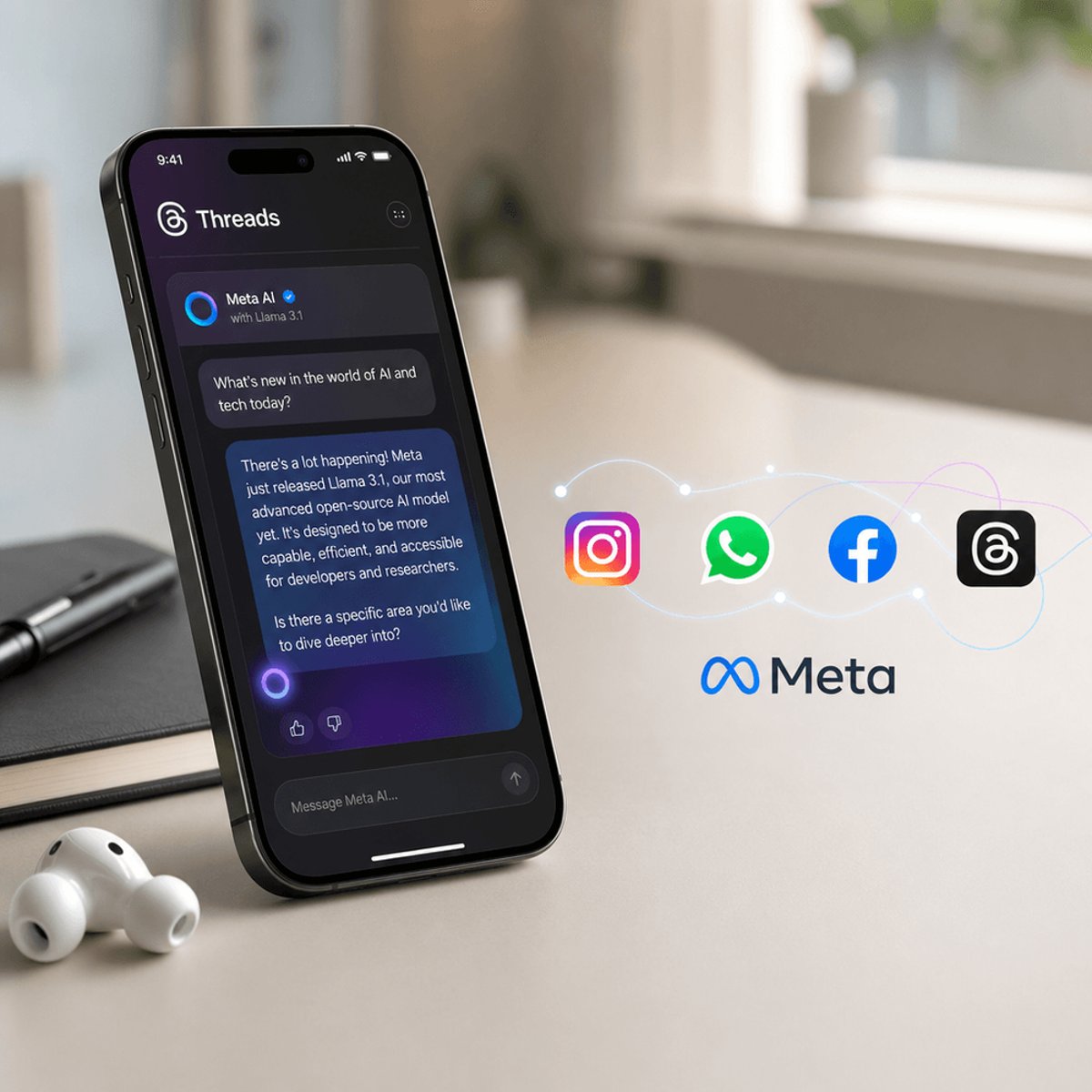
Meta AI in Threads DMs: What Changes for Users
You may have used Threads for quick takes and casual replies, then moved on. Now Meta is putting Meta AI in Threads DMs, and that changes the app’s job. It is no longer just a feed for posts and chatter. It is becoming a place where you can ask questions, draft text, and get help without leaving the conversation thread.
That sounds small. It is not. Once an AI sits inside your direct messages, it can shape how fast you respond, what you ask, and how much you trust the app with private context. Do you want a helper inside your inbox, or does that feel like one more layer of noise? That is the real question here. Meta is betting that convenience wins. Maybe it will. But the tradeoff is worth a hard look.
What stands out about Meta AI in Threads DMs
- It brings AI into private conversation flow. You do not have to jump to a separate chatbot.
- It changes Threads from social app to utility app. That is a bigger move than it looks.
- It may speed up routine tasks. Drafts, rewrites, summaries, and quick answers get easier.
- It raises privacy questions. DM context is more sensitive than public posts.
- It pushes Meta deeper into everyday AI use. The company wants the assistant to feel normal, not novel.
Why Meta AI in Threads DMs matters now
Meta has spent years weaving AI into its products, from Facebook and Instagram to WhatsApp. Threads is the latest test case, and the timing makes sense. People are already comfortable asking AI for writing help and quick research, so putting the tool directly in DMs removes friction.
That friction matters. A chatbot buried behind another app loses momentum fast. Put the same tool where the conversation already lives, and the use case becomes more natural. It is like moving a cutting board next to the stove. You cook more because the setup is simpler.
The real play is behavioral. Meta wants AI to feel like a default part of messaging, not a special feature you remember once a week.
“The hardest part of AI is not building the model. It is making the tool show up at the exact moment people need it.”
How you might use it day to day
The obvious uses are practical. You can ask Meta AI to rewrite a message, explain a topic, or help you reply faster. That can save time when you are juggling work chats, creator messages, or community threads that pile up quickly.
- Draft faster replies. Use it when you know what you want to say but need cleaner wording.
- Summarize messy exchanges. Long threads can be hard to scan, especially on a phone.
- Get quick context. If someone sends a link or topic, you can ask for a plain-English summary.
- Polish tone. Helpful when you need to sound direct without sounding cold.
And yes, this is where the product starts to look less like a social network and more like an assistant with a social layer. That is not a small shift. It is a new habit.
Meta AI in Threads DMs and the privacy tradeoff
Any AI in direct messages will trigger the same question: what does the system see, store, and learn? Meta will have to answer that clearly if it wants people to use this with confidence. Private chat is not the same as a public post. The tolerance is lower.
Threads users should pay attention to the data controls, especially if Meta AI can read the text you send or the context around it. Even if the feature is useful, people will not touch it if the boundaries feel vague. Trust is the price of admission here.
One more thing. The more a helper sits inside your DMs, the easier it is to treat it like a coworker. That can be handy. It can also create sloppy habits, where you paste in more than you should. Keep that in mind before you feed it anything sensitive.
What this says about Meta’s AI strategy
Meta has been consistent on one point. It wants its AI to live inside the apps people already use every day. That is smarter than asking users to learn a new product from scratch. It also gives Meta more chances to train habit loops across its ecosystem.
But the company still has a credibility gap. People know Meta is good at distribution. They are less sure about its restraint. So every new AI feature has to clear a higher bar than a stand-alone chatbot would. Will users see this as help, or as another push from a company that wants more screen time?
What to watch next
Watch three things closely.
- Controls. Can you turn the feature off cleanly?
- Clarity. Does Meta explain what the AI can access?
- Utility. Does it actually save time, or just add another button?
If Meta gets those basics right, Meta AI in Threads DMs could become one of those features people stop thinking about because it works. If it gets them wrong, users will treat it like clutter. And that is the fork in the road. Which version do you think Meta is about to deliver?
Where Threads goes from here
Threads is still young compared with Instagram or Facebook, so feature choices matter more here. Each addition helps define the app’s identity. Putting AI into DMs says Meta wants Threads to be useful, sticky, and hard to leave.
That is a bold bet, but not a crazy one. People already use chat apps for workarounds, drafts, and quick decisions. If Meta AI in Threads DMs helps with those moments without getting in the way, it could become a habit people keep. If not, it will sit there like gym equipment in the corner. Useful in theory. Ignored in practice.
The next test is simple: does the feature feel like a shortcut, or does it feel like a sales pitch?