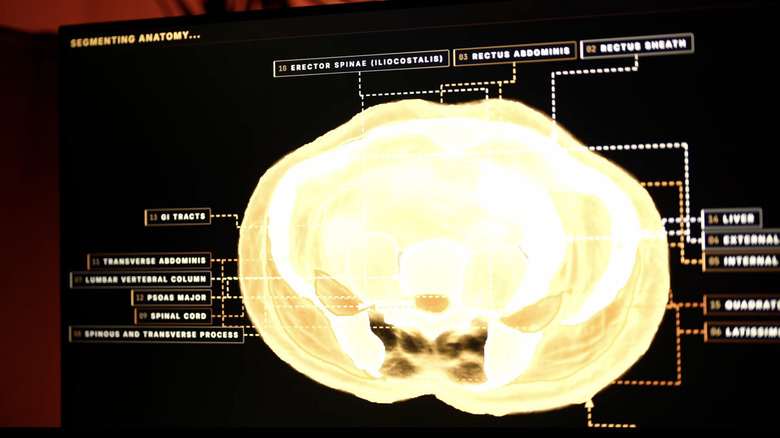
Midjourney Medical AI Ultrasound Scan Raises Real Stakes
Doctors do not need another shiny demo. They need tools that help them read scans faster, catch problems earlier, and avoid mistakes that cost time or lives. That is why the phrase Midjourney medical AI ultrasound scan matters more than it first appears. It sits at the intersection of image generation, clinical imaging, and the very real pressure to make AI useful in care settings.
The problem is simple. AI vendors keep promising speed, scale, and insight, but ultrasound is messy, operator-dependent, and often hard even for experienced clinicians to interpret. So the question is not whether AI can process images. It can. The question is whether it can do so in a way that is accurate, auditable, and safe enough for medicine. Who wants a fast answer if the answer is wrong?
What stands out about the Midjourney medical AI ultrasound scan story
- It shows how fast AI is moving into clinical-looking territory. That makes guardrails non-negotiable.
- Ultrasound is a difficult test case. Image quality changes with the operator, the patient, and the machine.
- Visual plausibility is not clinical validity. A clean image can still be misleading.
- Health systems will ask for proof. Accuracy, bias, traceability, and regulatory status all matter.
- Trust will decide adoption. Doctors will not hand over workflow to a black box.
Why the Midjourney medical AI ultrasound scan angle matters
Midjourney is known for image generation, not clinical diagnosis. That makes this story interesting, and a little unnerving. If a model built for visual output starts creeping toward medical imaging use cases, the line between illustration and diagnosis gets thin very quickly.
Ultrasound is a rough place to test AI. The images are noisy. Small changes in probe angle can change what appears on screen. And in many settings, the scan quality depends heavily on the operator, which means an algorithm may be learning from variable inputs rather than clean labels.
In medical imaging, a polished image is not the same thing as a correct image. That gap is where the risk lives.
What AI can help with in ultrasound, and what it cannot
There is real value in AI-assisted ultrasound. Systems can flag likely anatomy, help measure structures, improve workflow, and reduce repetitive review tasks. Hospitals and researchers have already explored these uses across radiology and point-of-care ultrasound.
But the limits show up fast. AI cannot replace the clinical context that tells you whether a finding matters. A model can mark a pattern on a scan. It cannot tell you whether that pattern fits the patient in front of you, the symptoms, the history, or the exam.
Practical use cases that make sense
- Image quality checks. The system can warn if the scan is too poor to interpret.
- Measurement support. It can help size organs, vessels, or fetal structures.
- Workflow triage. It can route likely urgent cases for review sooner.
- Training support. It can help less experienced users learn probe placement and standard views.
That is the useful lane. Everything else needs proof, not marketing.
Why regulation and validation are the real story
Medical AI is not judged on vibes. It gets judged on validation studies, clinical performance, and regulatory review. In the U.S., that means scrutiny from the FDA. In Europe, it means compliance with medical device rules and the newer AI Act framework. If a system influences diagnosis, it needs more than a clever demo.
Here is the thing. Many AI systems look strong in lab tests and then wobble in real hospitals. The training data does not match local patient populations. The device gets used by people with different skill levels. The workflow changes. The model drifts. This is why external validation matters, and why ongoing monitoring is not optional.
Think of it like building a bridge with perfect computer renderings. Nice drawings do not hold traffic. The structure has to bear weight in the real world, under stress, day after day.
How to judge a medical AI ultrasound tool
If you are a clinician, hospital buyer, or health tech reporter, ask the same hard questions every time.
- What data trained the model?
- Was it tested on the same type of patients you see?
- Does it work across different ultrasound machines?
- Who reviews false positives and false negatives?
- Can the system explain why it flagged a frame or measurement?
- Is there a clear audit trail?
Transparency is the first test. If a vendor cannot explain the data, the failure modes, and the limits, you should assume the product is ahead of the evidence.
What this means for the next wave of health AI
The broader shift is bigger than one company. AI is moving from text and general images into clinical workflows where mistakes carry direct consequences. That change will force the industry to grow up. Fast.
Expect two outcomes. First, the best tools will get narrower, not broader. They will do one imaging task well instead of pretending to solve medicine. Second, buyers will become less impressed by flashy output and more interested in proof, calibration, and monitoring. Good. That is the right pressure.
Midjourney medical AI ultrasound scan coverage is a reminder that the easy part of AI is generating something that looks convincing. The hard part is proving it helps a patient. And that is where the next fight will be won or lost.
What to watch next
Watch for clinical trials, regulatory filings, and real-world deployment data. If those do not appear, treat the hype with caution. If they do appear, read the details closely, because the fine print will tell you whether the system is a serious medical tool or just another polished demo.
For now, the smartest move is to ask one blunt question before believing any of it: does this system improve care, or does it only improve appearances?


