Musk vs Altman Exposes AI Leadership Failure
If you follow AI closely, the public fight between Elon Musk and Sam Altman can feel like gossip with bigger stakes. It matters because the people steering the most powerful AI systems now shape markets, labor, media, and policy. The Musk vs Altman AI leadership story is not really about one lawsuit, one insult, or one bruised alliance. It is about whether a tiny circle of wealthy founders and executives should have this much control over tools that could alter how societies work.
The timing matters. OpenAI sits near the center of the generative AI boom. Musk runs xAI while also controlling X, Tesla, and SpaceX. When two men with that much money, reach, and ego turn AI into a personal power contest, you should ask a harder question. Who is this technology actually being built for?
What stands out here
- The Musk vs Altman AI leadership clash highlights a governance problem, not just a personality feud.
- Both men talk about AI safety and public benefit, but both also operate inside power structures built around control.
- OpenAI’s shift from nonprofit ideals to commercial scale fed distrust long before the lawsuit.
- The bigger risk is not only bad models. It is weak accountability at the top.
Why the Musk vs Altman AI leadership fight matters
Look, tech history is full of founder drama. Most of it is noise. This case is different because it sits on top of a live debate about who gets to direct frontier AI research, who profits from it, and who answers for the fallout.
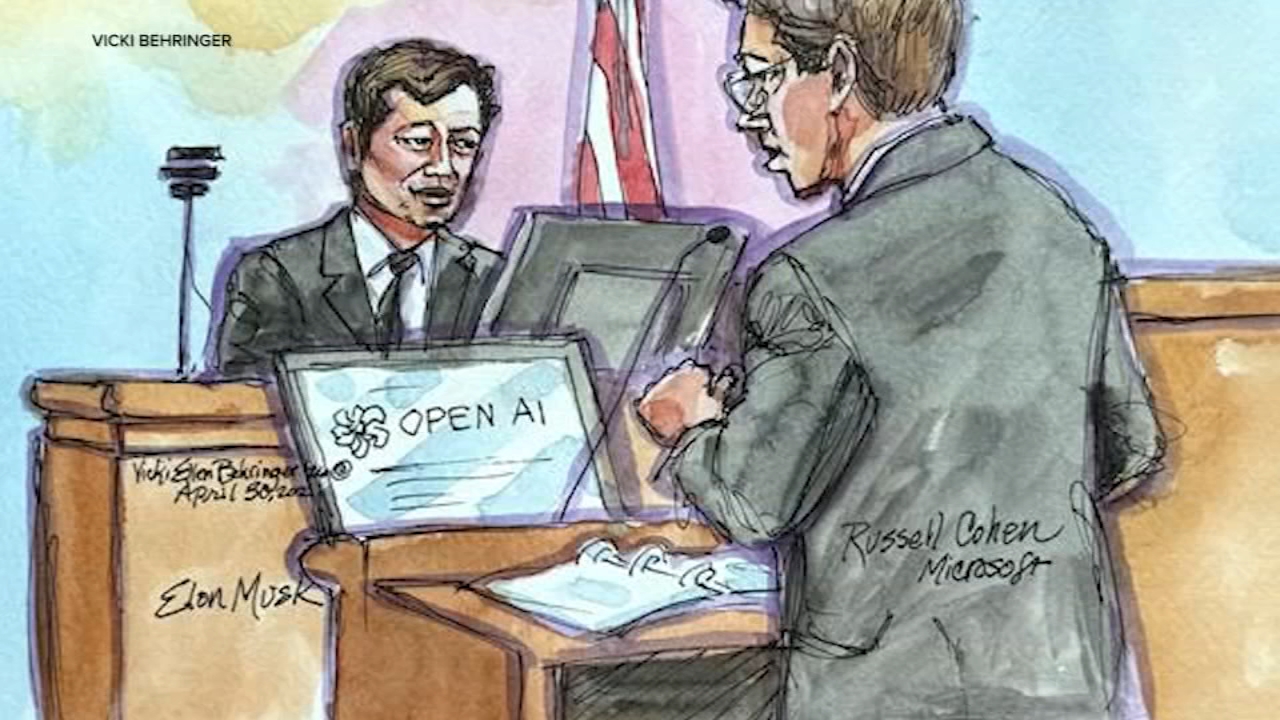
Musk helped fund OpenAI at the start. He later split from it. Altman became the face of OpenAI’s rise, especially after ChatGPT turned AI into a mass-market product. Musk then sued OpenAI and Altman, arguing the group had drifted from its original mission to develop AI for humanity rather than private gain. OpenAI pushed back and published receipts of its own, including claims about Musk’s past involvement and proposals.
That is the visible layer. Underneath it sits a much uglier truth. AI leadership has become concentrated in a handful of companies led by people who often speak the language of public duty while acting like empire builders.
Here’s the thing. A technology this powerful should not depend on the judgment, mood, or rivalry of a few celebrity executives.
What the OpenAI saga says about AI governance
OpenAI always invited tension. It started as a nonprofit with a public-interest pitch. Then it built a capped-profit structure, took major Microsoft backing, and raced into product deployment. Was that shift inevitable? Maybe. Was it clean or convincing? Not really.
This is why the OpenAI board crisis in late 2023 mattered so much. The board fired Altman, employees revolted, Microsoft gained even more influence, and Altman returned within days. For anyone watching governance, that episode was like seeing a building sway in high wind and then being told the foundation is solid. You do not forget it.
The episode suggested three things:
- Mission-driven structures can buckle under commercial pressure.
- Boards without stable power or public legitimacy struggle to check star executives.
- Strategic partners such as Microsoft can end up with enormous sway, even without straightforward ownership control.
And that is before you get to Musk, who now sells his own AI vision through xAI. He is not an outside critic in the pure sense. He is a competitor with his own incentives, his own platform power, and his own record of treating governance as an obstacle when it gets in the way.
Are Musk and Altman actually offering different models?
In style, yes. In substance, less than fans on either side admit.
Altman tends to present himself as measured, policy-aware, and institution-friendly. Musk plays the insurgent, warning about civilizational risk while mocking rivals and regulators in the next breath. But both approaches still center elite control. Both rely on the idea that a small group of insiders can responsibly manage systems with broad public impact. That is a big ask.
Honestly, this is where a lot of AI commentary gets too soft. It treats the conflict as if one side must be the adult in the room. But what if the room itself is the problem?
One lawsuit cannot fix that.
What better AI leadership would look like
If you care about AI beyond stock moves and founder theater, the useful question is not who wins this feud. It is what sort of governance would make these feuds less relevant.
1. Stronger independent oversight
AI labs building frontier models need boards with real technical literacy, real independence, and real power to slow deployment. Not symbolic oversight. Actual oversight.
2. Clearer public-interest obligations
Companies that claim to build AI for humanity should publish more than model demos and safety slogans. They should disclose testing standards, deployment thresholds, known failure modes, and conflict-of-interest boundaries where possible.
3. Less founder worship
The industry still acts as if charisma is a substitute for accountability. It is not. Running an AI lab is not like captaining a pirate ship or calling plays in a startup Super Bowl. It is closer to operating core infrastructure, where process matters because failure spreads fast.
4. A bigger role for public institutions
Governments are slow, yes. Regulators are often behind, yes. But leaving frontier AI to private actors alone has obvious flaws. Public research bodies, standards groups, and international coordination efforts need more weight in the system (even if the process gets messier).
The deeper problem with Musk vs Altman AI leadership
The Verge piece gets at an uncomfortable point. This fight exposes how poorly matched many AI leaders are to the responsibility they claim to carry. The problem is not only ambition. Plenty of ambitious people build useful things. The problem is the blend of ambition, weak restraint, and public-interest rhetoric that can mask ordinary power grabs.
You see it in shifting missions. You see it in selective transparency. You see it in the way safety language can become branding. And you see it in how quickly debate collapses into picking a billionaire to trust.
But trust should be earned through structure, not vibes.
What you should watch next
If you want to judge the future of Musk vs Altman AI leadership, ignore the noisiest quotes and watch these signals instead:
- Whether OpenAI gives clearer evidence of independent governance
- How much influence Microsoft holds over model deployment and strategy
- Whether xAI adopts stronger transparency than the firms Musk criticizes
- How regulators in the US, EU, and UK treat frontier model accountability
- Whether safety claims come with verifiable benchmarks
That last point matters most. Anyone can promise responsibility. The real test is whether outsiders can inspect, challenge, and constrain the people making the calls.
Where this leaves the AI industry
The AI boom is still young, but the power map is already clear. A small number of companies control the compute, the talent, the distribution, and much of the public narrative. The Musk-Altman feud did not create that concentration. It revealed it in blunt terms.
So do not read this saga as a mere grudge match between former allies. Read it as a stress test for the people and structures guiding advanced AI. So far, the test results are shaky.
The next phase of AI should be led by people who welcome constraints, not just people who promise they can handle them. If that sounds unrealistic, ask yourself a sharper question. What is less realistic than trusting this much power to so few hands?