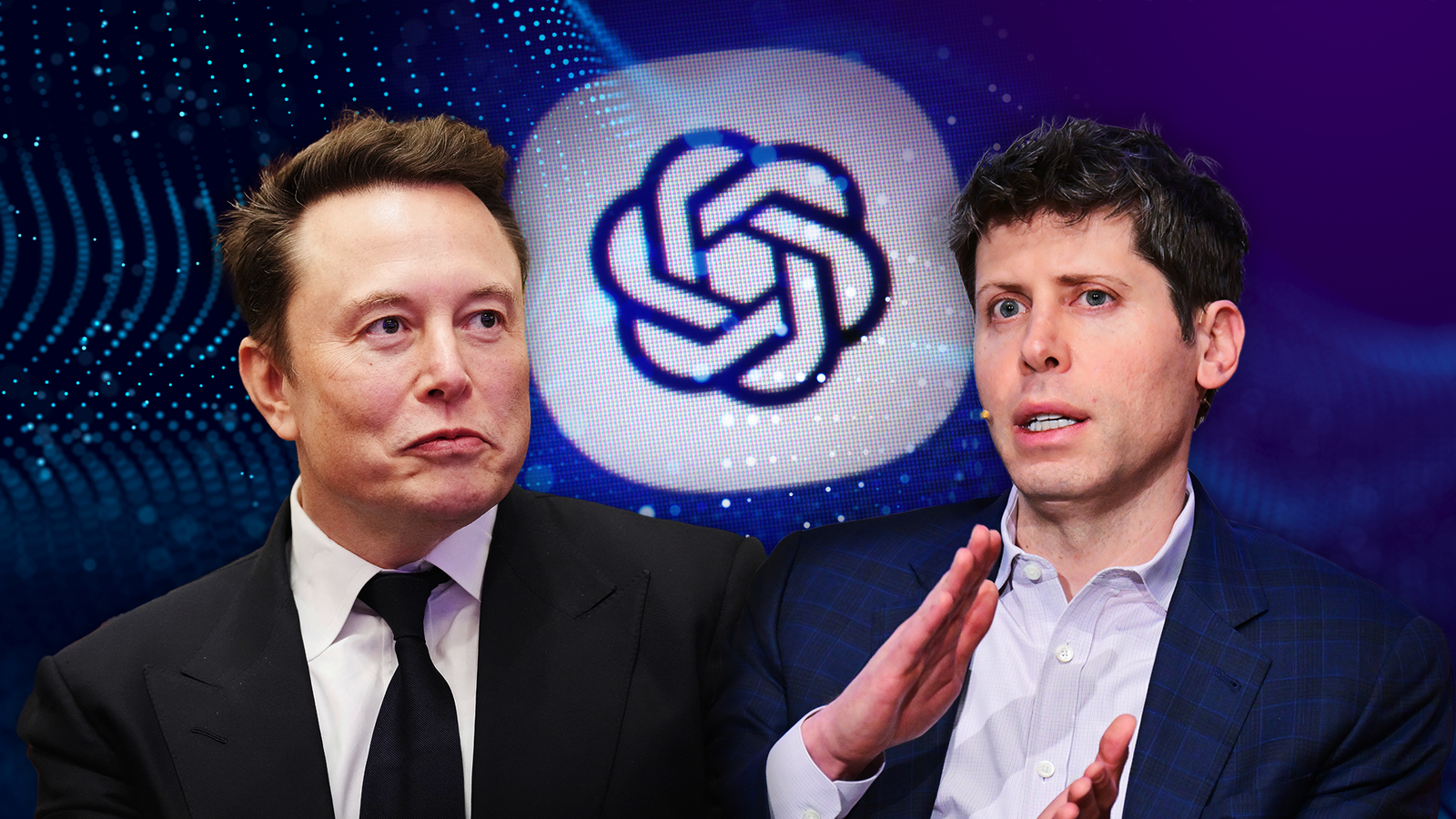
Musk vs Altman Is Reshaping AI Power
If you are trying to make sense of the AI industry, the Musk vs Altman fight matters more than the usual founder drama. This is not just a personality clash. It is a battle over who gets to control the most valuable AI models, the largest compute budgets, and the public story about safe artificial intelligence. That matters now because OpenAI, xAI, Microsoft, and other players are setting the pace for products that millions of people use at work every day. And the fight keeps spilling into courtrooms, fundraising, and product launches. Want to know where AI may be headed over the next two years? Watch where Elon Musk and Sam Altman put their money, their lawsuits, and their public attacks. That will tell you plenty.
What to watch
- Musk vs Altman is really a fight over control, governance, and AI infrastructure.
- OpenAI’s shift from nonprofit roots remains a pressure point that Musk keeps targeting.
- xAI gives Musk a direct rival platform, not just a megaphone on X.
- The real stakes are compute, talent, and distribution, not social media sparring alone.
Why the Musk vs Altman fight matters
Look, the easy version of this story is that two famous tech figures do not like each other. The harder and more useful version is that they represent two competing models for building AI. Altman has pushed OpenAI toward a giant commercial machine tied closely to Microsoft’s cloud, enterprise reach, and capital base. Musk has attacked that shift while building xAI into a rival that can pull from his own companies, especially X and Tesla.
That makes this more like a fight over railroads than a fight over apps. Whoever controls the tracks, compute clusters, data pipes, and distribution channels gets a huge edge.
“Musk v Altman is just getting started,” as TechCrunch framed it, is less a headline than a sober read on where this conflict is heading.
And yes, it is personal. But personal battles in tech often hide the business logic underneath.
Musk vs Altman and the OpenAI origin story
One reason the dispute has legs is that Musk was there at the start. He helped found OpenAI and has argued that the company drifted away from its original mission of building AI for the public good. Altman, for his part, has defended OpenAI’s structure and direction as a practical response to the brutal cost of training frontier models.
That argument lands because frontier AI is expensive in a way most outsiders still underestimate. Training and serving large language models requires chips, power, networking, engineering talent, and giant data center deals. Ideals are nice. GPUs are non-negotiable.
This is where Musk’s critique hits a real nerve. If an organization begins with nonprofit language and ends up deeply tied to commercial incentives, people will ask whether the mission changed or the mask slipped. Fair question, right?
What each side is really trying to win
Sam Altman’s side
Altman needs OpenAI to keep three things moving at once. First, model performance. Second, enterprise adoption. Third, investor confidence that OpenAI can keep scaling without breaking its structure or its alliances.
- Keep OpenAI at the front of model quality.
- Hold the Microsoft relationship together.
- Turn ChatGPT and API products into durable business lines.
- Defend OpenAI’s governance choices from legal and reputational attacks.
Elon Musk’s side
Musk wants to weaken OpenAI’s moral authority while building xAI into a credible challenger. He also benefits from framing himself as the one calling out contradictions in the current AI boom. Honestly, that message plays well with audiences already skeptical of Big Tech concentration.
- Pressure OpenAI through litigation and public scrutiny.
- Raise xAI’s profile as an alternative.
- Pull talent, attention, and possibly customers toward Musk’s own AI stack.
- Link AI development to his broader ecosystem, including X, Tesla, and compute infrastructure.
Why xAI changes the tone of Musk vs Altman
At first, Musk’s criticism of OpenAI could be dismissed as sour grapes from a founder who left. That is harder to say now. xAI gives him operating leverage, product ambitions, and a reason to keep escalating. He is no longer just arguing from the sidelines.
That changes the industry readout. A legal fight is one thing. A legal fight backed by a rival model company, massive fundraising ambition, and a built-in distribution platform is another (and a much messier one).
Think of it like a heavyweight boxing match where one fighter also owns the arena and controls the cameras. That does not guarantee a win, but it changes the rules around the edges.
What this means for the rest of the AI market
For startups, the Musk vs Altman battle is both noise and signal. The noise is obvious. Public feuds suck up oxygen. The signal is more useful. It shows where market power is concentrating.
The companies that matter most in AI right now share a few traits:
- Access to top-tier chips and cloud infrastructure
- A path to huge funding rounds
- Consumer or enterprise distribution
- A clear story on safety, openness, or both
If you are building in AI, that list should shape your strategy more than the latest social post. You do not need to copy OpenAI or xAI. But you do need to know which layer of the stack you can actually own.
The legal and governance angle you should not ignore
Governance sounds dull until billions of dollars are on the line. Then it becomes the whole story. OpenAI’s unusual structure has drawn attention for years, and Musk’s challenge keeps that scrutiny alive. Investors, regulators, and partners all care about whether the decision-making setup matches the public mission.
This matters beyond one company. If OpenAI’s structure is seen as unstable or too elastic, it could push the whole market toward simpler corporate models. That would be a seismic shift for labs that still present themselves as mission-led first and profit-driven second.
One sentence matters here.
Trust in AI firms depends on whether their governance holds up when the money gets huge.
So who has the stronger position?
Right now, Altman has the stronger operating hand. OpenAI has brand recognition, product momentum, major partnerships, and a deep foothold in both consumer AI and developer tools. That is hard to dislodge.
But Musk has something Altman cannot ignore. He knows how to turn conflict into attention, attention into capital, and capital into industrial scale. He has done it before, even when critics thought the plan looked overcooked.
The winner may not be the company with the best rhetoric about AI safety. It may be the one that can afford the next giant training run and get its tools into more hands.
That is the blunt truth of this market.
What to watch next in Musk vs Altman
If you want a practical way to track this story, stop focusing only on the insults. Watch these indicators instead:
- New court filings and governance disclosures tied to OpenAI
- xAI fundraising, chip access, and data center buildout
- Changes in Microsoft and OpenAI alignment
- Talent moves between OpenAI, xAI, Anthropic, Google DeepMind, and Meta
- Product releases that show whether xAI can move from narrative to real usage
Here is the thing. The AI race is no longer about who can sound smartest on stage. It is about who can sustain the cost, survive the scrutiny, and keep shipping. Musk vs Altman is a sharp preview of that reality. And if this fight keeps widening, the next phase of AI will look less like a lab experiment and more like a power struggle in plain sight.


