Nvidia GPUs on the Moon: What the Plan Really Means
Sending a GPU on the moon sounds like a stunt until you look at the problem space. Lunar missions need more local computing, not less. Data links to Earth are slow, expensive, and fragile, so every byte sent back and forth matters. That is why this news matters now. If Nvidia can put useful compute on the lunar surface, it changes how future missions handle imaging, autonomy, mapping, and fault detection.
But the headline hides the real challenge. Space hardware is not a desktop with a better cooling fan. It has to survive radiation, brutal temperature swings, and long periods with little power. So the question is simple. Is this a serious step toward off-world infrastructure, or just a flashy proof of concept? The answer sits somewhere in between, and the details matter more than the hype.
What stands out about the GPU on the moon plan
- Local compute cuts bandwidth pressure. Lunar missions can process images and sensor data on site instead of sending everything home.
- Autonomy gets better. Robots and landers need fast decisions when round-trip latency makes human control clumsy.
- Thermal design becomes the real boss fight. Heat does not disappear on the moon the way it does in a data center.
- Reliability matters more than peak speed. A chip that survives is more valuable than a chip that benchmarks well.
- This fits a bigger trend. Space agencies and private firms are pushing more intelligence to the edge, including the lunar edge.
Why put a GPU on the moon at all?
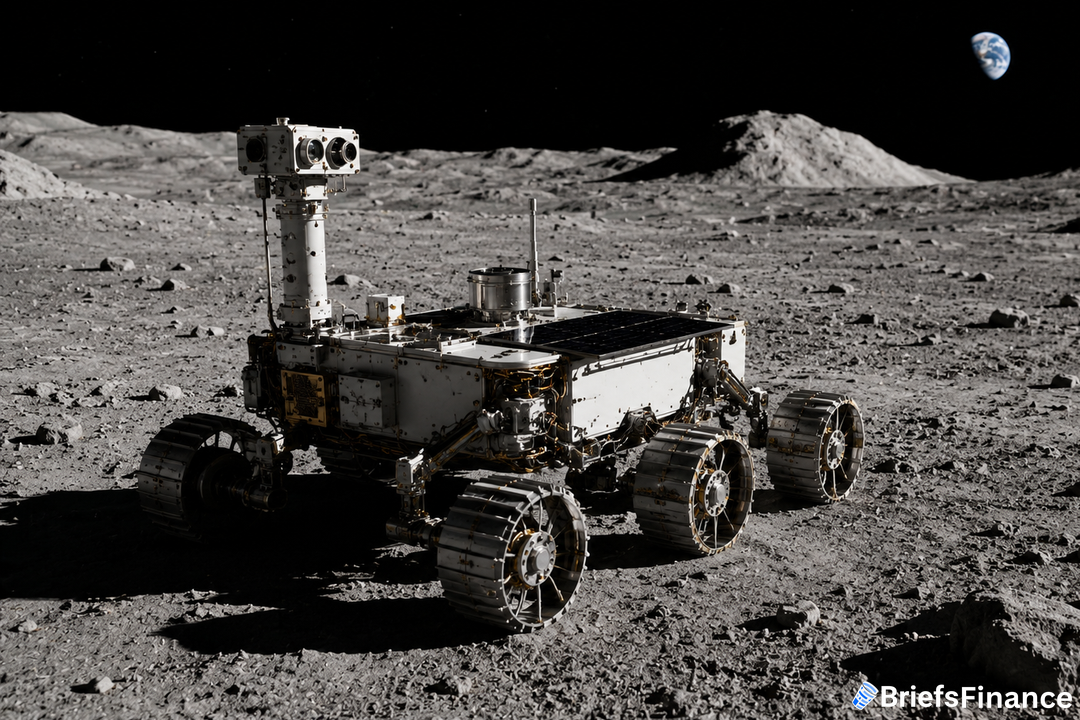
Because the moon is far enough away that old-school remote control starts to crack. A rover spotting a hazard cannot wait for a human operator on Earth to study the frame and send back a command. It needs to react in seconds, sometimes faster. That is where a GPU helps.
Modern GPUs are good at parallel workloads. Image stitching, terrain mapping, object detection, and sensor fusion all benefit from that kind of processing. Think of it like putting a strong chef in the kitchen instead of mailing every ingredient back to the restaurant and waiting for instructions. The meal gets to the table sooner.
The moon also makes data expensive in a very literal sense. Every transmission costs power, time, and often mission risk. If on-device processing can filter out junk and keep only the useful bits, the whole mission gets leaner.
The real value is not raw compute. It is mission independence. A lunar system that can think locally is harder to break and easier to scale.
GPU on the moon and the hardware problems nobody can ignore
Look, the moon is a hostile place for electronics. Radiation can flip bits. Vacuum changes how heat moves. Day and night cycles can swing temperatures wildly. Consumer GPU design assumes none of that.
So any lunar GPU setup needs serious adaptation. That can mean radiation tolerance, error correction, rugged packaging, and software that expects failures instead of pretending they will not happen. The chip itself is only part of the stack. The board, enclosure, power system, and software all have to cooperate.
And then there is power. Lunar missions live on tight energy budgets. Solar panels help, but the moon’s long nights make storage and efficiency non-negotiable. A power-hungry accelerator is not useful if the rest of the spacecraft goes dark.
What has to work together
- Power management for low-energy operation and battery preservation.
- Thermal control to keep chips inside safe temperature ranges.
- Radiation handling through shielding and error correction.
- Software resilience so the system can recover from faults without a ground intervention.
Why this is bigger than one company
This is not only about Nvidia. It points to a shift in how space systems get built. For years, the model was simple. Send a probe, collect data, send it home, process it later. That model is getting old. Missions now want smarter instruments, faster decisions, and fewer bottlenecks.
That is why you are seeing more interest in edge AI, embedded inference, and autonomous mission software. NASA has already tested AI and machine learning on spacecraft workflows. The European Space Agency and private lunar programs are moving in the same direction. Nvidia stepping into that space gives the market a loud signal, even if the first deployments are small.
It also creates pressure on competitors. If a space-grade GPU stack becomes practical, aerospace buyers will ask for options. AMD, Intel, and specialized radiation-tolerant chip vendors will not sit still. Neither will the systems integrators that turn these parts into flight hardware.
What you should watch next
Do not focus only on whether the chip gets to the moon. Ask what it does there.
If the system only runs a few demos, the impact is limited. If it can support navigation, hazard detection, and science data triage over long durations, that is a different story. That is infrastructure.
Three signals will tell you this is real:
- Flight testing that proves the hardware survives launch and lunar conditions.
- Clear mission tasks that need local inference, not just a marketing showcase.
- Evidence that the power and thermal budgets still work after integration.
Honestly, that last point is the one most people skip. But it decides whether the project scales or stalls.
A moonshot with real engineering behind it
The phrase “GPU on the moon” invites eye rolls, and fair enough. Tech companies love a headline. But this one touches a real operational problem, and the solution space is not fantasy. Future lunar bases will need local intelligence the same way ships need onboard navigation. You do not want every decision routed through a distant control room.
So the next time someone asks why a graphics chip belongs on the moon, ask them another question. If a rover can think for itself, process its own data, and keep moving without waiting on Earth, why would you build it any other way?