NYC AI Restrictions in Schools: What the Chatbot Ban Means
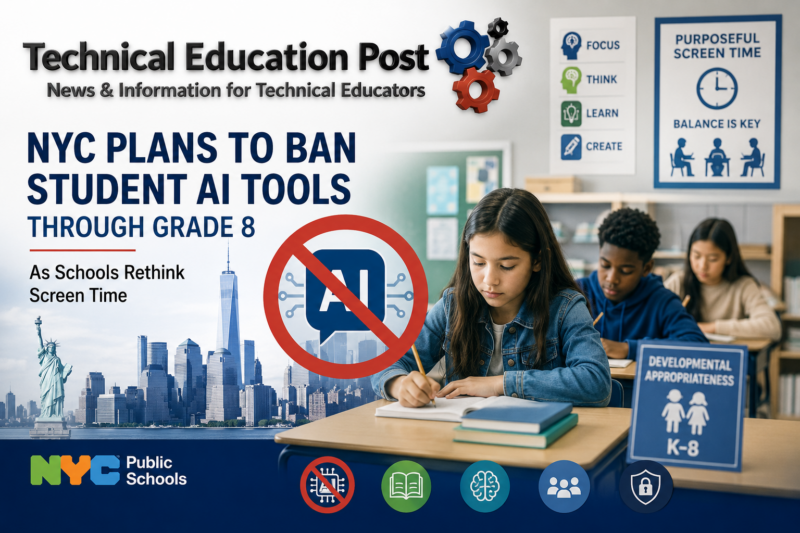
NYC AI restrictions in schools are no longer a vague policy idea. They are now shaping how teachers, students, and administrators handle chatbots, lesson planning tools, and classroom work. That matters because schools are moving faster than the rules around them, and the gap can create confusion fast. Can a student use a chatbot for homework help? Can a teacher use one to draft a worksheet? The answer now depends on the district’s policy, the vendor, and how the tool handles student data. Schools do not get to wing this anymore. The stakes are privacy, academic integrity, and basic trust.
- Chatbot rules are now a school operations issue, not a side topic for tech staff.
- Student data privacy is the biggest legal and practical risk.
- Teachers need clear use cases, or they will either overuse AI or avoid it completely.
- Parents should ask how tools store data and whether vendors train on student inputs.
Why NYC AI restrictions in schools hit a nerve
New York City schools are not dealing with a toy problem. They are dealing with classrooms full of minors, public institutions, and vendors that often move faster than policy teams. That is a messy mix.
Chatbots can help with drafting, summarizing, and brainstorming. But they can also produce wrong answers, expose sensitive data, or blur who did the work. A school district has to sort out those lines before a bad rollout turns into a parent complaint or a compliance headache.
The real issue is not whether AI belongs in schools. It is whether schools can set hard limits before the tools set the norms.
What the NYC AI restrictions in schools actually change
The practical shift is simple. Schools must be more explicit about which tools are allowed, what data they can see, and who can approve them. That may sound boring. It is not.
Think of it like letting new players onto a basketball court. You do not just hand over the ball and hope for the best. You set the rules first, or the game gets sloppy very quickly.
For teachers
Teachers need clearer guardrails on lesson prep, grading support, and student-facing chat tools. A chatbot that helps draft quiz questions may be fine. A chatbot that ingests student essays without a privacy review is another matter.
For students
Students need to know what counts as acceptable help. If a school says AI can be used for brainstorming but not final answers, that line should be plain and repeated often. Vague rules invite abuse and confusion.
For administrators
Administrators have to review vendors, data flows, and training. That includes retention policies, account controls, and whether a product allows opt-out from model training. If those answers are fuzzy, the product should stay off the approved list.
Where the biggest risk sits
The largest risk is not flashy cheating. It is data handling. Student prompts can contain names, health details, family information, and writing samples that should never wander into a vendor system without a clear purpose.
CNBC, The Washington Post, and education privacy groups have all pointed to the same pressure point in recent AI-in-school coverage. Schools want speed. Vendors want adoption. But privacy law and district policy move slower, and that delay matters.
- Check what data is collected. Look at prompts, logs, metadata, and account information.
- Check where data goes. Storage location, access controls, and subcontractors matter.
- Check how long it stays. Retention should be short and documented.
- Check who can review it. Human access to student content should be tightly limited.
That sounds tedious because it is. But tedious is better than reckless.
How schools should respond now
Schools should not ban everything by reflex. They should build narrow rules that match actual classroom needs. That means allowed tools, banned uses, approved age groups, and a review process for anything new.
And they should train staff on the policy. A rule nobody understands is a wall with a door left open.
Three moves matter most:
- Write a short acceptable-use policy that covers teachers and students.
- Publish a vetted tool list with clear reasons for approval or rejection.
- Review vendor contracts for privacy, retention, and training-on-user-data language.
Schools also need a response plan for mistakes. If a student pastes private information into a chatbot, who gets notified? If a teacher uses an unapproved tool, what happens next? The answer should already be on paper.
What parents should ask
Parents do not need a technical audit. They do need a few sharp questions. Which AI tools does the school allow? What data do those tools collect? Can students opt out? And does the vendor train models on student inputs?
If a school cannot answer those questions clearly, the policy is not ready. Simple as that.
What happens next for NYC AI restrictions in schools
Expect more districts to copy pieces of the New York City approach, even if the exact rules differ. The pressure is national. Schools want the benefits of AI without becoming test cases for privacy failures.
The next fight will be less about chatbot hype and more about governance. That is where the real work sits. Who gets to approve a tool, and who pays when it goes wrong?
Schools that answer that now will be in better shape when the next wave of AI products shows up at the door.