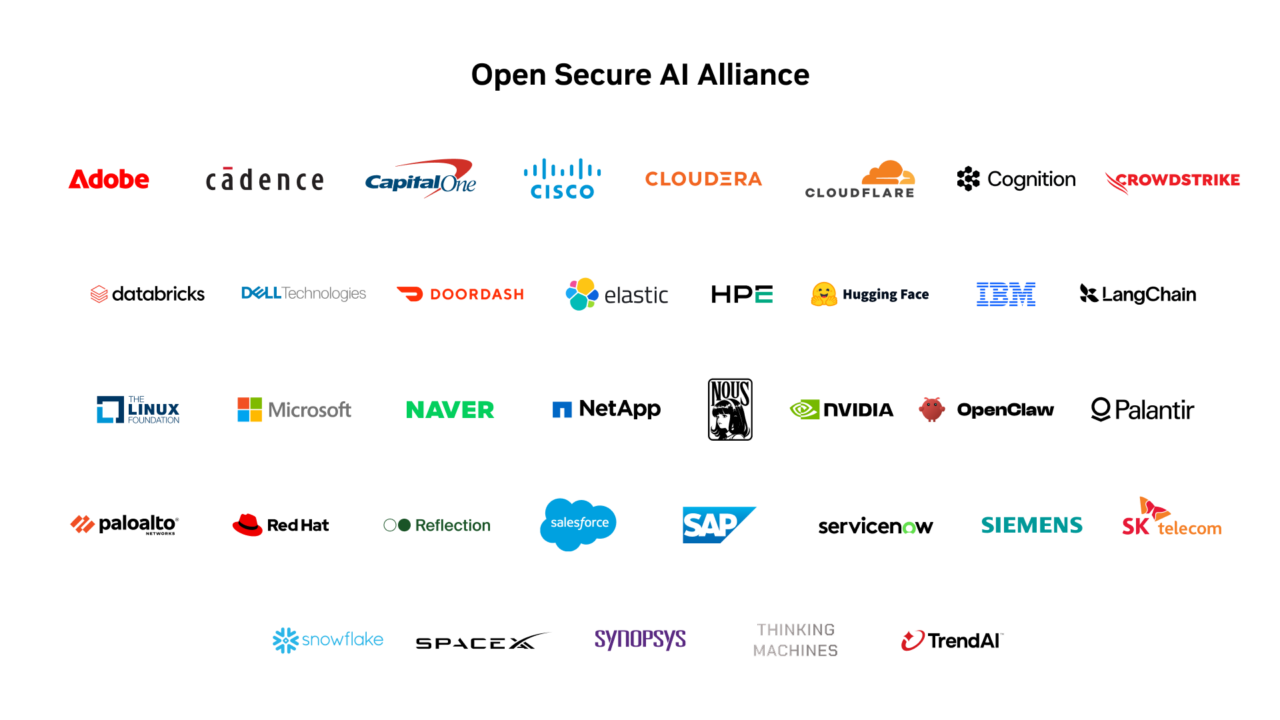
Open Secure AI Alliance Explained: NVIDIA’s Push for Safer Enterprise AI
Enterprise AI is moving fast, and security teams are feeling the squeeze. New models, new agents, new data flows, and a lot of old controls that were never built for this mess. The Open Secure AI Alliance enters that gap with a simple promise, which is to make open secure AI alliance work more safely in real deployments. That matters now because companies are already putting sensitive data, internal tools, and customer workflows into AI systems before they have a clean security model. If you are responsible for AI adoption, you need more than vendor talk. You need a practical way to reduce exposure without freezing innovation. And yes, that balance is hard. But it is also non-negotiable if AI is going to leave the pilot stage.
Why the Open Secure AI Alliance matters
The alliance is NVIDIA’s answer to a real problem. AI security is fragmented. One team worries about model access. Another worries about data leakage. A third worries about prompt injection, jailbreaks, and agent behavior. Put those together and you get a security stack that looks like a patchwork roof in a rainstorm.
The open secure AI alliance tries to bring vendors, builders, and security teams onto shared ground. That does not solve every issue. But it can help create common practices for deployment, monitoring, and governance.
“The useful question is not whether AI should be open or secure. It is how you make both ideas survive contact with production.”
- It aims to reduce confusion around AI security controls.
- It gives enterprises a clearer path for deploying AI with guardrails.
- It supports collaboration across vendors and security teams.
- It reflects a broader shift toward practical AI governance, not theory.
What problem is the open secure AI alliance trying to solve?
AI systems create new attack surfaces. A large language model can be tricked through prompt injection. An agent can take the wrong action if it has too much access. A retrieval system can expose documents that were never meant for the requestor. These are not edge cases. They show up as soon as people connect AI to real business data.
The open secure AI alliance is trying to make those risks easier to manage. That means encouraging security controls that work across models, frameworks, and infrastructure layers. It also means treating AI security as part of enterprise architecture, not a side project for one overworked team.
Think of it like building a stadium. You do not just want a fast entrance gate. You need turnstiles, cameras, staff, and exit routes that all work together. AI security is the same. One control is not enough.
How the open secure AI alliance fits enterprise AI
Most companies are not asking for perfect AI. They want useful AI that does not leak data or break policy. That is a much more grounded goal. The alliance fits that reality by pushing for shared security patterns that enterprises can actually use.
1. Better control over data
Data is still the center of the problem. If your AI system can access confidential files, customer records, or internal code, then your security model has to control what the system can see and do. The alliance’s value is in making those controls easier to standardize.
2. Better visibility into model behavior
Security teams need to know how a model is being used, what it accessed, and whether it followed policy. Without logging and monitoring, you are guessing. And guessing does not scale.
3. Better coordination between vendors
Enterprise AI usually spans cloud providers, model hosts, orchestration tools, and endpoint protections. If each layer uses its own language, operations get ugly fast. Shared guidance can cut down that friction.
That is the real value here. Not hype. Less chaos.
What you should look for in a secure AI program
Do not wait for a branding stamp to tell you your AI stack is safe. Ask sharper questions. What data can the model reach? What actions can an agent take? Where are the logs stored? Who reviews them? Those are the questions that matter.
- Limit access first. Give AI only the data and tools it truly needs.
- Track every action. Keep records of prompts, outputs, tool calls, and policy decisions.
- Test for abuse. Run prompt injection and data exfiltration tests before release.
- Separate environments. Keep experiments away from production systems.
- Review vendor claims. Ask how security controls work in practice, not in slides.
Look, this is not glamorous work. It is closer to building a decent kitchen than designing a flashy showroom. You need the pipes, the wiring, and the fire code sorted before anyone starts cooking.
Why the open secure AI alliance is part of a bigger shift
The alliance also signals something larger. The market is moving away from AI as a novelty and toward AI as infrastructure. Once that happens, security becomes a design constraint. That is not a burden. It is maturity.
Companies that treat AI as a toy will ship faster at first, then spend months cleaning up the mess. Companies that build in controls early will move with less drama. Not faster on day one, maybe. But steadier, and that usually wins.
There is also a policy angle here. Governments and industry groups are pushing for clearer AI governance, especially around data handling and accountability. The open secure AI alliance fits that climate because it speaks to implementation, not abstract ethics.
What this means for your team
If you are running AI projects, the alliance should not be treated as a press release to skim and forget. Treat it as a signal. Security is moving upstream. So should your planning.
Start with a simple audit. Map where your AI systems touch data, where they make decisions, and where humans still need to approve the output. Then decide which controls are mandatory before wider rollout. That is the work that keeps a promising tool from turning into an expensive liability.
And if your current answer is “we will deal with security later,” ask yourself this. Later, after what?