OpenAI ChatGPT Smart Speaker Rumor: What a Battery-First Device Could Mean
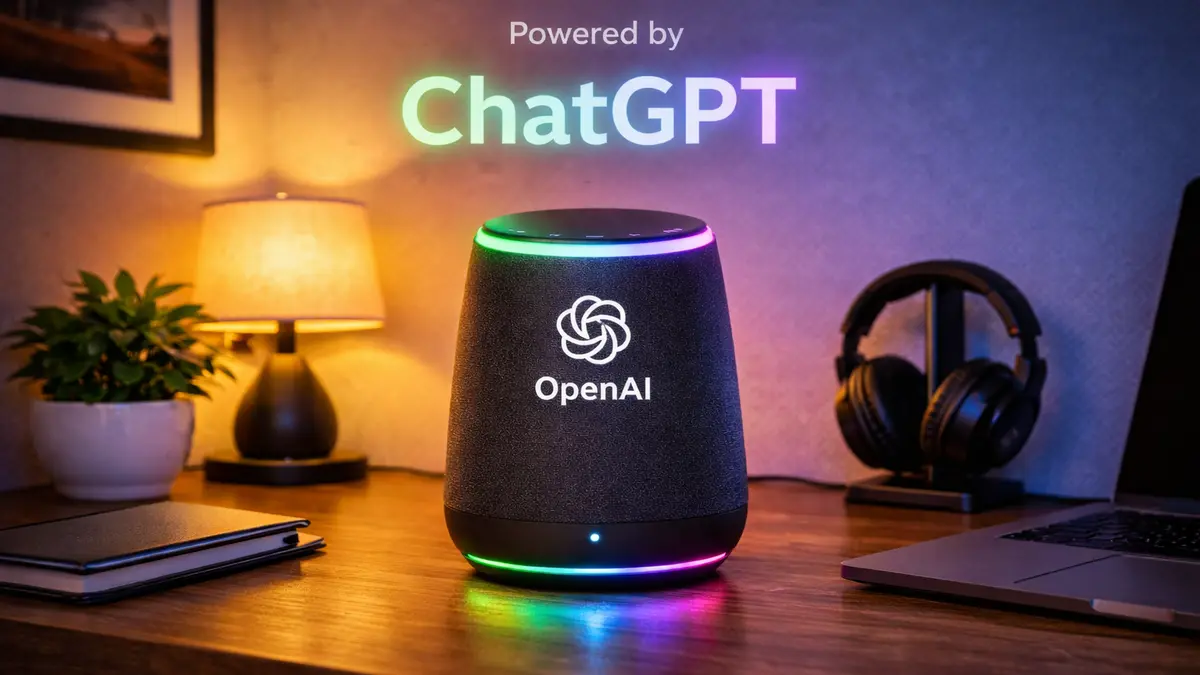
The OpenAI ChatGPT smart speaker rumor is getting attention for a simple reason. A voice assistant that can move around the house, sit on a kitchen counter, or travel from room to room changes the product story fast. If OpenAI is really working on a battery-powered speaker, that is not a minor hardware tweak. It shifts the device from a fixed smart-home gadget to something more personal, more useful, and harder to ignore.
Why does that matter now? Because voice AI has spent years stuck in the same place. Smart speakers have been good at timers, weather, and music, but clumsy at deeper conversation. A new form factor could give OpenAI a cleaner shot at the market, especially if it wants ChatGPT to feel less like a webpage and more like a companion device you keep nearby. That is the bet. And it is a big one.
What stands out in the OpenAI ChatGPT smart speaker rumor
- Battery power changes usage. You can carry the device, not just park it on a shelf.
- Voice becomes the main interface. That raises the bar for latency, wake-word accuracy, and follow-up responses.
- OpenAI would be entering a crowded field. Amazon, Google, and Apple already own the smart speaker aisle.
- Design matters more than specs. A speaker that feels natural in your home can win even without flashy hardware.
- Privacy will be a hard question. A always-listening assistant in a portable body invites scrutiny.
Why battery power is such a big deal
Most smart speakers are like wall-mounted appliances. They sit in one place and wait for commands. A battery changes that relationship. It makes the device feel closer to a portable radio than a static home hub, which is a much better fit for how many people actually use assistants.
That shift also creates pressure on engineering. Battery life, microphone quality, thermal limits, and Wi-Fi stability all become intertwined. If the device runs hot or dies too fast, the whole pitch falls apart. Nobody wants a smart assistant that needs a charger more often than your phone.
There is also a product lesson here. A portable assistant only works if it answers fast and reliably. If you say, “What is on my calendar?” and wait for a sluggish reply, the magic evaporates. Why would anyone accept a voice gadget that feels slower than pulling out a phone?
Battery-powered does not just mean mobile. It means the device has to earn its place in your day, hour by hour.
How the OpenAI ChatGPT smart speaker rumor fits the market
OpenAI is not walking into an empty room. Amazon has Alexa, Google has Nest speakers, and Apple still has HomePod. Each one has strengths, but none has fully solved the core problem: people still prefer phones for complex tasks. That opens a gap for a product built around ChatGPT’s conversational edge.
Here is the thing. If OpenAI can make a speaker that handles multi-step requests better than the old guard, it may not need to beat them on every front. It just needs to be clearly better at one job. That job could be follow-up questions, natural language control, or answering messy queries that make older assistants stumble.
Think of it like a kitchen knife set. You do not need every blade to be perfect. You need the one you reach for most to feel right in your hand. A ChatGPT speaker would have to aim for that kind of everyday trust.
What OpenAI would need to get right
- Fast response times. Voice AI feels broken when the pause drags on.
- Strong local controls. You should be able to mute microphones, manage accounts, and review activity easily.
- Clear use cases. Music, reminders, timers, household questions, and quick planning are the obvious wins.
- Good industrial design. The device has to look at home on a table, not like a prototype from a demo stage.
- Careful privacy defaults. Users will expect direct controls, not hidden menus.
And OpenAI cannot lean on hype here. Consumers have seen plenty of AI hardware launches that promised a lot and delivered a novelty. The Rabbit R1 comes to mind. Pretty device. Big headlines. Thin real-world payoff. That is the trap.
Could this be the next step for ChatGPT?
Yes, but only if OpenAI treats the speaker as a product, not a stunt. A voice-first device can extend ChatGPT into the home, where questions are casual, repeated, and often time-sensitive. That is a useful lane.
It also raises the stakes.
Once a company puts its assistant into a speaker, it is asking for daily trust. That means fewer vague promises and more proof. Better answers. Better controls. Better habits.
OpenAI has a chance to make voice AI feel less like a party trick and more like a utility people keep using. If this rumor turns into a real product, the test will be simple. Will you leave it plugged in, or will you reach for it because it actually saves you time?
What to watch next
Watch for three signals. First, whether OpenAI confirms a hardware partner or design direction. Second, whether the device is framed as home-only or portable. Third, whether privacy and subscription details appear early, because those will shape adoption as much as voice quality.
If the company gets the balance right, the OpenAI ChatGPT smart speaker rumor could mark a real shift in consumer AI. If not, it will join the long list of gadgets that looked smarter on paper than they felt in the hand. The next move will tell you which path this is on.