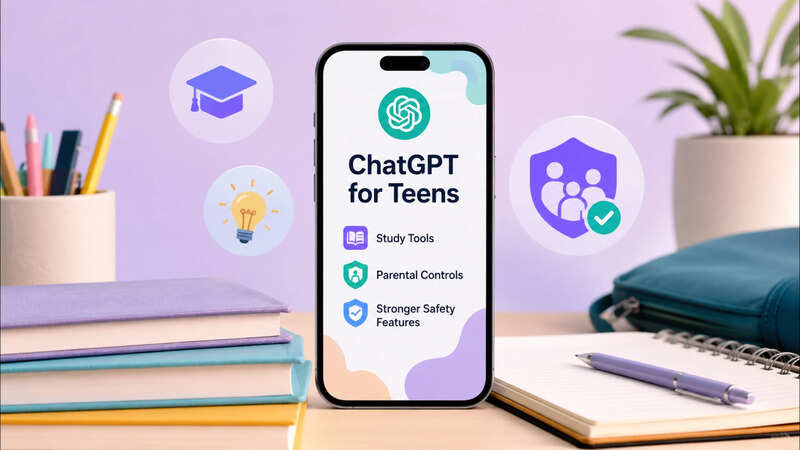
OpenAI Turns ChatGPT Into a Teen Study Tool
Students already use AI to summarize chapters, quiz themselves, and clean up rough drafts. The problem is trust. A teen can ask ChatGPT for study help and get something useful, something sloppy, or something that quietly crosses a school policy line. That is why OpenAI’s new push around ChatGPT teen study tools matters now. According to The Verge, OpenAI is adding teen-focused features that include college planning and notecards, moving ChatGPT closer to the daily rhythm of homework, test prep, and applications. This is not a small product tweak. It is OpenAI trying to make ChatGPT feel less like a chatbot you visit and more like a student workspace. Parents and schools should pay attention, because the product design choices here will shape how young users study, plan, and ask for help.
What Stands Out
- OpenAI is positioning ChatGPT as a structured study companion, not only a general chatbot.
- The reported features include college planning and notecards for teen users.
- These tools could help students organize work, but accuracy and overreliance remain real risks.
- Schools will need clearer AI policies as student-facing tools become more tailored.
What Are ChatGPT Teen Study Tools?
ChatGPT teen study tools are features designed around how students actually work. Based on The Verge’s report, OpenAI is testing or rolling out tools such as notecards and college planning support for younger users. That points to a shift from open-ended prompting toward guided academic workflows.
That matters. A blank chat box asks students to invent the right question. A notecard tool or college planner gives them a path. In product terms, it is the difference between handing someone a pile of ingredients and giving them a recipe card.
OpenAI has spent the last year trying to make ChatGPT more useful for specific tasks, including writing, coding, research, and tutoring-style help. A teen-centered experience fits that pattern. But this audience needs tighter guardrails than adults, especially around privacy, mental health, academic integrity, and high-stakes college advice.
Teen-focused AI tools should reduce confusion, not replace judgment. That is the line OpenAI has to walk.
Why OpenAI Wants ChatGPT Teen Study Tools in the Student Routine
Here’s the thing. The teen education market is huge, sticky, and habit-driven. If students use ChatGPT to study for biology on Monday, build flashcards on Tuesday, and plan college essays by Friday, OpenAI gains more than usage. It gains routine.
That is a seismic prize in consumer AI. Search engines won because people used them by reflex. Productivity apps win when they become part of the workday. For students, the equivalent is the study session, the homework crunch, and the college application calendar.
Can a chatbot become the default place students go before they open a textbook?
OpenAI clearly thinks so. Adding notecards makes sense because flashcard-style study is familiar, repeatable, and easy to measure. College planning is more delicate. It can help students organize deadlines, compare requirements, and prepare questions for counselors. But bad guidance can nudge a student in the wrong direction at the worst possible time.
Where These Tools Could Help Students
I have covered enough education technology to be skeptical of grand claims. Still, there are practical use cases here. The best ones are narrow, visible, and easy for a student to check.
- Turning notes into study prompts: A student can paste class notes and ask for notecards based on terms, dates, formulas, or themes.
- Planning application tasks: A college planner can break a messy process into deadlines, document lists, and follow-up questions.
- Practicing retrieval: Notecards can push students to recall information instead of rereading the same page four times.
- Explaining missed answers: ChatGPT can help a student understand why an answer was wrong, if the explanation is accurate.
- Creating study schedules: A teen can ask for a plan that fits sports, work, family duties, and test dates.
The strongest version of this product would feel like a good coach. It would ask what class you are in, what material your teacher assigned, and what you already understand. Then it would help you practice.
No magic required.
The Risks Behind ChatGPT Teen Study Tools
The danger is not only cheating. That is the easy debate, and schools have been stuck in it since ChatGPT arrived. The larger issue is dependency. If a student leans on AI for planning, explaining, drafting, and checking, what skills are they still building on their own?
Accuracy is another problem. AI systems can produce confident errors, and younger users may not spot them. A flawed flashcard set for a history quiz is annoying. Faulty advice about financial aid forms, application deadlines, or admissions requirements is more serious.
Privacy deserves equal attention. Teen tools may involve school interests, grades, career hopes, family income, and personal details. Parents should know what data is collected, how it is stored, and whether it is used to train models. Schools should ask the same questions before recommending any AI service.
What Parents Should Check First
- Does the teen account have age-appropriate safety settings?
- Can parents or guardians understand what data is being shared?
- Does the tool cite sources or explain where advice comes from?
- Can students export, review, or delete study materials?
- Does the product make clear that counselors, teachers, and official college sites remain the authority?
How Schools Should Respond to ChatGPT Teen Study Tools
Blanket bans are looking less realistic by the month. Students can access AI at home, on phones, and through products that look more like normal study aids. Schools need policies that separate acceptable support from dishonest substitution.
A solid policy should be specific. “Do not use AI” is too vague. “You may use AI to generate practice questions, but not to write your final response” gives students a rule they can follow. Teachers can also ask students to submit prompts, drafts, or reflection notes when AI use is allowed.
Districts should also train teachers, not leave them to improvise. The arrival of student-facing AI tools is like adding a new calculator to math class. You do not pretend it is absent. You teach where it helps, where it distorts, and when the student needs to do the work unaided.
ChatGPT Teen Study Tools and College Planning
College planning is the feature that deserves the most scrutiny. Students need help organizing deadlines, essays, recommendation letters, test dates, scholarships, and financial aid forms. A well-built AI planner could reduce stress, especially for first-generation applicants who may not have easy access to private counseling.
But admissions advice has context. State residency rules, FAFSA details, institutional deadlines, portfolio requirements, and scholarship conditions change. ChatGPT can support planning, but it should point students back to official college pages, the Common App, school counselors, and government financial aid resources.
That should be non-negotiable.
If OpenAI gets this right, the college feature will act like a checklist manager with plain-English explanations. If it overreaches, it risks becoming a confident admissions counselor without accountability.
What I Would Like to See From OpenAI
OpenAI has a chance to set a better standard for teen AI products. The company should resist the urge to make every feature feel frictionless. Some friction is healthy, especially for minors.
- Source links for factual claims: College requirements and study explanations should show where information comes from.
- Clear school-use modes: Teachers should be able to define permitted uses for assignments.
- Transparent teen privacy controls: Data policies should be readable to parents and students, not only lawyers.
- Built-in metacognition: The tool should ask students to explain answers in their own words.
- Escalation to humans: For college, financial aid, or personal issues, ChatGPT should direct users to qualified people and official sources.
Look, the teen AI race is coming whether schools feel ready or not. OpenAI’s move makes sense from a product standpoint, and some students will benefit from better structure. The hard question is whether ChatGPT will teach students to think more clearly, or teach them to outsource the messy parts of learning.
The Next Test Is Trust
OpenAI’s teen study push will be judged less by flashy features than by small daily outcomes. Do students remember more? Do they plan better? Do they understand the limits of the advice they get?
Parents should try these tools with their teens before relying on them. Schools should update AI policies now, while the habits are still forming. And OpenAI should treat teen trust as a product requirement, not a marketing line.


