Oracle Layoffs and AI Spending: What the Debt-Fueled Bet Means
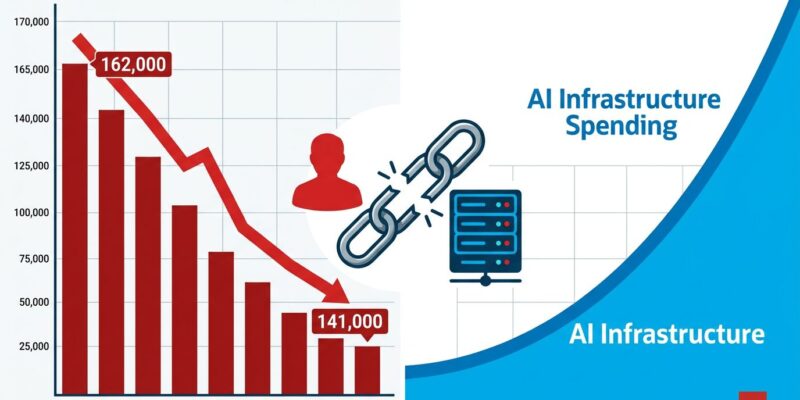
Oracle layoffs are back in the spotlight, and they are tied to a much bigger story than headcount cuts. The company is borrowing heavily to fund AI infrastructure, cloud capacity, and the data center buildout that goes with both. That matters because the bill is landing now, while the payoff is still uncertain.
If you run a tech team, buy cloud services, or watch enterprise spending trends, this is not a side note. It is a signal. Oracle is trying to fund a seismic shift in its business model without slowing down the AI race, and that means pressure on margins, staffing, and capital discipline (all at once). The question is simple: how long can a company trim labor while it pours cash into compute?
What the Oracle layoffs and AI spending story tells you
- Oracle is cutting jobs while raising debt to support AI-related investment.
- The company is betting on cloud and infrastructure demand to justify the spending.
- Labor cuts may offset part of the cost, but they do not solve long-term financing risk.
- Enterprise AI is still capital-heavy, which means winners need cash, borrowing access, or both.
Why Oracle is making this move now
Oracle has spent years trying to catch up in cloud infrastructure, and AI has given that effort new urgency. Large language models need huge amounts of compute, storage, and networking, which makes data center capacity a hard limit. If you do not have the hardware, you do not get the deal.
That is why the spending pattern looks aggressive. Oracle is pushing money into the parts of the stack that matter most to AI customers. It wants to be the provider that can take a giant model training job or a large inference workload and keep it running without choking on demand.
Oracle is not just buying growth. It is buying time, capacity, and relevance in a market where those three things are getting expensive.
How debt changes the Oracle layoffs and AI spending story
Debt can be useful when the returns are clear and quick. But AI infrastructure does not work like a software subscription business. The upfront costs are huge, the depreciation clocks start fast, and the customer payback period can stretch out longer than expected.
That is the risk here. Oracle may be using layoffs to keep operating costs from ballooning while it adds debt to fund expansion, but the balance sheet still absorbs the strain. And if AI demand cools, or if customers shift workloads elsewhere, the financing burden does not disappear.
Look at it like building a stadium before you know if the team can sell out the seats. The structure may be impressive. The financing still has to make sense.
What this means for enterprise buyers
If you buy cloud services, Oracle’s move should make you ask sharper questions. Are you paying for real capacity, or for a vendor’s rush to claim market share? Are you getting pricing stability, or just access to a provider that is trying to keep its utilization high?
Vendor strength matters. So does vendor stress. A company under pressure to justify heavy AI spending may offer better terms in the short run, but it may also tighten contract language, push longer commitments, or change product priorities faster than you expect.
Questions worth asking Oracle and other cloud vendors
- How much of your AI spend is tied to committed customer demand?
- What happens if utilization falls below forecast?
- How are you balancing capex with debt service?
- Which AI services are profitable now, and which are still experimental?
Oracle layoffs and AI spending are part of a wider trend
Oracle is not alone. Across tech, companies are cutting staff while funding AI infrastructure, model development, and data center expansion. The logic is easy to explain and hard to sustain. Management wants growth without letting expenses drift too far. Investors want AI exposure without waiting years for proof.
But this model has a ceiling. If too many firms chase the same AI demand with borrowed money, the market starts rewarding scale over discipline. That can work for a while. Then the financing costs show up and the patience runs thin.
The real test is not whether Oracle can spend. It is whether Oracle can turn that spending into durable cash flow without leaning too hard on debt or layoffs to make the math work.
What to watch next
Pay attention to three things. First, whether Oracle keeps expanding its AI and cloud footprint faster than revenue grows. Second, whether layoffs continue in waves instead of one-off cuts. Third, whether management starts sounding more defensive about margins and financing costs.
That is where the story gets real. Not in the press release, but in the follow-through.
And if Oracle can pull this off, other vendors will copy the playbook. If it cannot, expect the industry to get a lot less romantic about debt-fueled AI growth very quickly. Who gets to blink first?
What this means for the next AI spending cycle
Oracle’s moves show that AI infrastructure is becoming a capital test, not just a product race. The companies that win will need clean execution, strong demand, and enough financial room to absorb a few expensive mistakes. That is a narrow lane.
If you are watching the sector, do not just track model launches and feature lists. Track borrowing, capex, and layoffs too. They tell you who is building from strength and who is building on credit.