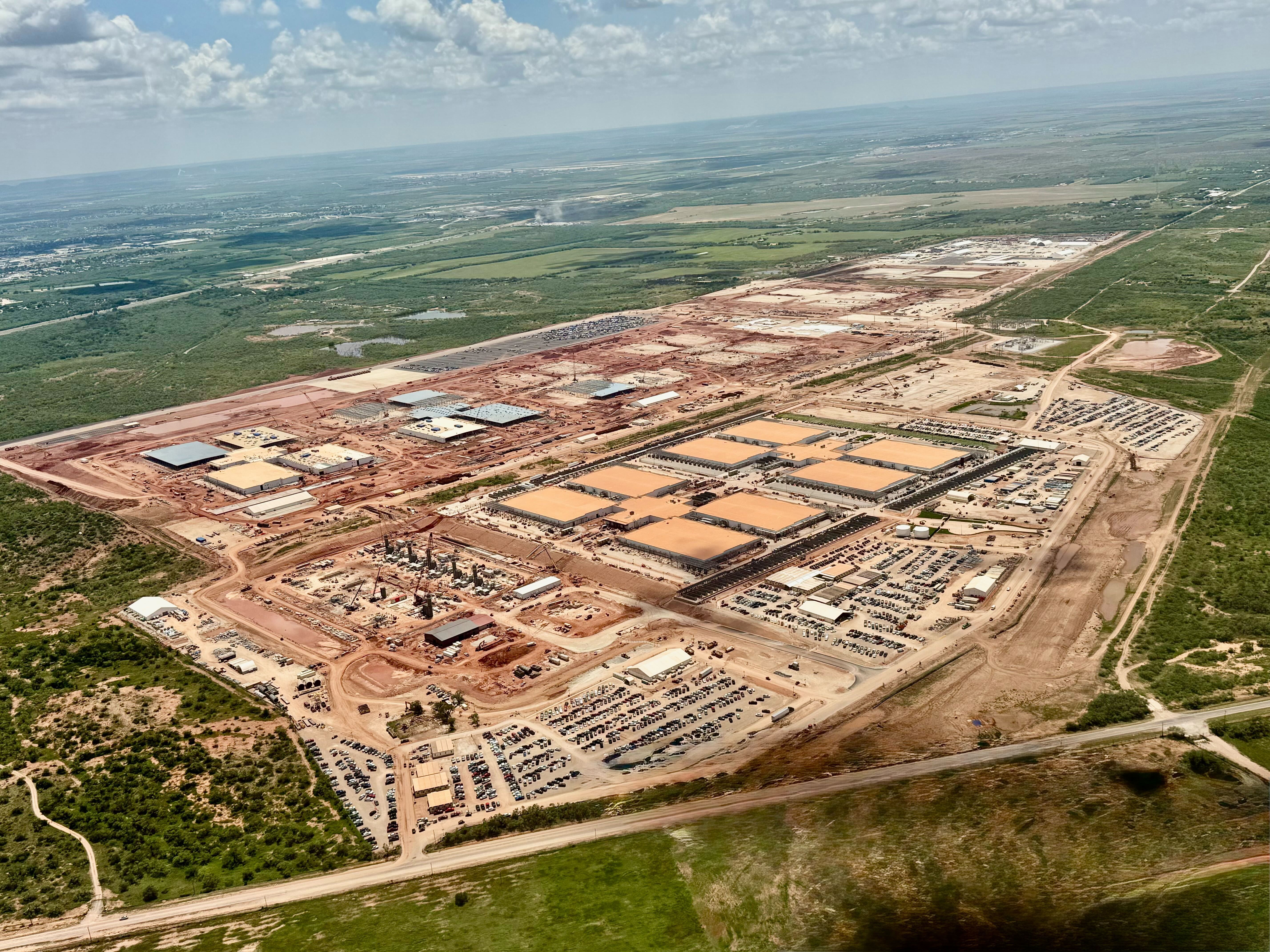
Oracle and OpenAI Data Center Buildout Explained
AI demand has turned compute into a supply problem. If you rely on models, APIs, or cloud infrastructure, that matters right now because the biggest bottleneck is no longer ideas. It is power, chips, land, and the ability to stand up working capacity fast. The Oracle OpenAI data center buildout is a direct response to that pressure. It shows how the AI race is shifting from model releases to physical infrastructure, where timelines are slower, costs are brutal, and execution decides who wins. Readers have heard plenty of hype about giant AI deals. Fair enough. But this one deserves attention because it points to a harder truth. The next phase of AI will be shaped as much by construction crews and utility hookups as by researchers and product teams.
What stands out
- Oracle is becoming a bigger infrastructure partner in OpenAI’s capacity push.
- The real story is not branding. It is access to GPU clusters, power, and deployable data center space.
- This buildout adds pressure on AWS, Microsoft Azure, and Google Cloud to secure more AI-ready capacity.
- For customers, the main question is simple. Will more supply lower delays and improve access to advanced models?
Why the Oracle OpenAI data center buildout matters
Look, AI infrastructure used to be a backroom topic. Not anymore. Training and serving large models now requires huge capital outlays, long hardware lead times, and close coordination between cloud vendors, model labs, and chip suppliers like Nvidia.
That is why the Oracle OpenAI data center buildout matters beyond the two companies involved. It is a signal that AI leaders cannot depend on a single cloud relationship forever. They need optionality, bargaining power, and more physical capacity in more places.
AI scale now depends on old-school industrial constraints. Power, cooling, real estate, and supply chain discipline are the new gatekeepers.
And that changes the competitive map.
What problem is this buildout trying to solve?
At the most basic level, OpenAI needs more compute. That means more servers, more GPUs, more networking gear, and facilities that can actually run them without power or cooling failures. Sounds obvious, but getting those pieces lined up is like building a stadium during playoff season. Everyone wants the same steel, labor, and prime dates.
Oracle brings something useful to that fight. It has been pushing hard to sell AI infrastructure through Oracle Cloud Infrastructure, or OCI, and it has already worked to position itself as a serious home for high-performance AI workloads. For OpenAI, another route to capacity can ease pressure on existing partners and reduce exposure to one provider’s limits.
Why capacity is the real product
People often talk about AI models as if the magic sits only in the weights and algorithms. That misses half the story. Without enough inference capacity, even a strong model becomes a queue.
For enterprise buyers, that affects:
- Latency for live applications
- Availability during usage spikes
- Pricing over time
- Regional deployment options
- Speed of new model rollouts
If OpenAI can spread workloads across more infrastructure, customers may see steadier access. That is the practical angle.
What Oracle gets from the Oracle OpenAI data center buildout
Oracle has spent years trying to prove it belongs in top-tier cloud conversations. It has deep enterprise roots, but it has often trailed Amazon, Microsoft, and Google in mindshare. AI gives Oracle a rare opening to reset that debate.
Partnering on a high-profile Oracle OpenAI data center buildout helps Oracle make a blunt point to the market. It can host serious AI workloads at scale. That pitch matters because cloud buyers often follow credibility as much as raw specs.
Honestly, Oracle does not need to win the whole cloud war. It needs to win enough strategic deals to become non-negotiable in AI infrastructure buying cycles. Big difference.
What this says about the wider cloud market
The old cloud story was about software services, migration, and price-performance tradeoffs. The new one is more physical. Who can deliver GPU clusters first? Who already has power secured? Who can build near demand centers without getting stuck in permitting and utility delays?
This is where the AI market gets less glamorous and more serious.
Microsoft still has a powerful relationship with OpenAI. That has not changed. But large-scale AI players are increasingly acting like major industrial buyers. They want multiple supply channels because shortages are expensive and downtime is worse.
That shift could produce three clear outcomes:
- More multi-cloud AI deployments for top model providers
- Tighter links between cloud companies and data center developers
- More aggressive spending on power procurement and regional buildouts
There is also a political and regulatory angle. Massive data centers raise local questions about electricity use, water, tax incentives, and grid strain. Those debates tend to arrive after the press release, not before.
Is this good news for AI customers?
Probably, with caveats. More capacity should help reduce supply pressure, especially if it comes online on schedule and supports real production demand rather than serving as a headline number. But new facilities take time, and AI demand keeps climbing.
So what should customers watch?
Signals that matter more than the announcement
- Whether OpenAI expands enterprise availability or raises usage caps
- Whether latency improves for high-demand products
- Whether pricing stabilizes as infrastructure grows
- Whether Oracle publishes credible proof points around uptime and AI performance
That last point matters. Infrastructure claims are easy to make. Running stable large-scale inference is harder (and much less forgiving).
The missing piece people skip over
Many reports on AI infrastructure focus on chips alone. Chips are vital, sure, but they are only one layer. Data center networking, storage throughput, power density, cooling design, and deployment speed can ruin a project even when the GPUs arrive on time.
That is why this kind of buildout deserves a skeptical read. The headline may sound like a simple expansion deal. In practice, these projects are execution tests. Can the provider source hardware? Can the site support dense AI racks? Can the economics hold up if demand shifts?
A veteran rule from covering tech for years applies here. The flashy part is rarely the hard part.
What businesses should do now
If your company depends on external AI platforms, treat infrastructure concentration as a business risk. Do not assume every top model provider has endless spare capacity, even if the demos look smooth.
A practical approach:
- Ask vendors where workloads are hosted and how they handle failover.
- Review latency and rate-limit terms in enterprise contracts.
- Model costs under peak usage, not average usage.
- Keep a backup path for core AI features if one provider slows down.
- Watch infrastructure news as closely as model launch news.
That last one sounds boring. It is not. If AI is moving into your product or operations, compute supply is now part of your risk planning.
Where this likely goes next
The Oracle OpenAI data center buildout is part of a bigger shift. AI leaders are becoming infrastructure strategists, not just software companies. Expect more deals that blend cloud contracts, real estate, energy planning, and custom hardware commitments.
And expect the market to keep testing whether these giant plans translate into usable capacity. That is the only scorecard that matters. If more buildouts mean faster access, lower friction, and steadier service, customers will care. If not, all the announcements in the world will feel like scaffolding without a building. So here is the real question. Which company can turn AI ambition into operating capacity first?