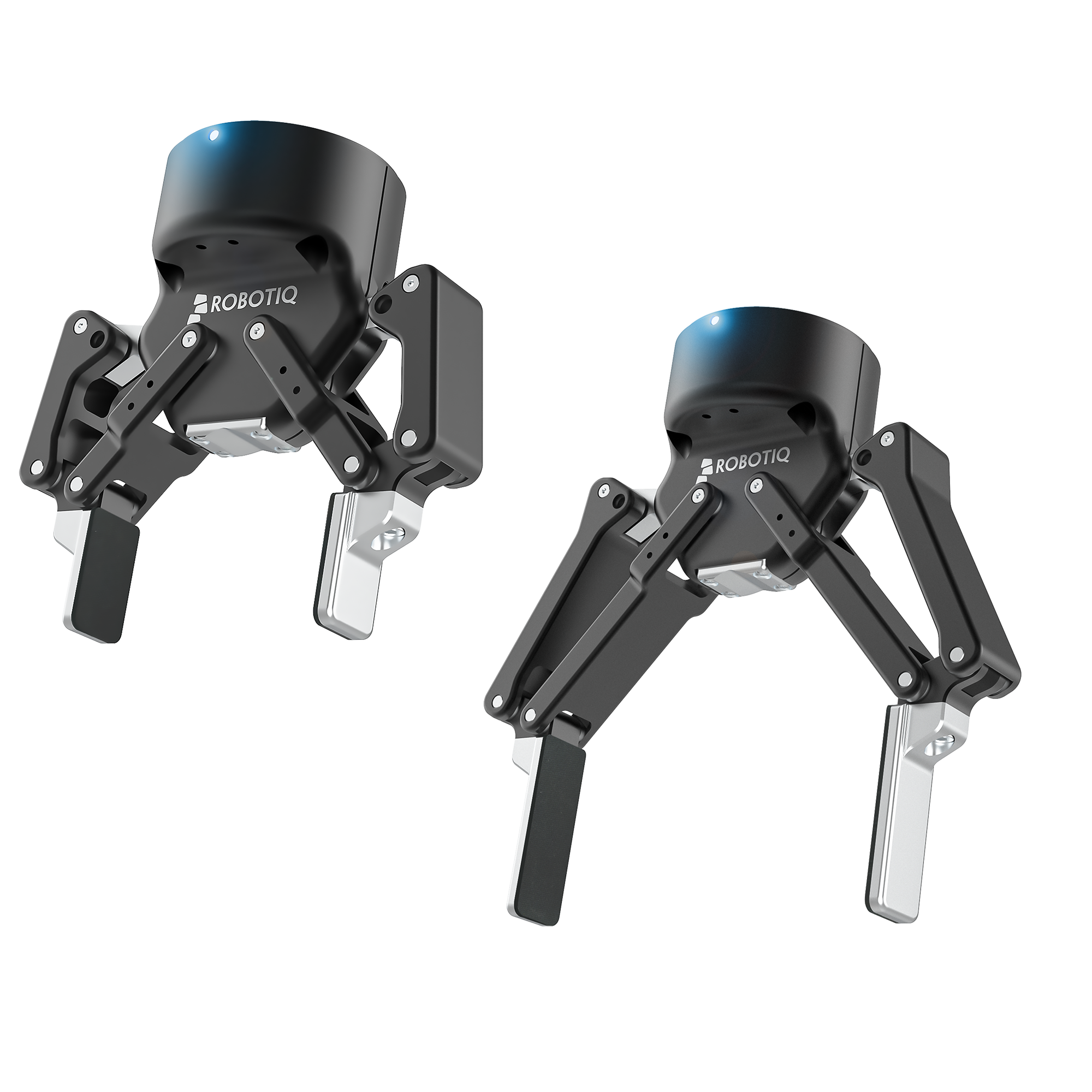
Robot Grippers Need Their ChatGPT Moment
Robots can move through warehouses, map streets, and even hold a conversation. Yet many still struggle with a basic task your hand does without thought. Pick up a sock. Twist open a bottle. Shift a slippery object without dropping it. That gap matters now because robot grippers sit at the center of the next wave of automation. If machines cannot reliably handle the messy variety of real objects, a lot of the hype around humanoids and general-purpose robots hits a wall. I have covered robotics long enough to know this pattern. Software grabs headlines, but hardware sets the limit. And in robotics, the hand is often the real story. So if you want to know where robots will actually become useful at scale, start with the pincers.
What matters most right now
- Robot grippers remain one of the hardest problems in robotics because real-world objects vary in shape, weight, texture, and fragility.
- Large AI models may help robots plan actions, but physical manipulation still depends on sensors, materials, and control systems.
- Many successful systems use specialized grippers for narrow jobs, not one hand that can do everything.
- The biggest near-term gains will likely come from pairing smarter software with better end effectors, not from humanoid hype alone.
Why robot grippers are still the bottleneck
Moving a robot arm from point A to point B is hard, but manageable. Grasping an unknown object in a cluttered bin is a different beast. The robot needs to judge shape, force, friction, balance, and the chance that one object will snag another.
Human hands solve this with dense sensing, fast feedback, and years of practice. Robots usually get a stripped-down version of that package. Some have cameras. A few have tactile sensors. Many rely on rigid grippers built for repeatable factory parts, which works fine until the world gets messy.
Robotics has no shortage of ambitious demos. The tougher question is whether a machine can handle the awkward, inconsistent objects that fill homes, hospitals, farms, and back rooms.
That is why the field keeps circling back to the gripper. You can have a brilliant model and a polished humanoid frame, but if the hand cannot manipulate objects with care and consistency, the whole system looks smarter than it is.
What a robot grippers breakthrough would really look like
People talk about a ChatGPT-style leap for robotics. Fine. But what would that mean in practice for robot grippers? It would not mean one flashy demo where a robot folds a shirt under studio lights. It would mean broad, repeatable gains across many objects and settings.
A real leap would likely include several things at once:
- Better tactile sensing, so the robot can feel slip, pressure, and contact points in real time.
- Adaptive materials, including soft robotics approaches that conform to irregular shapes.
- Stronger data pipelines, with large training sets tied to grasp outcomes and failure cases.
- Control systems that react instantly, not after a visible fumble.
- Generalization, so the robot handles unfamiliar items without a custom script.
Think of it like cooking on a busy line. Reading the recipe matters, but so does knowing how hard to grip a tomato, when a pan is too hot, and how to recover when something starts to slide. Robotic manipulation needs that same feel.
That is the missing layer.
Why AI alone will not solve robot grippers
Look, this is where some of the current pitch gets slippery. Generative AI can help robots interpret instructions, label scenes, and break tasks into steps. That is useful. But a language model does not magically give a machine fine motor skill.
The physical world is stubborn. Friction changes. Plastic flexes. Cardboard deforms. Fruit bruises. Transparent objects confuse cameras. Reflective surfaces can wreck depth sensing. Anyone saying AI alone will flatten these problems is skipping the hard part.
Researchers across robotics have been pushing on this for years through tactile sensing, reinforcement learning, sim-to-real transfer, and soft gripper design. Work from labs at MIT, Stanford, and Carnegie Mellon has shown progress in grasp planning and dexterous manipulation, while companies in warehouse automation have built strong task-specific systems. But general-purpose handling remains elusive.
Honestly, that should temper expectations. It should not kill them.
Where robot grippers already work well
The most successful commercial robotics systems tend to avoid the broadest manipulation challenge. They narrow the problem. Smart move. In factories and logistics, robots often handle known objects in structured environments, using grippers designed for those exact conditions.
Good fits for current gripper technology
- Vacuum grippers for boxes, sealed packages, and flat surfaces
- Parallel jaw grippers for predictable industrial parts
- Soft grippers for produce and delicate packaged goods
- Magnetic end effectors for specific metal components
This is less glamorous than a humanoid making coffee, but it is where the money is. And it explains a basic truth about automation. The winners are often the companies that reduce variation, not the ones that promise a robot can handle everything.
What to watch next in robot grippers
If you are tracking the field, watch for progress in a few specific areas instead of broad claims about embodied AI.
1. Tactile sensing that survives real use
Lab-grade tactile sensors can be impressive, but deployment is another matter. Can they stay accurate after repeated contact, dust, oil, vibration, and wear? That question is non-negotiable for real adoption.
2. Soft and hybrid designs
Rigid grippers offer control. Soft grippers offer compliance. The interesting work sits in between, where hybrid systems can be gentle without becoming clumsy.
3. Faster learning from failure
Robots need to learn from near misses, slips, and bad grasps, not only from perfect runs. That is how people improve, and it is how machines will get better too (assuming the training data is broad enough).
4. Better benchmarks
What counts as progress? A cherry-picked demo tells you very little. Shared benchmarks across object sets, surfaces, and task types would make it easier to separate solid engineering from marketing gloss.
The hype check investors and buyers need
Here is the question buyers should ask: can this robot manipulate the objects that actually define my workflow, day after day, without a technician babysitting it?
If the answer depends on controlled lighting, custom trays, slow cycle times, or a narrow object catalog, then the system may still be useful. But call it what it is. A specialized tool. Not a general robot revolution.
That distinction matters because deployment costs pile up fast. Integration, maintenance, retraining, and downtime can erase the appeal of a slick demo. I have seen this movie before in enterprise tech. The pilot impresses. The roll-out gets ugly.
What happens when robot grippers finally improve
Once robot grippers become more capable, a lot of adjacent promises get more believable. Warehouse picking expands to messier inventories. Home robots move beyond novelty. Assistive machines in elder care and hospitals become more practical. Manufacturing gets more flexible, especially for shorter runs and mixed items.
But the winners may not look like sci-fi androids. They may be plain-looking machines with excellent hands, good sensors, and software that knows its limits. That would be a more grounded future, and probably a more profitable one too.
The next thing worth your attention
The smartest way to read robotics news now is to ignore the smiling humanoid for a minute and watch the hand. Can it adapt? Can it recover? Can it handle edge cases? That is where the real signal sits.
Software will keep getting better. No surprise there. But if the next big robotics leap is coming, it may arrive one careful grip at a time. So the next time a company promises general-purpose robots are almost here, ask a simple question. What can the pincers actually pick up?


