Satya Nadella on Why One AI Model Is a Bad Bet
If you are betting your product, your support stack, or your internal workflows on a single AI system, you are taking on more risk than many teams admit. The latest mainKeyword debate is not about which model is smartest. It is about whether your company can survive when one vendor changes prices, one model slips on quality, or one outage knocks your workflow flat. Satya Nadella’s warning lands because it cuts through the hype. The real question is not whether AI is powerful. It is whether your AI plan is brittle.
That matters now because enterprise buyers are moving from demos to dependency. Once AI sits in customer service, search, coding, and analytics, a bad choice spreads fast. And if your whole setup is tied to one provider, you do not have strategy. You have exposure.
What stands out in the mainKeyword warning
- Single-vendor AI creates concentration risk. One outage or policy change can hit many teams at once.
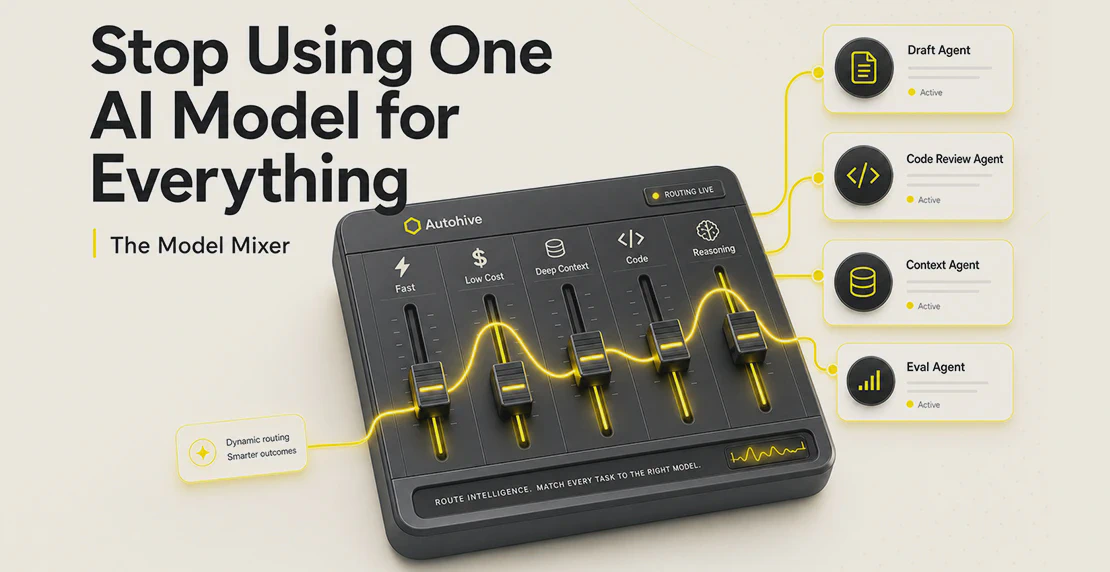
- Different models are good at different jobs. A coding assistant, a support bot, and a research tool do not need the same brain.
- Cost can swing quickly. Model pricing, usage caps, and token costs can change faster than procurement cycles.
- Quality varies by task. The best model for drafting text may not be the best for retrieval, reasoning, or low-latency work.
- Resilience matters more than hype. Companies need fallback paths, not a single AI crown jewel.
Why the mainKeyword debate is really about risk
Look, this is not a philosophical argument. It is basic operations. If your company uses one model for every job, you are tying together functions that should stay separate. That is like building a kitchen with one burner and expecting it to handle breakfast, dinner, and a banquet.
Enterprises learned this lesson with cloud services, payment processors, and databases. They did not keep one backup because they loved complexity. They did it because outages happen, contracts shift, and vendors make mistakes. AI is heading down the same road. Why would you treat it differently?
Nadella’s point lands because AI is becoming infrastructure. Once it is embedded in daily work, reliability and optionality matter as much as raw model quality.
How to build a better AI stack
You do not need ten models for every task. You do need choices. A sane setup usually includes a primary model, one fallback, and clear rules for where each one fits.
- Map the jobs first. Separate customer-facing tasks, internal drafting, code generation, search, and analysis.
- Match models to tasks. Use the tool that performs best on the job, not the one with the loudest marketing.
- Add fallback routes. If your first-choice model fails, your system should degrade gracefully.
- Track cost and latency together. Cheap output that arrives late is still a business problem.
- Test regularly. Re-run prompts, compare outputs, and watch for drift after model updates.
Where teams get it wrong
Teams often pick one model because procurement is easier. That is a short-term win and a long-term tax. They also confuse brand with fit. A famous model name does not mean it is best for your workflow, your data, or your latency target.
And then there is lock-in. Once your prompts, guardrails, and internal tooling are built around one API, switching feels expensive. That is the trap. Not the technology itself. The cost of rearranging your own system later.
What this means for AI buyers
If you are buying AI for a business, ask three blunt questions. What happens if this model goes down? What happens if pricing doubles? What happens if a better model appears next quarter?
Those questions sound simple. They are non-negotiable. A strong AI plan should survive vendor churn the same way a solid finance system survives market swings. No drama. No heroics.
The smartest teams are building AI like an architecture project, not a showroom. They care about load-bearing structure, not glossy finishes. That means modular tools, clear ownership, and enough flexibility to swap parts without tearing down the whole building.
What companies should do next
Start with an inventory. Find every place AI touches your product or operations. Then mark which parts can fail safely and which cannot. The critical paths should have a backup, even if the backup is less elegant.
After that, run side-by-side tests. Compare one model against another on your actual tasks. You will learn quickly where one shines and where another saves money. That is more useful than any vendor keynote.
Satya Nadella’s warning is useful because it pushes companies to stop thinking in slogans. The next wave of winners will not be the teams that worship one model. They will be the teams that know when to switch, when to fallback, and when to ask a harder question: are we building on AI, or are we betting the shop on it?