Self-Driving Trucks Ready to Scale
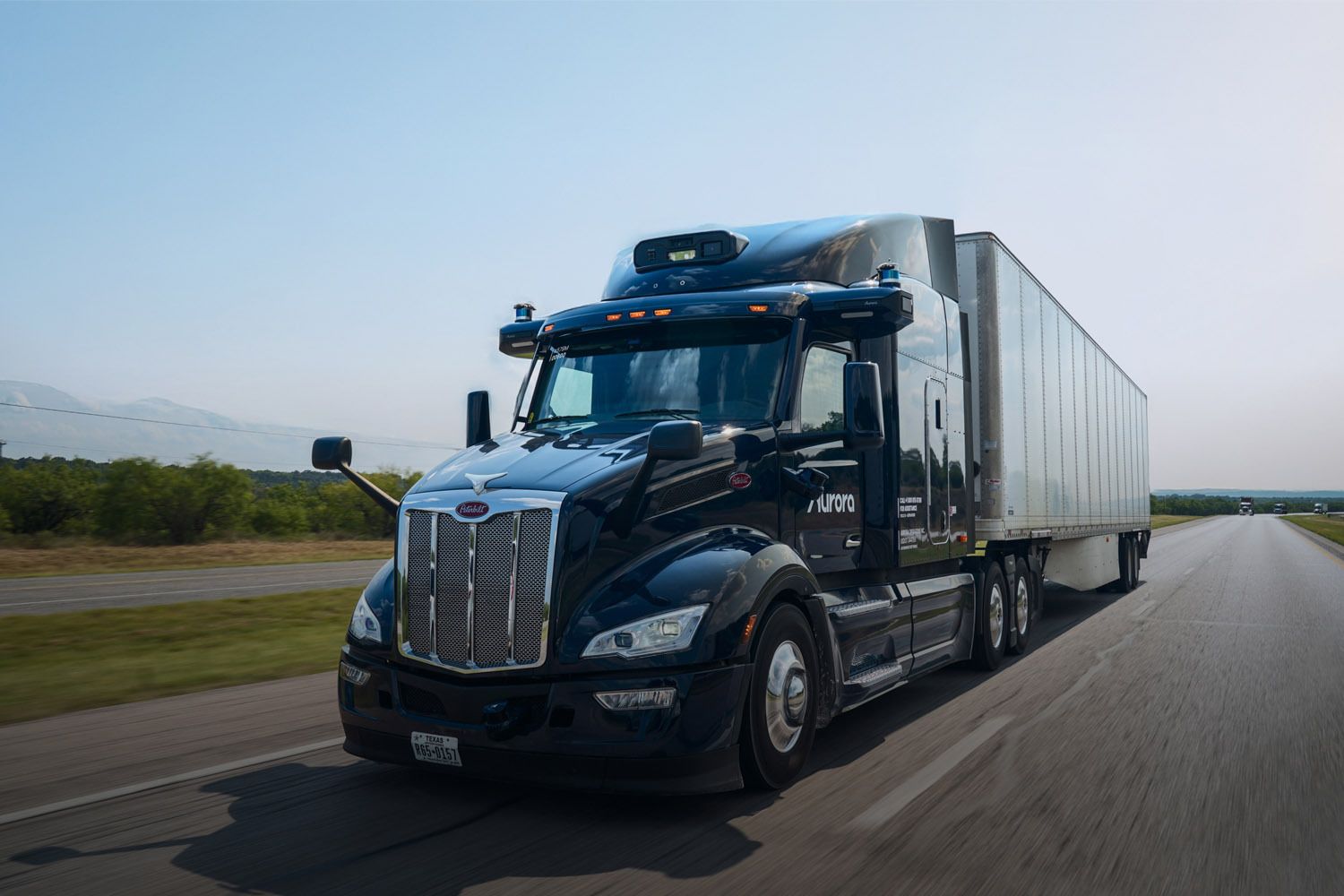
If you work in freight, you have heard this promise for years. Autonomous trucks were always close, but never quite here. Now the pitch is sharper. Aurora co-founder and CEO Chris Urmson argues that self-driving trucks have reached the point where commercial scale is realistic, and that matters because long-haul freight still faces driver shortages, cost pressure, and nonstop demand for faster delivery.
But hype has burned this sector before. So the real question is simple. Are self-driving trucks actually ready for broad use, or are we hearing another polished timeline from an industry that keeps missing them? Based on Aurora’s current position and the wider market, the answer looks more serious than it did a few years ago, though the road to scale still depends on safety proof, lane choice, and disciplined rollout.
What stands out right now
- Aurora is making the case that self-driving trucks can start with fixed freight lanes where weather, mapping, and operating conditions are more controlled.
- The strongest business case is long-haul trucking, where labor constraints and route repetition create a cleaner opening for autonomy.
- Safety and uptime will decide adoption faster than flashy demos. Fleet buyers care about cost per mile and reliability.
- Scale will likely come corridor by corridor, not all at once across the country.
Why self-driving trucks look more viable now
The timing is not random. Several pieces have matured at the same time. Sensor stacks have improved, onboard compute has become more capable, and developers have spent years training systems on highway driving data. That matters because highway freight is a narrower problem than full urban robotaxi service.
Look at the operating design domain. Long highway stretches are more predictable than downtown streets full of bikes, pedestrians, and chaotic intersections. That does not make the job easy. It does make it easier to define where autonomy can work first.
Think of it like commercial aviation versus a city taxi. One runs on tightly defined routes and procedures. The other deals with constant improvisation.
Aurora’s case also fits the economics of freight. The American Trucking Associations has repeatedly flagged driver supply as a structural issue, and fleets continue to face pressure on labor, fuel, insurance, and equipment utilization. An autonomous system that can run more hours with fewer interruptions gets attention fast, if it is safe and if it pencils out.
Self-driving trucks do not need to solve every road in America on day one. They need to solve a specific lane well enough that shippers and carriers trust them with real freight.
What Aurora is really saying about self-driving trucks
Urmson’s argument is not that the whole industry has suddenly crossed the finish line. It is narrower and, frankly, more credible than that. Aurora appears to be saying the first commercial use case is ready to expand because the company can now target repeatable highway routes with clearer economics and fewer edge cases than passenger autonomy.
That is the right frame. For years, autonomous vehicle companies sold a future that sounded universal. Investors loved it. Operators had to wait. Now the tone is more grounded. Start with freight corridors in states like Texas, where regulation, weather patterns, and shipping volumes make testing and deployment easier.
That restraint is a good sign.
And it lines up with what seasoned transportation buyers want. They do not buy moonshots. They buy systems that lower cost, reduce downtime, and survive ugly real-world operating conditions (including night driving, road debris, and construction changes).
Where the scale story still gets messy
If you strip away the buzz, three hard problems remain.
1. Safety proof at commercial volume
A pilot is one thing. Running large autonomous truck fleets with consistent safety performance is another. Regulators, insurers, partners, and the public will want evidence that holds up over millions of miles, not selective clips from controlled runs.
That evidence standard is non-negotiable because trucks carry more mass, create more severe crash risk, and operate deep inside supply chains that cannot afford drama.
2. Freight networks are not one-size-fits-all
Aurora can scale on attractive lanes first, but freight moves through messy handoffs. There is linehaul, terminal operations, local pickup, maintenance, fueling, and exception handling when something goes sideways. Full autonomy on the highway is only one link in that chain.
So fleets will ask a blunt question. Does this technology improve the whole movement of freight, or just one polished segment of it?
3. Economics have to beat human-driven alternatives
Even if the tech works, adoption depends on cost. Hardware, remote support, maintenance, mapping updates, and insurance all shape the final number. If self-driving trucks cannot offer a clear path to lower cost per mile or better asset utilization, scale will stall.
Honestly, this is where many flashy transport technologies lose momentum. They work in principle, then get kneecapped by operations math.
How fleet operators should evaluate self-driving trucks
If you are a carrier, shipper, or logistics buyer, focus less on the headline and more on execution. A practical review should cover these points:
- Lane fit: Which routes are being targeted first, and why do they suit autonomy?
- Safety case: What public data, validation methods, and incident reporting support the deployment?
- Operational model: How are transfers, roadside assistance, and maintenance handled?
- Economics: What happens to cost per mile, dwell time, and tractor utilization?
- Scalability: Can the system move beyond one corridor without a major cost jump?
That is the checklist that matters. Not glossy branding. Not a founder’s confidence. Results.
What this means for the autonomous trucking market
The broader market may be entering a more mature phase. The early era was driven by giant claims, loose timelines, and a lot of venture money. The next phase looks more industrial. Fewer promises. More route discipline. More partnerships with carriers, OEMs, and logistics players that know how freight actually works.
This shift is healthy. It suggests autonomous trucking could become a real infrastructure story rather than a perpetual demo cycle.
But here is the catch. The winners may not be the companies that talk the loudest. They will be the ones that can prove safety, integrate into freight operations, and scale lane by lane without blowing up their cost structure. That is a much tougher test than getting a truck down the highway with nobody behind the wheel.
What to watch next
Watch for concrete signals, not rhetoric. Commercial launch details matter. Named freight corridors matter. Repeat customers matter. Public safety reporting matters. So do partnerships with truck manufacturers and large carriers.
If Aurora and its peers can show steady expansion on real shipping lanes, self-driving trucks may finally move from futuristic talking point to normal part of long-haul logistics. If not, the sector risks another cycle of inflated expectations and delayed trust.
Freight does not care about grand visions. It cares about moving loads on time, at a solid margin, with fewer surprises. The next year should tell us whether self-driving trucks can meet that bar, or whether the industry is still one more milestone away.