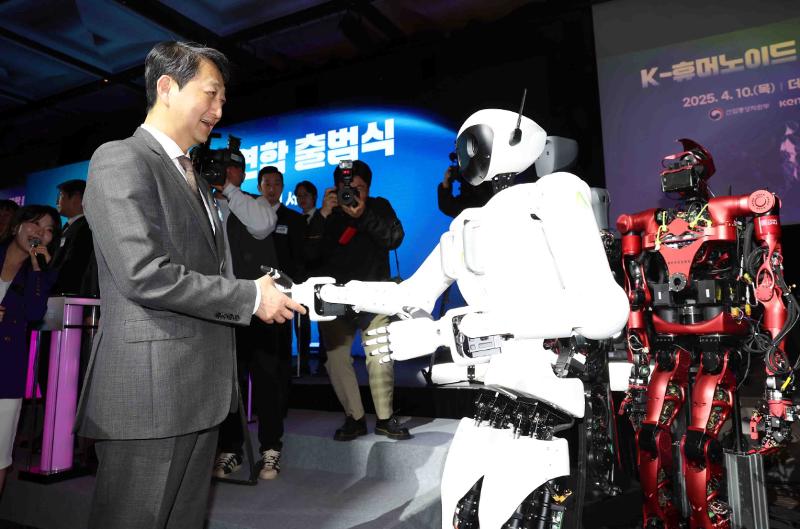
South Korea AI Robots Boom: What It Means for Business
South Korea AI robots are moving from demo-floor spectacle to real business infrastructure, and that shift matters now. Companies are under pressure to cut labor costs, fill stubborn staffing gaps, and speed up production without burning out human workers. South Korea has been one of the fastest places to turn robotics from a niche into a standard tool, helped by dense manufacturing, strong electronics firms, and a government that has backed automation for years.
That does not mean the hype is clean. Robots still need integration, maintenance, data, and human oversight. But if you run a factory, warehouse, hospital, or retail operation, you should be asking a blunt question: what work do you want humans to keep doing, and what work should a machine take over?
What South Korea AI robots are changing
- Factories are getting faster, with robots taking repetitive tasks that slow line workers down.
- Logistics is getting tighter, because automated systems can sort, move, and track goods with fewer delays.
- Service work is shifting, especially in places where staffing is thin or turnover is high.
- Training is becoming more technical, since workers now need to supervise machines instead of only operating equipment.
The practical shift is simple. Robotics is no longer only about welding arms or car assembly. In South Korea, the push now spans delivery, food prep, inspection, and warehouse flow, which makes the market more like an operating system than a single gadget.
“The real story is not the robot. It is the process around the robot.”
Why South Korea AI robots are scaling faster than in many places
South Korea has a structural edge. It already has one of the highest robot densities in manufacturing, according to the International Federation of Robotics, which tracks industrial robot deployment worldwide. That matters because once a country has enough robots in the field, it has more installers, more software talent, more maintenance crews, and more companies willing to buy again.
There is also a blunt economic reason. South Korea faces demographic pressure from an aging population and a shrinking workforce. If fewer workers are available, automation becomes less of a luxury and more of a pressure valve.
Think of it like a restaurant kitchen. If you are short on prep staff, you do not redesign the menu first. You buy time with equipment that removes the slowest tasks. Robotics works the same way.
Where South Korea AI robots still hit friction
Plenty of buyers still get this wrong. They assume the robot is the product, when the real product is the workflow.
Three friction points show up again and again
- Integration costs. New robots must connect with existing software, conveyors, sensors, and safety systems.
- Change management. Workers need new roles, and managers need a plan for retraining.
- Reliability. A robot that fails at the wrong moment can slow an entire line, not speed it up.
And there is another issue that gets overlooked. Many companies buy automation to solve a labor problem, then discover they also need better data quality and cleaner floor operations. Bad inputs still produce bad outcomes, even with a shiny machine in the middle of the room.
What businesses should watch next
If you are tracking the South Korea AI robots market, watch for four signals. First, whether deployments move beyond manufacturing into health care, retail, and food service. Second, whether vendors package hardware with software and support, since that lowers adoption friction. Third, whether smaller firms start buying in volume instead of only conglomerates. Fourth, whether regulators push harder on safety, labor displacement, and data governance.
The companies that win will not be the ones that buy the most robots. They will be the ones that redesign work around them without making the operation brittle.
That is the part most executives still miss. A robot rollout is not a trophy. It is an operational bet. If South Korea keeps moving the way it has, the rest of Asia will be watching closely. And if your business is still treating automation as a future project, how long can you afford that delay?
Bottom line for decision-makers
South Korea AI robots are a signal, not a sideshow. They show where labor, software, and hardware are meeting in practical ways, and they expose which companies can adapt fast enough to keep margins intact. The next move is not to admire the tech. It is to map one process in your own business and ask where automation would save time without creating new chaos.