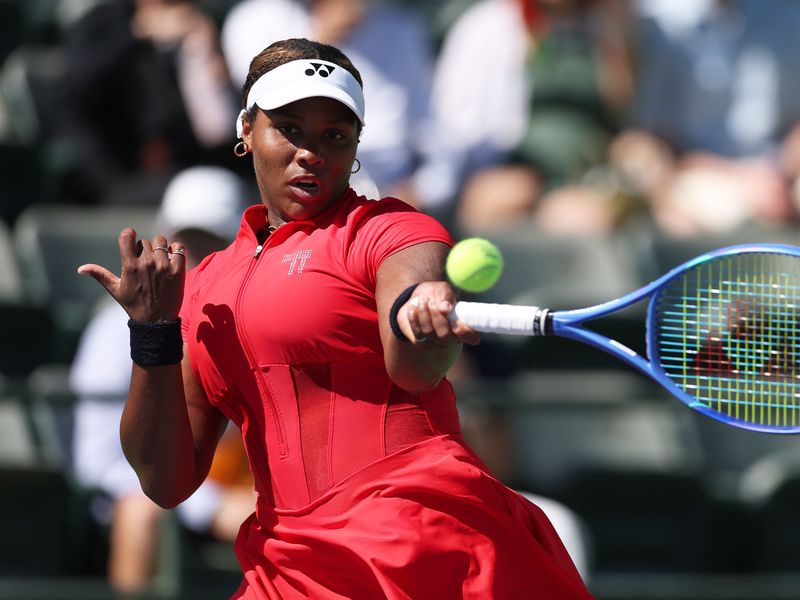
Taylor Townsend at Indian Wells: The Sacrifice Behind the Win
Professional tennis asks for a brutal kind of tradeoff, and Taylor Townsend’s Indian Wells moment put that reality in plain view. The Taylor Townsend Indian Wells story is not only about lifting a trophy. It is about what she gave up to get there, including missing her son Adyn Aubrey Johnson’s fifth birthday while competing in one of the sport’s biggest events. That matters because fans often see the celebration, the ranking points, and the payday, but not the private cost behind them. Townsend did not hide from that tension. She said the sacrifice was worth it after winning the doubles title at Indian Wells, and that honesty hit harder than any polished athlete quote. What does success really cost when your job takes you away from your child on a milestone day?
What stands out most
- Taylor Townsend won the women’s doubles title at Indian Wells with Katerina Siniakova.
- She missed her son’s fifth birthday during the tournament, a choice she openly addressed afterward.
- Her comments cut through the usual sports script and showed the family strain built into elite tennis.
- The moment adds depth to the broader Taylor Townsend Indian Wells story, which is about more than one result.
Why the Taylor Townsend Indian Wells moment resonated
Townsend’s comments landed because they felt unfiltered. Athletes are usually pushed toward clean, sponsor-safe lines. She went the other way and acknowledged the sting of missing her son’s birthday while still saying the win made the trip worth it.
Look, that can make some people uneasy. It should. Parenting and ambition do not always line up neatly, and pro sports can force choices that sound cold from the outside. But pretending otherwise would be dishonest.
Townsend framed the result in human terms, not PR language. She made clear that winning mattered, and so did the pain of what she missed.
That is why the story traveled beyond tennis fans. It touched a nerve shared by traveling workers, single parents, and anyone who has ever chosen one duty over another and then sat with the guilt.
What she actually won at Indian Wells
Taylor Townsend and Katerina Siniakova won the BNP Paribas Open women’s doubles title, one of the biggest prizes outside the four Grand Slams. Indian Wells is often treated like a fifth major because of the field, the scale, and the attention it gets across the sport.
That context matters. Missing a family milestone for a routine stop would be one thing. Missing it for a title at a premier event, with ranking points and career momentum on the line, is different.
One match can shift a season.
Townsend has built a strong doubles career, and this result added another high-end line to her resume. For a player balancing motherhood with the travel and grind of tour life, those chances are not abstract. They are career-defining.
The hidden math of pro tennis and parenting
Fans often lump all tennis players into the same bucket. That misses the point. Unless you are at the very top of the sport, every week carries financial and professional pressure. Prize money, rankings, sponsorship value, and entry into future events are all tied to results.
And for a mother on tour, the calculation gets even sharper. Travel planning is harder. Recovery time is tighter. Emotional bandwidth gets split in two. Sometimes more than two.
Here is the hard math behind choices like Townsend’s:
- A deep run at Indian Wells brings major rankings value and income.
- Skipping or losing early can change your schedule and your earning outlook for months.
- Family milestones do not move to fit the tennis calendar.
- So the player has to choose, then live with it.
It is a bit like being a chef during the holiday rush. The biggest opportunity lands on the exact day your family wants you home. You can say no, but the cost is real either way.
Why her honesty matters more than the usual sports platitudes
Sports coverage often flattens athletes into symbols. The dedicated pro. The grateful mom. The fighter. Real life is messier than that, and frankly more useful to readers when it stays messy.
Townsend gave people a version of ambition that was neither glamorous nor sanitized. She did not pretend the sacrifice felt noble every second. She said it was worth it because the result matched the cost.
Honestly, that is the part many public figures avoid. They will talk about balance as if it is a stable setting you can switch on. It is not. It is more like patching a roof in a storm. You handle the leak in front of you, then move to the next one.
What this says about Taylor Townsend’s career right now
The Taylor Townsend Indian Wells result points to a player who knows exactly where she stands and what windows matter. She is no longer chasing a vague idea of potential. She is converting opportunities at the top level, especially in doubles, where she has become a real force.
That shift is easy to underrate. There is a big difference between being talented and being positioned to win titles that shape your season. Townsend is in the second category now.
A veteran’s read on the bigger picture
For years, women athletes who became mothers were treated as side stories, almost as if parenthood and elite performance were competing identities. The sport has slowly moved past some of that, helped by players like Serena Williams, Victoria Azarenka, Elina Svitolina, Naomi Osaka, and others who forced a broader conversation around maternity, scheduling, and support.
But slow progress is still slow. Tennis remains a sport that demands constant travel across continents, and the support structures vary wildly from player to player. Townsend’s story is a reminder that policy talk means little unless it changes the daily strain.
What fans should take from the Taylor Townsend Indian Wells story
You do not need to agree with her choice to understand it. That is the real test here.
- Respect the result without erasing the sacrifice.
- Stop assuming athletes can “have it all” on clean terms.
- Read family stories in sports with more care and less judgment.
- Pay attention when players speak plainly. Those moments usually tell you more than the trophy shot does.
And yes, there is a tennis angle beyond the emotion. Winning Indian Wells matters in the standings, in confidence, and in reputation. That is why Townsend’s choice carried weight in the first place.
Where this leaves the conversation
Townsend’s win will sit in the record books as a doubles title. Fair enough. But the reason people will remember this episode is that she said the quiet part out loud. Elite success can require painful timing, and sometimes the only honest answer is that the sacrifice hurt and still made sense.
Expect more athletes, especially parents, to speak this directly in the years ahead. The better question is whether fans and sports organizations are ready to hear them without demanding a cleaner story.