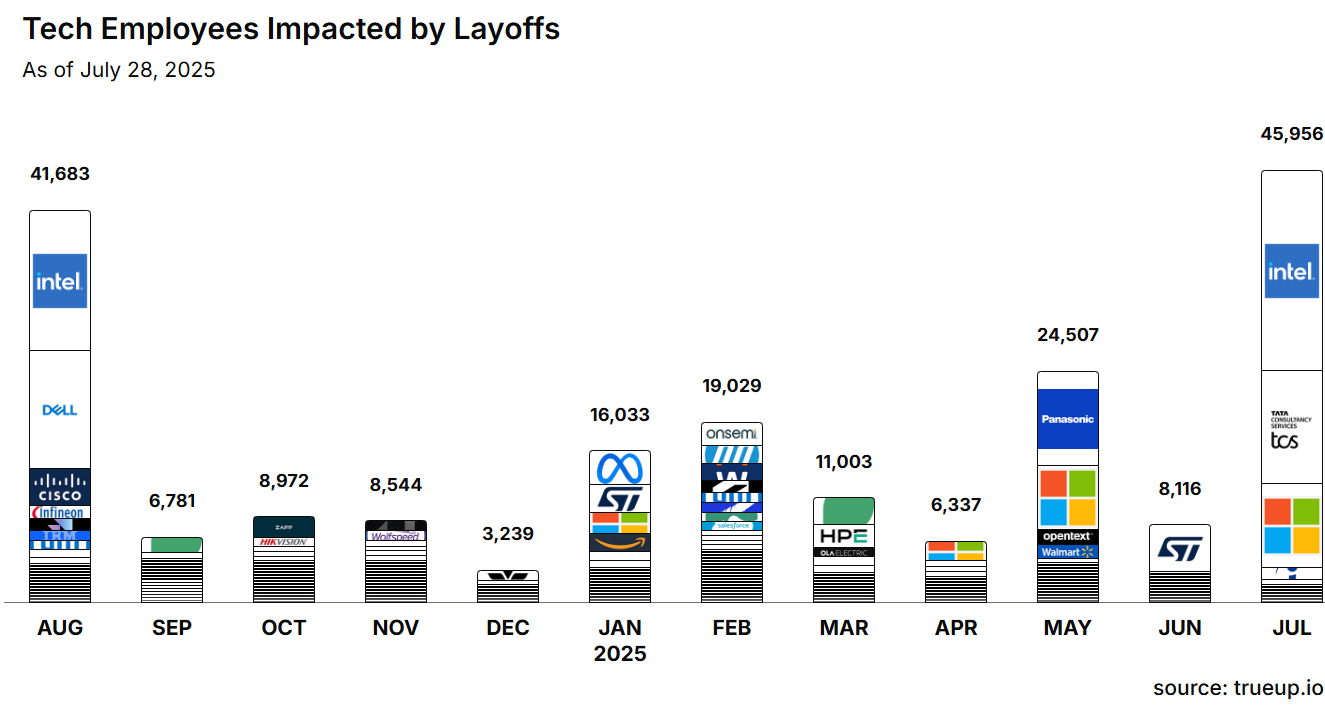
Tech Layoffs and the AI Push
Tech workers are trying to read a messy job market. Companies are still talking about growth, yet more teams keep shrinking. The phrase tech layoffs AI push sums up the tension. Firms want to spend faster on artificial intelligence, data centers, and automation, and that money often comes from somewhere else. Usually payroll. That matters now because AI spending is no longer a side bet. It is becoming a budget priority, even at companies that already cut staff in earlier rounds. If you work in tech, manage a team, or invest in this sector, you need to understand what is really happening behind the headlines. This is less about one bad quarter and more about a broad reset in how companies decide which roles stay, which roles change, and which roles disappear.
What to watch
- Many firms are shifting spending from support functions and legacy products into AI projects.
- Layoffs do not always mean a company is weak. In some cases, they reflect a hard pivot in strategy.
- Engineers tied to AI infrastructure, machine learning, and data systems are in a stronger spot than many adjacent roles.
- The bigger story is allocation. Companies are choosing GPUs, model teams, and cloud capacity over headcount in other areas.
Why the tech layoffs AI push is happening
The broad pattern is simple. Executives believe AI can drive new revenue, cut costs, or both. So they are moving cash toward model development, chip access, cloud contracts, and internal AI tools. Those bets are expensive. A serious AI effort is not like adding one more software feature. It is closer to renovating the foundation of a house while people still live in it.
The Hill reported that layoffs have surged as companies pursue AI, pointing to a wider industry shift rather than isolated cuts. That framing rings true. Leaders are under pressure to show they have an AI plan, and Wall Street has rewarded that story for more than a year. What gets cut first? Often middle layers, overlapping teams, slower product lines, recruiting, trust and safety support, and parts of operations.
AI spending is not landing on top of old budgets. In many companies, it is replacing them.
That is the part many press releases leave out.
What companies are really optimizing for
Look, public statements usually stress efficiency, agility, or focus. Fine. But the underlying math is more blunt. Companies want to protect margins while funding a race that could define the next decade. If the choice is between keeping a larger staff or buying more compute and hiring a smaller number of specialized AI engineers, many leadership teams now choose the second path.
This does not mean every layoff is caused by AI. Some cuts still come from overhiring during the pandemic, slower enterprise sales, or pressure from investors. But AI changes the pecking order. And once that happens, whole job families start to look exposed.
Roles facing more pressure
- Programs tied to aging products with flat growth
- Operational roles that can be partly automated
- Large management layers with unclear ownership
- Generalist jobs where output is easier to standardize
Roles seeing stronger demand
- Machine learning engineers
- Data engineers and data platform teams
- AI product managers with real shipping experience
- Infrastructure, cloud, and security specialists
- Applied researchers working on models or evaluation
Does AI really replace workers that fast?
Not always. That is where some of the hype falls apart. Most companies are still early in turning AI demos into stable business systems. Generative AI can speed up coding, content drafting, search, customer support triage, and internal knowledge work. But speed is not the same as full replacement.
Honestly, the short-term effect is often reorganization before true automation. A company may cut a team because leadership believes AI tools will cover part of the workload later, even if the tools are still rough today. That gap matters. It means some layoffs are based on expectation, not just proven productivity gains.
So what should you believe? Believe the budget signals more than the slogans. If spending on GPUs, model access, and AI platform hires rises while other teams shrink, the strategy is obvious.
How workers should read the tech layoffs AI push
If you are waiting for a perfect signal, you will wait too long. The safer move is to map your role against where company budgets are going. Ask a plain question. Is your work closer to revenue, infrastructure, security, and data, or is it easier for leadership to label as support?
- Track the company narrative. Is AI central in earnings calls, product launches, and hiring posts?
- Study internal budget moves. New compute spend and AI headcount often tell the real story.
- Build adjacent skills. SQL, data pipelines, prompt evaluation, model testing, and automation workflows all help.
- Collect proof of output. In a tight market, visible impact beats vague potential.
- Stay close to teams that ship core products. Distance from the center can get expensive.
And yes, one more thing matters. Relationships. In a choppy market, strong internal sponsors can buy you time that a resume cannot.
What this means for the broader tech job market
The market is splitting. A narrow slice of AI talent can command strong pay, while many capable tech workers face a slower, colder hiring environment. That split can make the sector look healthy from the outside even while plenty of people struggle to land interviews.
Think of it like a basketball team that keeps signing star guards while cutting role players. The roster may look flashy, but it gets thinner everywhere else. Companies are concentrating spend in a few areas they think will matter most. The result is uneven hiring, bigger workloads for remaining teams, and more pressure on workers to prove they fit the new map.
What executives often get wrong
Some leaders are moving too fast from AI ambition to headcount reduction. That can backfire. Cutting domain experts before AI systems are mature can slow execution, create quality problems, and erode customer trust. A chatbot cannot fix a broken product strategy. And an internal coding assistant will not rescue a company that gutted the people who understand its customers.
The strongest companies will likely do this in stages. They will trim duplication, retrain useful talent, and invest where AI actually improves products or operations. The weaker ones will slash first, then scramble when the savings fail to turn into results.
Where this goes next
The tech layoffs AI push is unlikely to fade soon. As long as investors reward AI spending and executives fear being left behind, companies will keep redirecting money toward models, infrastructure, and automation. More restructuring is likely, even at firms that claim they are done cutting.
If you work in tech, the practical move is clear. Get closer to the systems, products, and data work that companies see as non-negotiable. If you lead a team, be honest about whether AI is adding output or simply giving cover for cuts. The next year will sort out who is building durable businesses and who is just chasing the loudest story in the market. Which side do you think your company is on?