Trump Delays AI Security Executive Order
If you follow US tech policy, this is the part that should get your attention. A delayed AI security executive order does not just slow paperwork in Washington. It changes the timing for compliance planning, national security safeguards, and the rules AI companies may face next. That matters right now because major model developers, cloud providers, and enterprise buyers are all making bets on how much federal oversight is coming, and how fast.
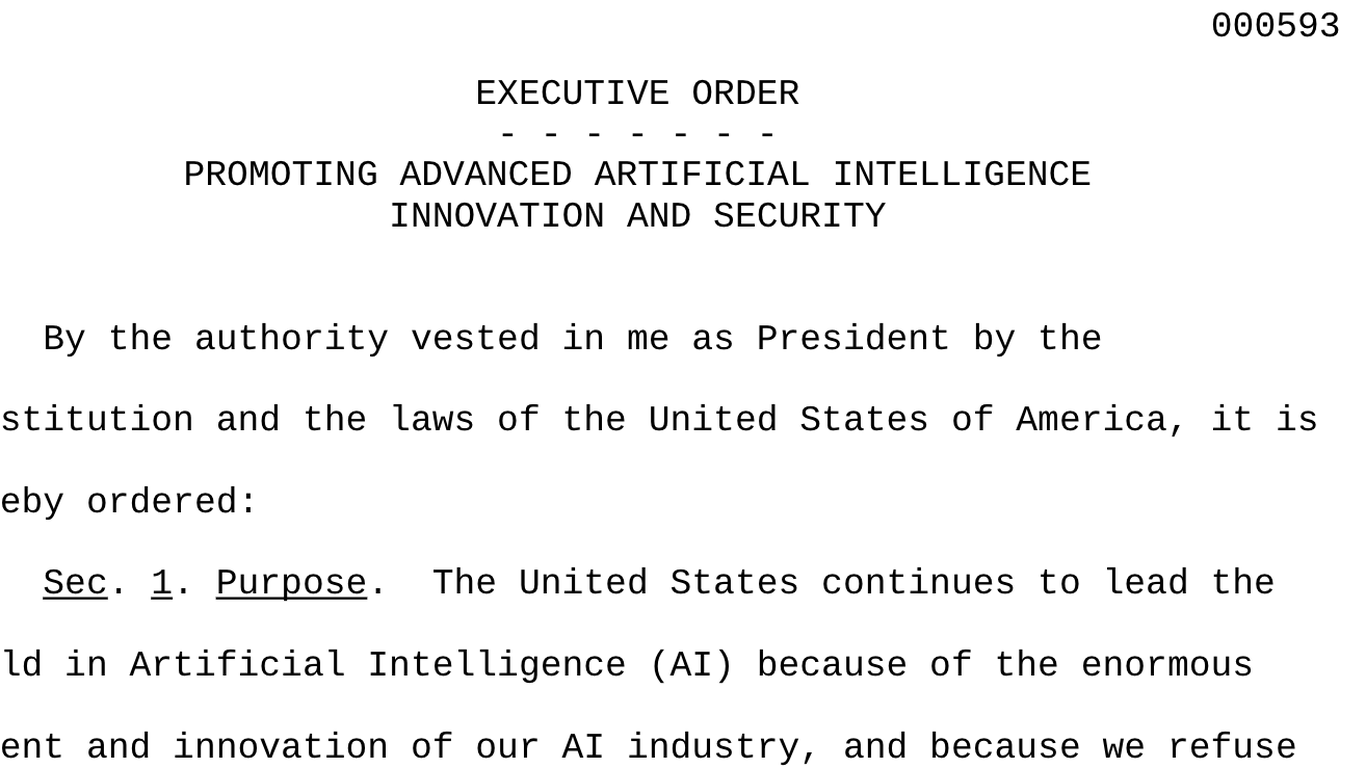
According to TechCrunch, former President Donald Trump said he wants to delay an AI-related security executive order because he does not want to get in the way of US leadership. That line will appeal to firms worried about friction. But it also raises a basic question. If the government steps back on AI security, who fills the gap while the technology keeps moving?
What matters most here
- The AI security executive order delay adds policy uncertainty for model makers, enterprise buyers, and federal contractors.
- Trump framed the move around preserving US leadership in AI, which puts innovation and security in direct tension.
- Companies may get short-term breathing room, but they also lose clarity on future standards and reporting expectations.
- National security, red-team testing, and model risk management are likely to stay central even if this order slips.
Why the AI security executive order matters
An executive order is not a law passed by Congress, but it can still shape how federal agencies act, what contractors must disclose, and which standards become non-negotiable in practice. That is especially true in AI, where procurement rules and agency guidance can steer the market fast.
Look, companies do not only react to regulation after it lands. They react to the shadow of regulation. If the White House signals tougher rules on frontier models, cloud access, cybersecurity, or safety evaluations, product teams start adjusting before the ink dries.
Policy delays can feel business-friendly in the short run. They often create more confusion than relief.
Think of it like building codes in a fast-growing city. Developers may cheer when inspections loosen up, at least for a minute. Then lenders, insurers, and tenants start asking harder questions.
Why Trump says the AI security executive order should wait
Trump’s stated reason, as reported by TechCrunch, is straightforward. He does not want government action to slow US progress in AI. That argument is politically sharp because it taps into a real fear in the industry that heavy federal rules could push research, capital, and top talent elsewhere.
And there is some logic to it. The US is in a high-stakes contest with China over advanced computing, semiconductors, defense technology, and foundation models. A broad security order that adds compliance costs or limits deployment could annoy the very firms Washington sees as strategic assets.
But here’s the thing. Security rules and technological leadership are not opposites by default. Smart standards can support both. Aviation did not become dominant by ignoring safety. The same may prove true for advanced AI.
What this AI security executive order delay means for companies
If you run a startup, buy AI systems, or work in enterprise risk, the immediate effect is uncertainty. Not freedom. You may avoid a new layer of federal obligations for now, but you still need to prepare for customer due diligence, state-level rules, and procurement demands.
That uncertainty has a cost.
For frontier model developers
Large labs likely get more room to iterate without new White House guardrails arriving right away. But they should not mistake delay for a blank check. Pressure around model evaluations, misuse prevention, cyber defenses, and disclosure practices is still building from lawmakers, allies, and major customers.
For enterprises buying AI
Big companies want clear answers on liability, auditability, and vendor commitments. If federal guidance stalls, procurement teams may write their own standards into contracts. Expect more security questionnaires, more documentation requests, and tougher indemnity language.
For federal contractors and defense tech firms
This group may feel the delay least, at least publicly, because national security reviews often continue through agency channels anyway. The Pentagon, DHS, and intelligence agencies do not need a headline-grabbing order to care about model risks, data exposure, or foreign access concerns.
What likely stays on the table even without the AI security executive order
Even if this specific action is delayed, the policy themes are not going away. They are too tied to national security and too visible in global AI debates.
- Red-team testing for advanced models, especially around cyber misuse and biological risk.
- Reporting requirements tied to large training runs, compute thresholds, or major incidents.
- Cloud and chip controls linked to export policy and access to advanced compute.
- Federal procurement standards that reward vendors with better documentation and safer deployment practices.
- Critical infrastructure protections for sectors such as energy, defense, finance, and healthcare.
Honestly, this is where the debate gets messy. Politicians talk about “leading” in AI as if speed is the whole story. It is not. If a leading company cannot explain how it tests models, secures weights, and limits misuse, is that leadership or just momentum?
The bigger policy split behind the AI security executive order debate
This dispute is really about two competing instincts in US AI policy. One camp sees regulation as a brake that could weaken American firms in a global race. The other sees baseline safeguards as part of strategic strength because they reduce the odds of accidents, abuse, and public backlash.
Both sides have a point. Loose policy can help near-term experimentation. But a vacuum invites fragmented state rules, reactive enforcement, and trust problems after the first big failure.
That is why executive action matters even when it is limited. It signals priorities to agencies, allies, investors, and adversaries. And once markets see that signal, behavior changes.
What you should do while Washington stalls
If your organization uses or builds advanced AI systems, waiting for perfect policy clarity is a mistake. A better approach is to prepare for the standards that are most likely to survive any administration.
- Map where AI is used in your products, operations, and vendor stack.
- Document model provenance, training data limits, and known failure modes.
- Set up internal red-team exercises and incident response plans.
- Review contracts for security commitments, audit rights, and data handling terms.
- Track federal agency guidance, not just White House headlines.
A practical rule helps here. Build governance that would satisfy a skeptical enterprise customer today and a federal reviewer tomorrow. The overlap is larger than many teams think (and cheaper to address early).
Where this goes next
The delayed AI security executive order may please firms that want fewer immediate hurdles. Still, the core pressure behind it is not fading. Advanced models are getting stronger, geopolitical stakes are rising, and the appetite for some form of oversight keeps growing across Washington and allied capitals.
So do not read this as the end of AI security policy. Read it as a pause in one venue, with the same fight moving to agencies, contracts, export controls, and eventually Congress. The real question is whether the US can move fast without pretending safety is optional.