TSMC Sales Surge Signals AI Spending Is Still Rolling
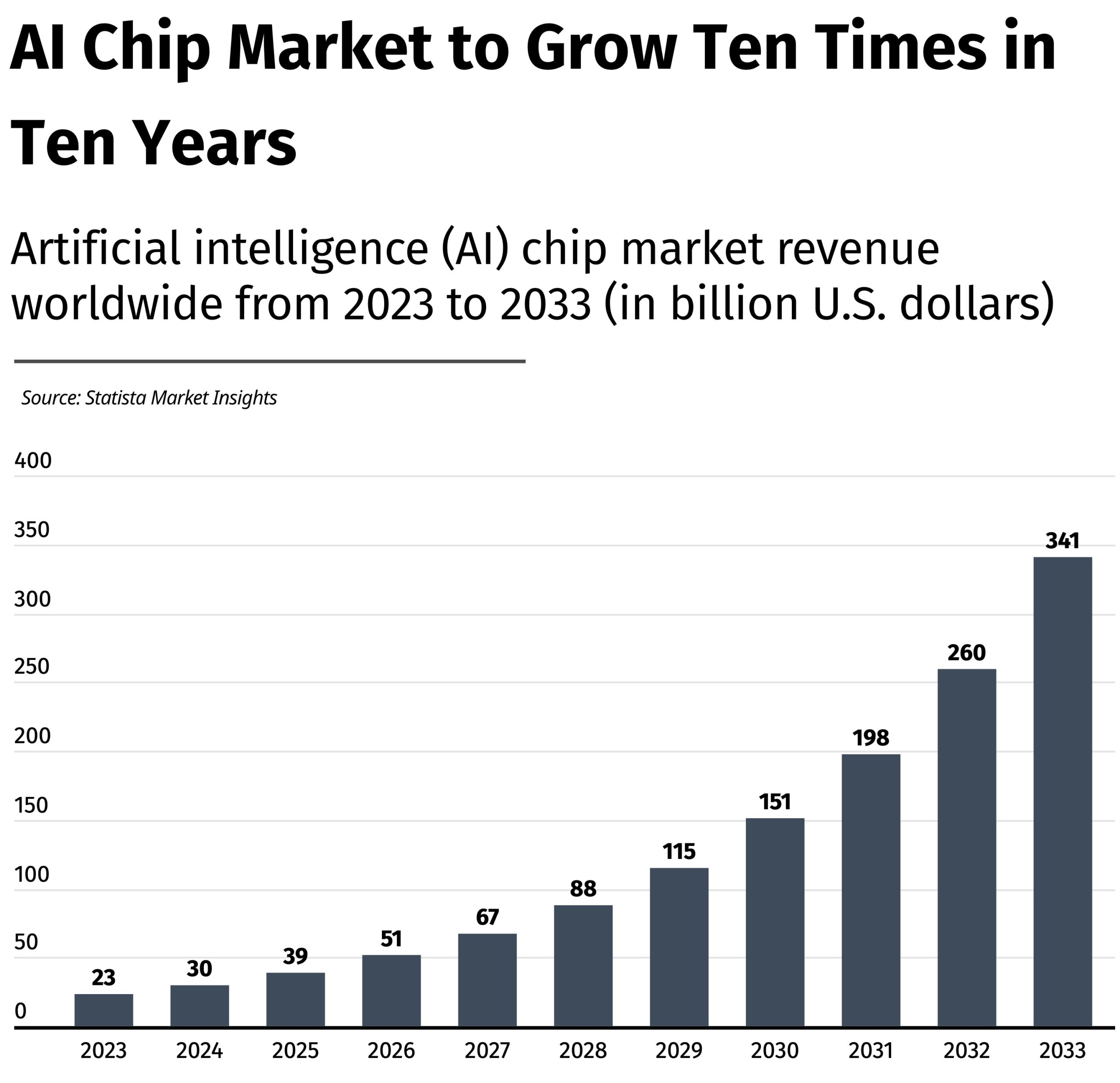
TSMC’s AI chip demand story just got another hard number behind it. Bloomberg reported that the company’s sales rose 36% in the latest period, a fresh sign that the buildout around artificial intelligence is still driving orders for advanced semiconductors. That matters because TSMC sits near the center of the supply chain. If its revenue is climbing this fast, the appetite for high-end chips is not slowing in any meaningful way.
For you, the useful question is not whether AI demand exists. It does. The question is where it is concentrated, how durable it looks, and whether the spending is spreading beyond a few giant buyers. One quarter can be noisy. A pattern is harder to fake.
What the TSMC Sales Surge Tells You
- AI infrastructure is still absorbing capital, especially in advanced nodes and packaging.
- Hyperscalers remain the main engine behind the order flow.
- Supply constraints are easing in some spots, but not enough to cool demand.
- The market is still rewarding compute-heavy bets, even with uneven returns elsewhere.
Why this TSMC sales surge matters for AI chip demand
TSMC is not a random bellwether. It manufactures chips for Nvidia, AMD, Apple, and a long list of others that rely on leading-edge process technology. So when its sales jump, that usually reflects more than a single product cycle. It points to broader demand for wafers, advanced packaging, and the kind of capacity that AI accelerators need.
Think of it like a stadium renovation. You do not see the crowd from the concrete pour alone, but the pouring tells you the game is coming. AI spending works the same way. The money starts upstream, in fabrication, and only later shows up in cloud services, model training, and enterprise software.
TSMC is often the best early read on whether AI capital spending is still real or just good marketing. Right now, the signal is still loud.
Is this demand broad, or just concentrated?
That is the key issue. A lot of the current AI chip demand comes from a tight group of buyers with deep pockets. Microsoft, Amazon, Google, Meta, and a few large device and chip customers are carrying much of the load. That concentration can keep TSMC busy for a long time, but it also creates risk. If one or two buyers slow capex, the effect can ripple fast.
But the picture is not static. The next phase depends on whether smaller companies and enterprise buyers move from testing to deployment. If that happens, demand gets wider and less fragile. If it does not, the market remains a tower built on a narrow base.
What to watch next
- Capital spending guidance from hyperscalers.
- TSMC’s advanced packaging capacity and utilization.
- Order trends for AI accelerators from Nvidia and AMD.
- Export controls and any shifts in China-related demand.
TSMC sales surge and the AI supply chain
There is another layer here. A 36% sales rise does not only reflect demand. It also reflects how well TSMC can turn demand into shipments. Supply chain discipline matters. The company has spent years building out capacity in advanced manufacturing, and that gives it a cleaner read on market conditions than companies farther downstream.
For chip investors, that makes TSMC a cleaner signal than many headline earnings stories. Software vendors can talk about AI adoption for months before the revenue shows up. Chipmakers have to ship the silicon. That is why this TSMC sales surge lands with more force than a pile of vague AI slide decks.
And yet, you should keep your guard up. Sales growth tells you spending is happening. It does not tell you whether the returns on that spending will justify the bill. That gap still hangs over the whole sector.
What this means for your AI spending thesis
If you have been waiting for evidence that AI budgets were cooling off, this is not it. The latest TSMC print says the opposite. Companies are still buying the picks and shovels, which usually means the mine is not empty.
Here’s the practical read: the AI trade has moved from hype to infrastructure, but it has not moved past concentration risk. The winners still cluster around chip design, foundry capacity, cloud infrastructure, and a few giant platform companies.
Look, the market loves a clean story. This one is messy. Demand is real, spending is high, and the profits are uneven. That mix can last longer than people expect.
What to watch after the TSMC sales surge
The next test is simple. Do customers keep raising AI budgets, or do they start trimming after the initial buildout? If capex holds, TSMC’s numbers could stay strong well into the next cycle. If it softens, the slowdown will show up first in orders, then in pricing, then in sentiment.
So the better question is not whether AI demand exists. It is whether the spending can widen beyond a handful of buyers and keep paying for itself. That is where the real story starts.
Watch the next round of hyperscaler capex calls closely. That will tell you whether this surge is a peak, or just another step up the ladder.