Vals Takes Aim at AI Benchmarking
AI teams have a boring problem that now costs real money. AI benchmarking often tells you which model looks good on public tests, but not which one will answer your support tickets, review your contracts, or write code in your style. That gap matters more as companies move from AI pilots to production systems with budgets, uptime targets, and angry users waiting on the other side.
Vals, a startup backed by Andreessen Horowitz, is trying to turn model evaluation into something closer to infrastructure. According to TechCrunch, the company wants to become a trusted benchmark layer for AI buyers and builders. That is a hard lane to own. But it is also one of the few AI markets where hype alone will not carry the day, because bad scores lead to bad deployments.
What to Watch
- Vals is targeting AI benchmarking at a time when public leaderboards no longer answer enough business questions.
- Enterprise buyers need task-specific tests, not generic scores that reward models for academic-style performance.
- Andreessen Horowitz backing gives Vals visibility, but trust will depend on methodology, repeatability, and independence.
- The bigger shift is clear, AI evaluation is moving from research labs into procurement, security review, and product operations.
Why AI Benchmarking Is Suddenly Messy
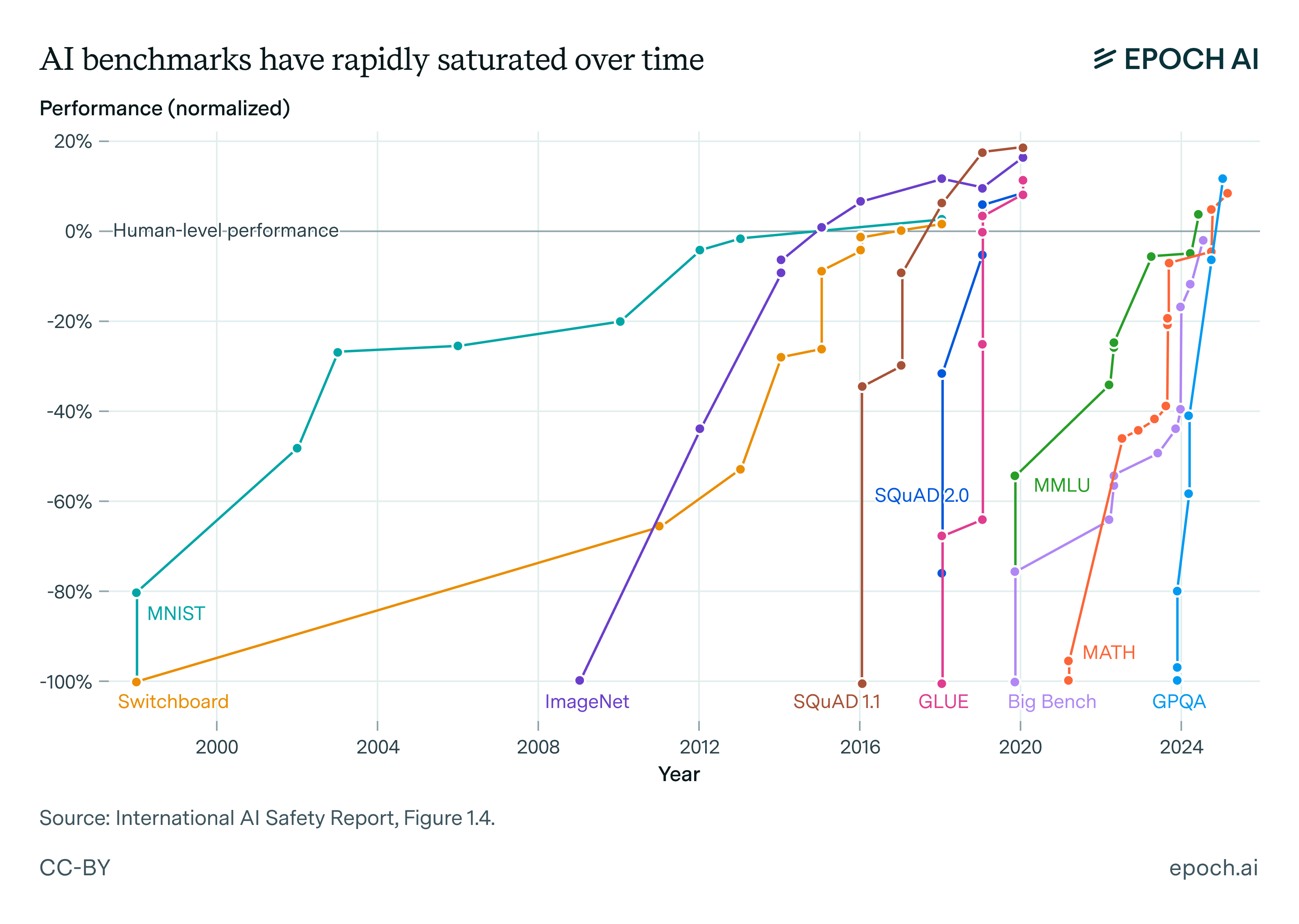
Public AI benchmarks helped the industry compare models when the main question was simple, which system performs best on a known test? That world has faded. GPT-5-class systems, Claude models, Gemini, Llama, and specialized open models now compete across reasoning, coding, retrieval, vision, safety, latency, and cost.
The bigger issue is contamination. Once benchmark questions become public, model makers can train around them, directly or indirectly. A leaderboard can start to look like a school exam where half the class has seen the practice test.
That does not make benchmarks useless. It means you need to know what they measure, who designed them, how often they change, and whether the score maps to your use case. A legal team, a call center, and a robotics startup do not need the same answer.
Good AI evaluation should behave less like a beauty contest and more like a driving test. The model has to perform under the conditions where you will actually use it.
How Vals Wants to Change AI Benchmarking
Vals appears to be betting on a simple idea, companies need a neutral way to test models against real tasks before they spend heavily. That sounds obvious. In practice, it is messy because the test set, grading rules, and business context all shape the result.
The strongest version of Vals would not only compare frontier models. It would help teams build repeatable evals for their own workflows, then track how results change when a model, prompt, retrieval system, or policy changes. That is where AI benchmarking starts to feel less like a blog post and more like quality assurance.
This is the real market.
Think about it like baseball scouting. A batting average tells you something, but a general manager still wants spray charts, injury history, contract cost, clubhouse fit, and performance against left-handed pitching. AI buyers now need the same layered view, especially when one model costs more, one runs faster, and one fails in strange ways under pressure.
What Enterprises Should Demand From AI Benchmarking Tools
If you buy AI software, do not treat benchmark claims as proof. Treat them as the start of a tougher conversation. Vendors should explain their eval design in plain language, and they should show where the model fails.
Here is the checklist I would use before trusting any AI benchmarking platform:
- Task fit: Does the benchmark reflect your real workflow, data format, tone, and risk level?
- Freshness: How often does the test set change, and how does the vendor reduce contamination?
- Grading method: Are humans, automated judges, or hybrid reviews scoring outputs?
- Cost visibility: Does the benchmark include token spend, latency, retries, and failure recovery?
- Audit trail: Can you inspect prompts, outputs, scoring rubrics, and version history?
- Safety testing: Does it test hallucination, data leakage, refusal behavior, and policy drift?
That last point matters because many AI failures do not look dramatic in a demo. They appear as small errors, repeated at scale. A chatbot invents a refund policy, a coding assistant misses a security bug, or a document tool summarizes the wrong clause with total confidence.
Vals, A16Z, and the Trust Problem
Andreessen Horowitz brings capital, a network, and a megaphone. That can help Vals reach founders and enterprise buyers faster than a bootstrapped evaluation startup. But money does not solve the trust problem.
Benchmarking companies sit in a sensitive position. If they rate models, partner with model makers, sell to enterprises, and publish comparisons, buyers will ask who benefits from the score. They should ask. A benchmark vendor needs clear rules on conflicts, dataset access, sponsored tests, and public claims.
Honestly, this is where the category could get ugly. Model providers want favorable rankings, enterprises want certainty, and benchmark firms want growth. The incentive mix needs daylight, or the market will learn to discount every shiny chart.
AI Benchmarking Needs More Than Leaderboards
The leaderboard era made AI feel like a horse race. That was useful for attention, but weak for deployment. Real AI benchmarking should help teams make decisions like whether to switch models, whether to fine-tune, whether to add retrieval, and whether a system is safe enough for users.
For product teams, the most useful evals often look plain. Did the assistant answer from approved sources? Did it refuse the right requests? Did it finish under two seconds? Did it keep performance after the prompt changed?
For executives, the key question is sharper: what does a better score buy you? If a model improves accuracy by 3 percent but doubles inference cost, that might be a bad trade. If it cuts human review time by 20 percent on a high-volume workflow, it may pay for itself quickly.
Where This Market Goes Next
Vals is entering a category that should grow because AI adoption creates a need for measurement. The winners will not be the firms with the loudest claims. They will be the ones that make evaluation boring, repeatable, and hard to dispute.
That is a high bar. It requires strong test design, clean reporting, domain expertise, and enough independence to tell powerful AI companies that their models underperform in specific settings. If Vals can do that, it may earn a serious role in how companies choose AI systems.
The practical next step is simple: before you adopt a new model, build your own small benchmark from real work. Then compare it with outside tools like Vals as the market matures. Public scores can guide you, but your users will grade the final exam.


